President of Russia Courtesy: President of Russia
2 October 2025

Valdai frames Russia’s global doctrine

Each autumn, Russia convenes its flagship Annual Summit — a gathering of global leaders, business elites and intellectuals. Often compared in scale to Davos or Shangri-La, what sets Valdai apart is President Vladimir Putin’s extended, unscripted dialogue with the audience. Over the years, India has moved to the centre of this dialogue, reflecting its strategic weight and offering rare insight into Moscow’s evolving worldview.
Amb Gurjit Singh Courtesy: ANI
17 August 2022

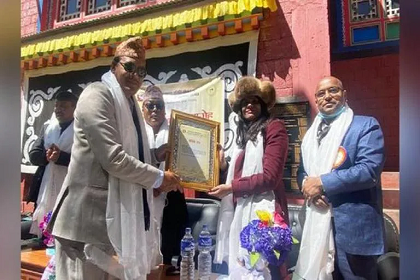
75 years of development cooperation

Since 1947, India has had a proud record of development cooperation. It began even though it was newly independent and itself developing, but created a camaraderie with movements in other emerging countries. Now after 75 years, its time to move toward an FDI-led model, which will particularly help reduce the rising indebtedness in the developing world.

shutterstock_1091235845 Courtesy: Shutterstock
15 October 2020

UN: Necessary but reformed

The UN turned 75 this year but instead of grand celebrations, the world witnessed an empty UNGA with world leaders addressing it via video screening because of the pandemic. The UN is under unprecedented stress and being shown up for its inability to tackle the challenges of today like the pandemics, climate change, terrorism or global peace and security. The institution's key governing structures, especially the UN Security Council, are inadequate and demand reform. India must now use gritty resolve to ensure its place in these governing structures.

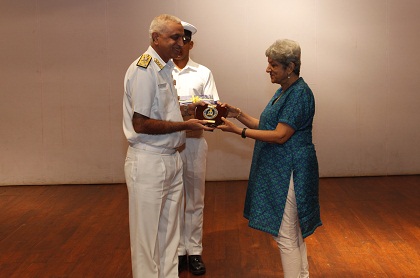
_MG_8960 Courtesy: Western Naval Command
28 September 2017

China in IOR: ‘peaceful rise’ no more

China has expanded its presence in the Indian Ocean Region. President Xi Jinping has abandoned Deng Xiaoping’s conciliatory posture for an aggressive, money-fuelled search for super power status

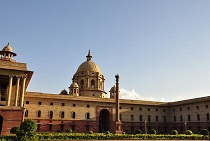
southblock Courtesy: rajkumari1220/Flickr
18 April 2014

Circles & Corridors of Economic Diplomacy

India’s political and economic future will be determined over the next few weeks. Gateway House recommends a priority diplomacy agenda for the next government – one which puts economics at the heart of our foreign policy

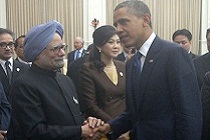
obama Courtesy: Ministry of External Affairs
11 January 2014

U.S: Losing friends, gaining nothing

Following Indian diplomat Devyani Khobragade’s expulsion, ties between India and the U.S. have hit a new low. This comes at a time when the two countries should be working closely to address the changing security matrix in Asia

halifax2 Courtesy: Sameer Patil
26 November 2013

Understanding our complex world, in Halifax

Gateway House’s Associate Fellow Sameer Patil, who participated in the fifth annual Halifax International Security Forum, blogs about his inferences from the main discussions as well as his interactions with the participants at the event

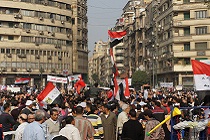
egypt protest Zeinab Mohamed flickr Courtesy: Zeinab Mohamed/Flickr
8 August 2013

Time to back the anti-Wahabbi tide

Today, the role Wahabbism plays in geopolitics poses a severe security risk not just to the West but also to the Muslim world. The West needs to rethink its strategy of promoting Wahabbi International, and realise that Wahabbism cannot be a moderated geopolitical asset

corridorsmap2 Courtesy: Gateway House
11 July 2013

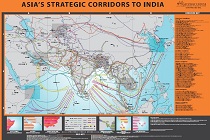
Asia’s Strategic Corridors to India

The map – Asia’s Strategic Corridors to India – has emerged from Gateway House’s study of India’s strategic links with other parts of Asia. It highlights the progress India has made in forging multiple links with six strategic regions – Central Asia, West Asia, East Africa, South-East Asia, East Asia, and our immediate neighbourhood

obama Courtesy: Pete Souza/The White House
22 February 2013

The pacific pivot: A decade late and five years too soon

The announcement of the Pacific pivot by the U.S. in 2001 has led to several nations making bold political moves. However, the U.S. isn’t yet ready to be a regional protector against China. What does Washington have to do to prepare itself for the Pivot?