An agenda for Modi in Silicon Valley
Prime Minister Narendra Modi's outreach to the influential Indian diaspora in Silicon Valley in September should be centered on creating an Indian ecosystem for tech start-ups

 Courtesy: John Fischer/Flickr
Prime Minister Narendra Modi's outreach to the influential Indian diaspora in Silicon Valley in September should be centered on creating an Indian ecosystem for tech start-ups
 Courtesy: Mashable
The following is an excerpt from the book 'India-U.S:$1 trillion by 2030' by Nish Acharya, Visiting Fellow at Gateway House
 Courtesy: Wikipedia
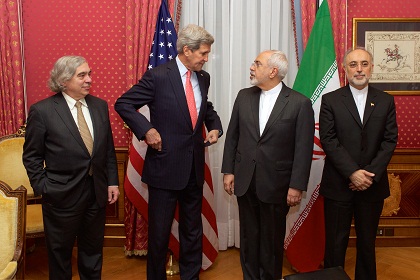
A journey which began in Istanbul in 2012 ended in triumph in Vienna in July 2014, as the P5+1 countries and Iran announced a Joint Plan of Comprehensive action that would see Iran free of all economic sanctions while upholding the right to a civil nuclear programme. While this journey, fraught with challenges, technically is over, the ratification battle in the U.S. congress commences now
 Courtesy: India Strategic
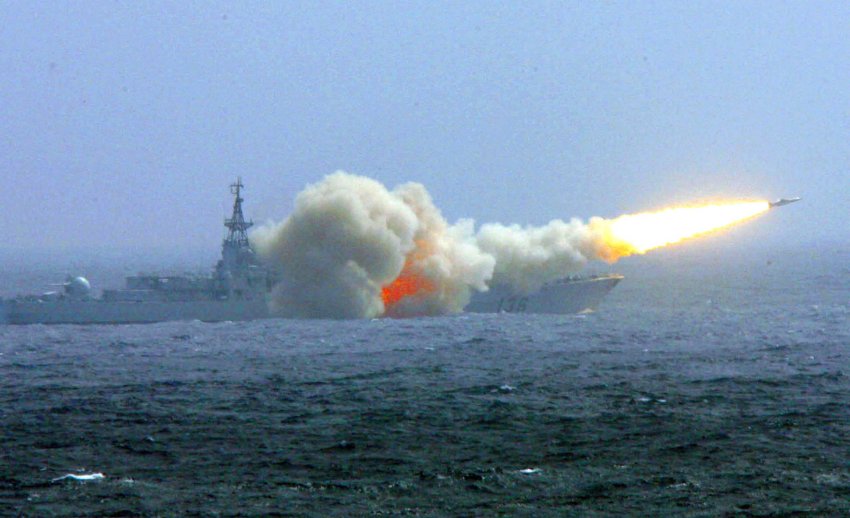
The recent re-evaluation by the US, China, Japan, and Russia of their military strategies reflects new geopolitical equations in which the Asia Pacific is a major strategic intersection. Turmoil in this region can impact India’s trade and security interests, and to avoid this India must craft a balance between its relations with all the countries involved
 Courtesy: Wikipedia
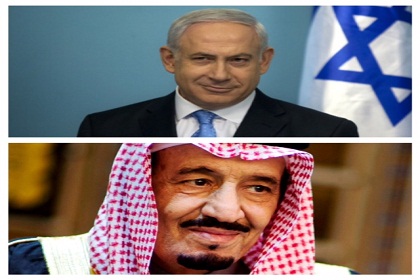
The announcement in June of a Saudi-Israeli alliance against Iran has to be seen in the context of the strategic dimensions of India’s relations with Saudi Arabia, Israel, Iran, and the U.S. And it has far-reaching implications for India’s policy towards West Asia
 Courtesy: U.S. Senate/Wikimedia Commons
Hardliners in the U.S. argue that the Obama administration’s eagerness to declare success has given Iran an advantage in the negotiations on its nuclear programme. Even if the agreement between the U.S., its partners, and Iran is finalised in the coming days, Obama has the tough task of convincing the U.S. Congress to lift sanctions
 Courtesy: Madaki/Wikimedia Commons
After respite from the U.S. government, Cuba now faces the daunting task of reviving its economy without having to give up on its political ideology. The Singaporean model of limited democracy is something Cuba could emulate.
 Courtesy: Wikimedia Commons
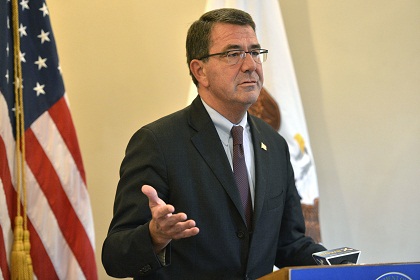
The visit of U.S. Defence Secretary Carter will help cement trust and expand the scope of India-U.S. defence cooperation. However, there are several important details around technology transfer that still need to be worked out before co-production of weapons can begin.
 Courtesy: Wikipedia
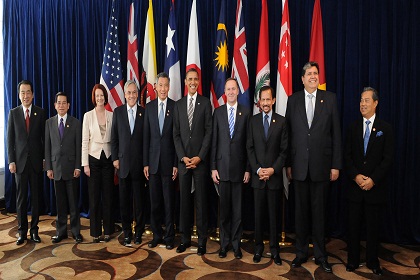
The Trans-Pacific Partnership might soon be concluded if the U.S. Congress fast-tracks it, as recently announced, while the Regional Comprehensive Economic Partnership Agreement remains on slow-track. But the TPP, although ambitious, follows an outdated template, and it is the dynamic RCEP that can be a model for a new global rules-based framework
 Courtesy: Wikimedia commons
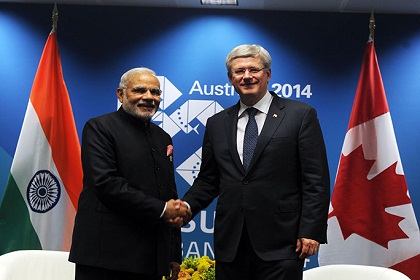
Canada’s nuclear energy sector has a lot to offer India—the sale of uranium, joint development of technology and best practices on regulations. Nuclear energy co-operation is also an area in which Canada and India can make substantial advancements quickly. We should not let this opportunity slip by