the jerusalem post Courtesy: The Jerusalem Post
16 July 2026

The gulf in the Gulf

The ongoing conflict in the Gulf has created tremendous change. Israel is deeply scarred by the October 7 attacks. Iran retains the ability to go nuclear despite U.S.-Israel attacks. China’s assistance to Iran through intelligence and the supply of parts and chemicals for missiles has been noticed. New formations of countries - either interlocutors, participants or victims of the war – are generating an alphabet soup of influencers.

outlook business (2) Courtesy: Gateway House
16 July 2026

Five surprising truths about middle-powers

The global steering wheel has come loose, replaced by more fluid, pragmatic, and regional frameworks. The Emerging Middle Powers Report 2026 illuminates the shifting postures and throws up some surprises: trust in the U.S. is receding, non-alignment is increasing, regionalism is more important, and divergences from the mainstream are clear. Can Middle Powers be more than just bridges to overcome differences?

Website articles  - 2026-07-14T142501.398 Courtesy: X/@narendramodi
14 July 2026

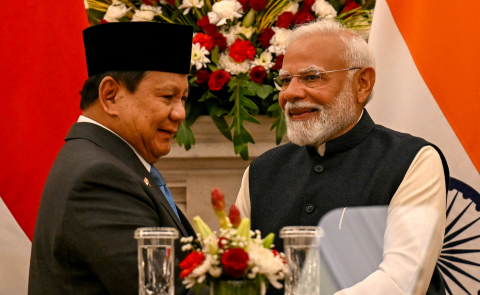
Modi-Prabowo sextet of good intentions

The Modi-Prabowo summit is a shared commitment to enhance strategic cooperation between two major Asian powers. This is necessitated by the dominance of China and the weakening U.S. pledges to regional security. Bilaterally, there has been political progress but limited economic engagement. The key now is to step up the trade and investment pillar, with energetic follow-up action for a strong trajectory.

Website articles  (3) Courtesy: Gateway House
9 July 2026

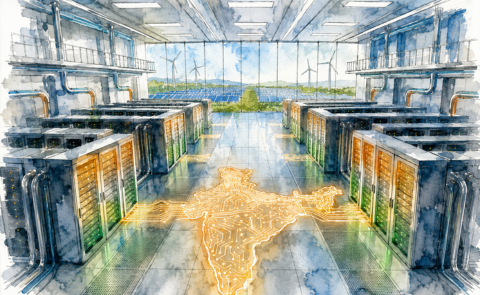
The missing pillar of India’s sovereign AI

India’s sovereign AI strategy prioritises chips, compute, data, models, and talent, but overlooks a critical pillar: energy security. As AI-driven electricity demand surges globally and the IndiaAI Mission rapidly expands computing capacity, reliable power is becoming a defining constraint on AI ambitions. Energy security must therefore be recognised as a core pillar of India’s sovereign AI strategy, not merely as supporting infrastructure.

WSJ Courtesy: The Wall Street Journal
9 July 2026

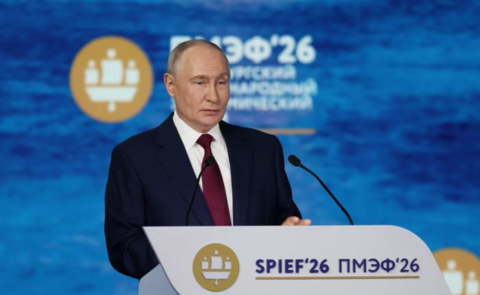
Putin pushes for technological sovereignty

The 29th St. Petersburg International Economic Forum highlighted Russia’s push for technological sovereignty. President Vladimir Putin argued that Russia and the Global South must avoid being held hostage to the West. Since the Russia-Ukraine war began in 2022, sweeping sanctions have accelerated Russia’s efforts to build domestic digital infrastructure, strengthen AI capabilities, and deepen technological cooperation with partners such as India.

outlook business Courtesy: Outlook Business
9 July 2026

India-Japan Economic Security Pillar

The legacy of the Modi-Takaichi Summit will extend well beyond the bilateral. It demonstrates that middle powers, through responsible and sustained action, are capable of shaping the future of the Indo-Pacific through strategic intent and the resilient economic networks that back it up to promote regional stability. For India and Japan, economic security is the foundation upon which the next generation of the bilateral will be built.

South China Morning Post Courtesy: South China Morning Post
2 July 2026

The Asian significance of Modi in Indonesia

Prime Minister Modi’s Indo-Pacific tour begins in Indonesia in early July. The two countries are expected to achieve a more aligned worldview, especially with the wars in Ukraine and the Gulf. The emerging entente cordiale between the U.S. and China will have a significant impact on the region, where India and Indonesia are leading players with the Indo-Pacific as their shared home.

G7 Courtesy: Prime Minister's Office of Japan
25 June 2026

G7 Evian summit matters

The 52nd G7 Summit, held in Evian-les-Bains from June 15-17, reflected both the challenges and continued relevance of the grouping. While the G7’s share of global GDP has declined, it remains influential. India’s participation as an invited guest drew attention as a major representative of the Global South. As BRICS chair this year, India has an opportunity to explain the motivations of both the G7 and BRICS to each other's members.

Website articles  (1) Courtesy: Gateway House
18 June 2026

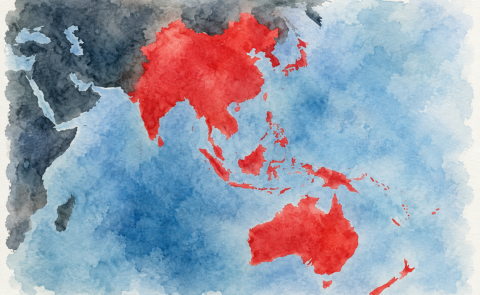
The relevance of the Indo-Pacific

After eight years of its nomenclature, on 16th June the U.S. Pacific Command dropped the 'Indo' from its military command title. It reflects clearly that the U.S. does not consider the Indo-Pacific region to be the most consequential theatre of geopolitics today. Yet its significance as the platform on which great-power contestation in political, military, technological, and economic domains will play out cannot be overstated.