

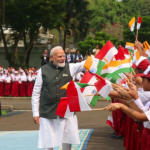

All reports from Jakarta indicate that Prime Minister Narendra Modi’s three-day visit to Indonesia (July 6-8) was spectacular. A post-visit assessment is essential to sift and distinguish substance from spectacle.
The host, Indonesian President Prabowo Subianto, together with his government and people, extended an exceptionally warm welcome, demonstrating their desire to deepen friendship and cooperation with India. The honoured guest hit all the right buttons. Diplomats and officials on both sides worked hard to produce a substantive joint statement, 14 MOUs/agreements, and six new ‘announcements’ on bilateral relations. What does it all amount to, in real terms?
The answer lies in the subtle changes in the geopolitical dynamics of the Indo-Pacific since January 2025, and especially after the outbreak of the Gulf War of 2026. The U.S.-China strategic rivalry is evolving into a more stable and friendly relationship. The U.S. is still committed to ensuring that the region is not dominated by “any hegemon”, as U.S. Defence Secretary Peter Hegseth announced at the Shangri-La Dialogue in May, but plans to build with China “a constructive relationship of strategic stability, based on fairness and reciprocity.”[1]
Appropriate conclusions have been drawn from this new approach by countries such as Indonesia and India. To manage their relations with China, they need to draw closer to each other because the U.S. commitment to regional security is weakening. China’s deterrence lies in stronger strategic cooperation between the two major Asian players – India and Indonesia.
In this light, the first takeaway from the Modi-Prabowo summit is a shared commitment to enhance strategic cooperation. They have defined their goal – a region with seven fundamental characteristics, namely “a free, open, transparent, rules-based, peaceful, prosperous, and inclusive Indo-Pacific region.”[2]
This will be achieved through “greater strategic convergence and coordination between India and Indonesia in multilateral and regional forums.”[3] The agreement to increase the role of South-South cooperation and “to enhance cooperation on strengthening the voice of the Global South” is a new nuance. Therein, New Delhi has signalled its interest in forging collective leadership of the Global South, and Indonesia will be a part of the leading team.
The second takeaway relates to maritime cooperation. Both sides are rediscovering their maritime proximity and consequential commonality of interests. Modi announced before the Indonesian Parliament, “From Sabang to Great Nicobar and from the Malacca Gateway to the Indo-Pacific, we will create new opportunities in connectivity, logistics, the blue economy, maritime security, and trade resilience.”[4] This puts real pressure on officials of both sides.
So far, their discussions, initiated when Modi first visited Indonesia in 2018, have secured only limited gains in forging new connectivity between the Andaman and Nicobar Islands and Aceh Province and in building the Sabang port. With a renewed political push, proactive action may be initiated, but ample financial resources will need to be secured if the declaration is to be translated into delivery.
The third takeaway is more substantial, focusing on defence and security cooperation. The signing of the MOU on ‘Cooperation on Brahmos Missile System’ and ‘Air-to-Air Missile Cooperation Agreement’ clears the way for the sale of batteries of Brahmos and Astra missiles to Indonesia. Commercial agreements will be concluded soon. The significance of this development lies in the public perception that the Brahmos, with an operational range of 290 km to 800 km, is an instrument of deterrence against a particular country. With India, the Philippines, Vietnam, and now Indonesia equipped with them, Asian voices will be taken more seriously on issues affecting the future of the Indo-Pacific. For Indonesia, it was a courageous decision, as the former president Joko Widodo was widely perceived as maintaining closer ties with China, which may have contributed to Indonesia’s reluctance to procure BrahMos. In contrast, President Prabowo has pursued a more independent foreign policy. The decision to accept BrahMos is facilitated by the change of president and the incumbent’s reassessment of the nation’s security needs in a turbulent world.
The fourth takeaway is that, while the Modi visit has prepared the ground well, the trade and investment pillar encompassing economic cooperation needs careful nurturing and energetic follow-up action. Bilateral trade is at about $30 billion; Indian investment in Indonesia is valued at $1.56 billion, and Indonesian investment in India is a mere $654 million. This needs serious attention and improvement, in keeping with the logic of the ‘Comprehensive Strategic Partnership’ and the augmented ambiance of the recent visit.
The decision on cooperation in the critical minerals sector was important. New possibilities in domains such as steel, pharmaceuticals, medical products, agriculture, and communication technologies will be pursued. Digital linkages in the financial sector could be realised by the end of the year. All this should combine to result in further expansion and diversification in economic ties.
Indonesia’s inclination to benefit from India’s development journey and experience as an electoral democracy is the fifth takeaway. President Prabowo’s frank articulation of his personal admiration for Modi’s leadership and for the Indian government’s welfare policies and schemes was undoubtedly heart-warming. Greater cooperation between the electoral authorities of the two countries will be for mutual benefit.
Finally, both leaders placed a premium on strengthening people-to-people exchanges and the civilisational connection. India’s help in the restoration project of the majestic Prambanan temple complex; Jakarta‘s decision to facilitate the opening of a new campus of the Indian Institute of Management (Bangalore) in Indonesia’s Singhasari Special Economic Zone in Malang, East Java,[5] and a combined endeavour to promote tourism in both directions are all steps in the right direction.
The presence of 150,000 Persons of Indian Origin (PIOs, who are Indonesian citizens) and 15,000 Non-Resident Indians (NRIs) in Indonesia is a significant benefit: they are all positive contributors to Indonesia’s economy. However, the people-to-people exchange is minimal. There are just 150 Indonesian students in India and only one Indian student in Indonesia as of 2022.[6] Indonesian students much prefer Australia, the U.S. and Singapore, especially for higher education. The focus in the future, therefore, should be on motivating more Indonesians to experience India as tourists, students, and business visitors. That is when stronger ties at the people’s level will become a reality.
Two observations merit mention here. One, on countering terrorism, India and Indonesia are broadly on the same page. Still, the latter did not go as far as Japan, which recently identified Pakistan as the source of cross-border terrorism in India.[6] Two, both nations advocate reform of the UN Security Council. Still, Jakarta does not support India’s candidature for a permanent seat in an expanded Security Council, given that Indonesia, as a major Asian player, has its own ambitions in that sphere.
The relationship has greatly benefited from Modi’s short sojourn in Indonesia. Now, what happens over the next year will be crucial. In six to nine months from now, External Affairs Minister S. Jaishankar should consider visiting Jakarta to review and re-energise follow-up, and officials must remember that the next summit could take place after a year.
Meanwhile, the two governments must encourage the continuation of Track 1.5 dialogues, which so handsomely contributed to this positive and optimistic phase in India-Indonesia relations.
Rajiv Bhatia is a Distinguished Fellow at Gateway House. He is a former diplomat who served in Jakarta as DCM and in Yangon as Ambassador.
This article was exclusively written for Gateway House: Indian Council on Global Relations. You can read more exclusive content here.
Support our work here.
For permission to republish, please contact outreach@gatewayhouse.in
© Copyright 2026 Gateway House: Indian Council on Global Relations. All rights reserved. Any unauthorised copying or reproduction is strictly prohibited.
References:
[1] Pete Hegseth, ‘Remarks At The IIss Shangri-La Dialogue’, 30 May 2025 Shangri-La Hotel, Singapore, Online Speech Bank, https://www.americanrhetoric.com/speeches/petehegsethshangri-ladialogue2026.htm
[2] ‘India-Indonesia Joint Statement on the State Visit by Prime Minister of India to Indonesia (July 06 – 08, 2026)’ Ministry of External Affairs, 7 July 2026, https://www.mea.gov.in/bilateral-documents?dtl/41413/IndiaIndonesia_Joint_Statement_on_the_State_Visit_by_Prime_Minister_of_India_to_Indonesia_July_06__08_2026
[3] Ibid
[4] ‘English translation of Prime Minister’s Address to the Parliament of Indonesia’, Ministry of External Affairs, 7 July 2026, https://www.mea.gov.in/speeches-statements?dtl/41412/English_translation_of_Prime_Ministers_Address_to_the_Parliament_of_Indonesia_July_07_2026
[5] Indian Institute of Management Bangalore. “Prime Minister Narendra Modi Announces IIM Bangalore Campus in Indonesia.” July 7, 2026. https://www.iimb.ac.in/pm-narendra-modi-announces-iimb-campus-indonesia
[6] Gateway House and Centre for Strategic and International Studies. India-Indonesia: Companion Souls in a New Era. Mumbai and Jakarta: Gateway House and Centre for Strategic and International Studies, 2024. https://www.gatewayhouse.in/india-indonesia-companion-souls-in-a-new-era/