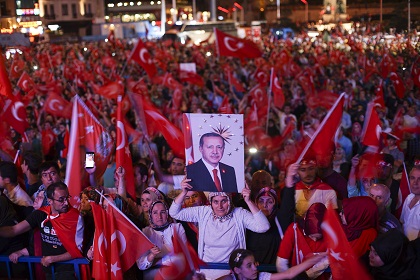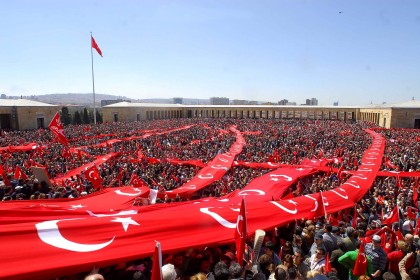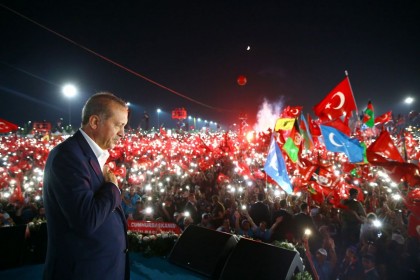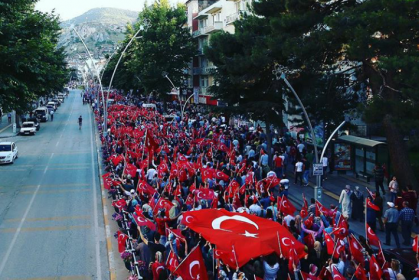
After coup nightly demonstartion of president Erdogan supporters. Istanbul, Turkey, Eastern Europe and Western Asia. 22 July,2016 Courtesy: Wikipedia
14 April 2017

How is Turkey to be governed?

Referendums are a way of mobilising society and bringing in exceptional change. Turkey’s third constitutional referendum in the last 10 years, being held on Sunday, April 16, is the greatest of them in many respects as it puts the country on uncharted waters, having it move from one unbalanced system to another

Protect_Your_Republic_Protest_-_1_(2007-04-14) Courtesy: Wikipedia
18 August 2016

Turkey post-coup: stronger than ever

It was the iron will of the citizens of Turkey and their uncompromising belief in the deeply rooted democratic traditions and institutions of the country which proved to be critical in defeating the July coup attempt. Turkey will continue the reforms which have made it a shining light in the region

5374e4111fc116307d4e734013dfc175 Courtesy: Yahoo
18 August 2016

Turkey’s fight for democracy

The July coup in Turkey did not achieve its objective of eliminating President Erdogan, who has, ironically, emerged a ‘national hero.’ Does this signal a new beginning? An analysis of the factors impending upon the colossal repair-and-rebuild task before the country.

Tokat_darbe_karşıtları Courtesy: Wikipedia
27 July 2016

The beginning of the end for Erdogan

The attempted coup on July 15 in Turkey as well as its aftermath have irreparably dented President Erdogan’s international image and impacted Turkey's standing as a democratic state, a military power, a NATO member, an EU aspirant, and an emerging economy. This downtrend is unlikely to be reversed in the near future and the country is in for an extended period of instability

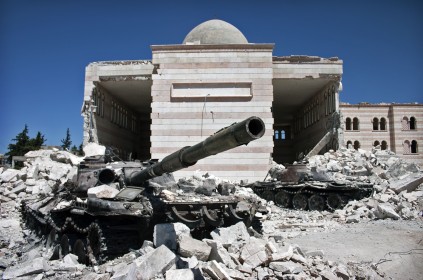
Azaz,_Syria Courtesy: Wikipedia
9 March 2016

India and the Syrian quagmire

With a cessation of hostilities been brokered by Russia and the United States, the conflict in Syria has entered a tense pause. India has had a bystander attitude to the conflict in Syria. However, with the truce expected to be short, does India have the incentive or the option to depart from its current position, and deepen its engagement in Syria?

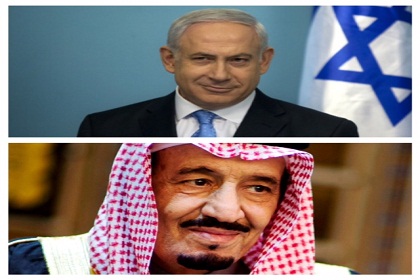
Israel-Saudi Courtesy: Wikipedia
13 July 2015

Reassessing our Israel, Arab engagement

The announcement in June of a Saudi-Israeli alliance against Iran has to be seen in the context of the strategic dimensions of India’s relations with Saudi Arabia, Israel, Iran, and the U.S. And it has far-reaching implications for India’s policy towards West Asia

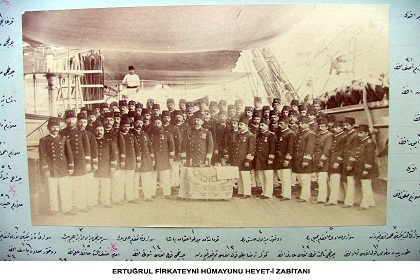
Crews (from museums archive) Courtesy: Turkish Museum archive
27 April 2015

Ottoman ship Ertugrul’s Bombay linkages

The Turkish naval ship TCG Gediz was in Mumbai recently, retracing the Ottoman frigate Ertuğrul’s 126-year-old voyage, when it stopped here while on its way from Istanbul to Yokohoma. To commemorate this anniversary, the Consulate of Turkey in Mumbai and Gateway House jointly hosted a lecture by Sifra Lentin on the significance of this historic passage

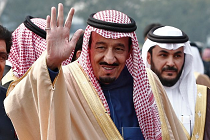
Saudi Arabia_King Salman Courtesy: sodere.com
5 February 2015

Prioritising Saudi Arabia

The last ten years had signalled the Saudi intention of building closer relations with India based on their immense crude oil resources and India’s growing market and skill sets. With a new king on the throne and the on-going turmoil in West Asia it is in New Delhi’s interest to initiate high-level visits with Riyadh as soon as possible

IS Courtesy: U.S. Staff Sergeant Aaron Allmon
16 September 2014

Modi, Obama and the Islamic State

Obama’s strategy to target the IS in Syria within the framework of a U.S.-led international coalition has met with a tepid response. There are reports that the U.S may offer India a non-NATO ally status during Modi’s upcoming visit in a bid to seek greater support – a gesture that India will do well to disregard.