U.S.-Taliban deal: India in strategic role
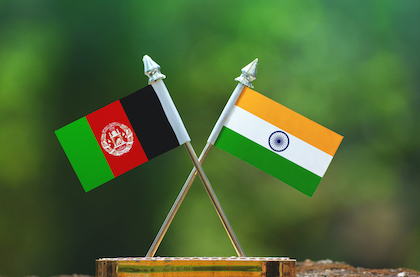
India should stop looking at Afghanistan through the Pakistan prism and be a major contributor in the development of peace and prosperity in the country

 Courtesy: Shutterstock
India should stop looking at Afghanistan through the Pakistan prism and be a major contributor in the development of peace and prosperity in the country
 Courtesy: MEA/Flickr
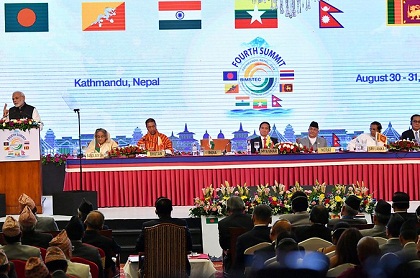
South Asia’s speedy economic development depends on the level of integration between countries in the region. The South Asian Association for Regional Cooperation (SAARC) and the Bay of Bengal Initiative for Multi-Sectoral Technical and Economic Cooperation (BIMSTEC) have lost their momentum. But both platforms have their uses and can be revived creatively
 Courtesy: Shutterstock
U.S. President Donald Trump's recent visit to India gave a boost to bilateral energy ties. To really benefit, India’s state-owned oil companies should consider investing in U.S. shale oil. The U.S. is politically and economically stable and investors are not subject to arbitrary action. Indian companies should only be financial investors, not operators of assets, and bet on companies with manageable debt and efficient operations rather than short-term winners
 Courtesy: Shutterstock
The signing of an agreement between the U.S. and the Taliban on February 29 may result in the withdrawal of U.S. troops from Afghanistan, which is contingent upon the Taliban’s adherence to certain conditions. The end of the West’s 19-year-long Afghan campaign – if Pakistan does not turn spoiler – is of vital interest to India
 Courtesy: Gateway House
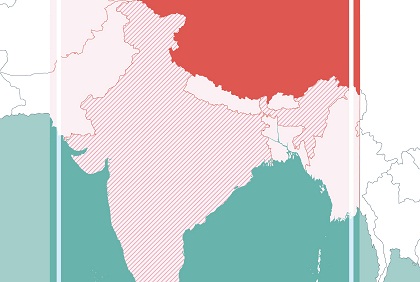
Over the last five years, China has quietly created a significant place for itself in India – in the technology domain. While India has refused to sign on to China's Belt and Road Initiative (BRI), this map shows India's positioning in the virtual BRI to be strategically invaluable for China. Nearly $4 billion in venture investments in start-ups, the online ecosystem and apps have been made by Chinese entities. This is just the beginning; there is much more to come.
 Courtesy: MEA/Flickr
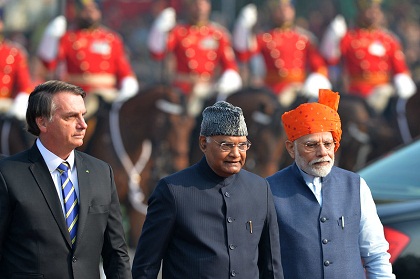
President Jair Bolsonaro’s visit to India in January helped correct the view that India-Brazil ties belong more in a multilateral forum. The accent this time was on the two countries’ congruence of interests amidst the current climate of geopolitical uncertainty and complex multipolarity and the scope for enhanced cooperation in four focus areas
 Courtesy: Shutterstock
India's Budget 2020 has just allocated Rs 8,000 crore to the Department of Science and Technology for the development of quantum technology, i.e. the use of quantum physics for computation. This opens up a wealth of possibilities and cybersecurity vulnerabilities too, but it is a sign of the Indian government’s seriousness in protecting the nation’s cyber infrastructure
 Courtesy: Shutterstock
The upcoming Financial Action Task Force (FATF) plenary session 16-21 February will be crucial for both Pakistan and Iran as the anti-money laundering and anti-terrorist financing measures undertaken by the two countries will be reviewed by the 39 member states of the FATF. Decisions will be taken on their retention or removal from the grey list and black list respectively
 Courtesy: MEA/Flickr
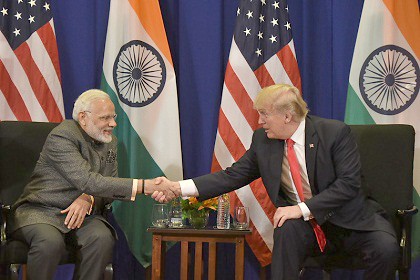
U.S. President Donald Trump’s first presidential visit to India later this month bodes well for bilateral relations. It is a continuing foreign policy success story for the two countries extending through four U.S. administrations and three Indian ones. A curtain raiser on what to expect.
 Courtesy: Shutterstock
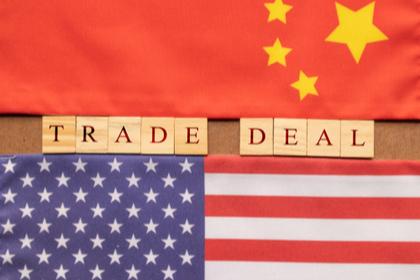
The U.S.-China Trade Agreement, concluded on 15 January 2020, was the result of a trade war. It is limited to agriculture, mainly, and select service sectors of American interest, with provisions designed to prevent imbalances and distortions