A clarion call to study BRICS
The launch of the BRICS Universities League in Shanghai is an important effort for the five nations to understand each other and define their place in global governance

 Courtesy: Blog do Planalto
The launch of the BRICS Universities League in Shanghai is an important effort for the five nations to understand each other and define their place in global governance
 Courtesy: Jacques Delarue/Wikimedia Commons
The leaderless protests are upending traditional definitions of leadership and forms of hierarchy. Instead, the protestors are seeking some form of direct democracy and dignity.
 Courtesy: Semilla Luz/ Flickr
The protests in Brazil, Turkey, Egypt and India are bound by a common thread of grievances against misuse of government power and corruption. These modern protests show a marked decline in government trust, even though may not always have clear objectives
 Courtesy: Legaleagle86/Wikimedia Commons
Policy Perspectives from Gateway House give an overview of a global issue that has implications for India’s policy-making and business community. This edition focuses on the global IPR framework and the need for new business models that can cater to public health concerns
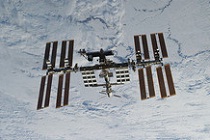 Courtesy: NASA's Marshall Space Flight Center/Flickr
An increase in the global demand for rare earth elements, used in high-technology industries, coupled with limited supplies on Earth, has accelerated extra-terrestrial exploration. International cooperation and competition for these space-based resources will determine the next human footprint and race in space.

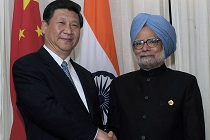
In 1990, the erstwhile South Commission recommended the creation of a 'South Bank' to aid the economic emancipation of the global South. Can the BRICS bank, which was discussed in length at the 5th BRICS Summit, provide a solution to the problems of the crisis-ridden African continent? Devaki Jain blogs
 Courtesy: Ministry Of External Affairs, India
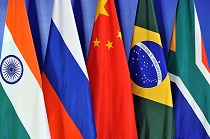
Indian foreign policy has not yet addressed the ramifications of Chinese economic dominance in BRICS. Nor have we matched China’s engagement within the group to ensure that the BRICS vision of a new international order for emerging economies actually works in their favour.
 Courtesy: Government/ZA/Flickr
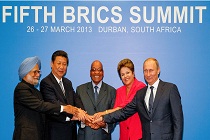
At the 5th BRICS Summit that begins in South Africa today, the heads of state of Brazil, Russia, India, China and South Africa are expected to ratify the creation of the BRICS Bank. After discussion and study for over a year by the respective governments, the bank will be launched with seed money estimated at between $50 billion to $100 billion, and most likely an equal share of voting rights for the management of the bank. What remains
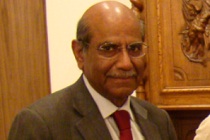
The establishment of a BRICS Development Bank will be among the prime topics of discussion at the BRICS Summit on March 26. Gateway House’s Akshay Mathur interviews former Indian Ambassador and Foreign Secretary, Shyam Saran, on the prospects and viability of alternate financial architectures.
 Courtesy: Shwkyn231/Flickr
The year 2012 has been a busy one for foreign policy: from escalating disputes in the South China Sea to alternate financial instruments from the emerging world. India’s foreign policy too has its shown strengths and weaknesses. We present our top foreign policy Hotspots, Sweet spots and Blind spots for 2012.