The Quad gathers steam Courtesy: Twitter | @AP
3 October 2021

The Quad gathers steam

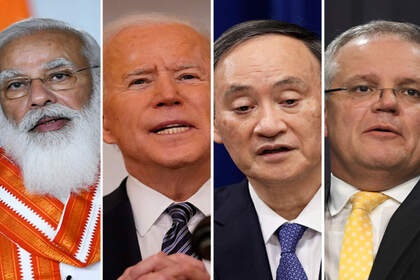
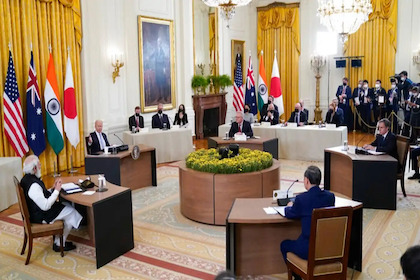
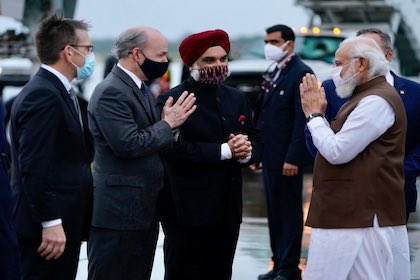
The first in-person Quad Leader's Summit drew global attention for its symbolism and substance. A critical analysis of its outcome shows that the institutionalisation of the organisation has begun. India has a chance to work with the advanced economies, on an equal footing and with much to contribute.

Quad amidst a geopolitical flux Courtesy: Twitter | @narendramodi
23 September 2021

Quad amidst a geopolitical flux

On September 24, the Quad leaders will attend the first in-person summit of the grouping in Washington DC. There is much to discuss for the four leaders, given recent developments: the Taliban takeover of Afghanistan, the Australia-UK-US (AUKUS) security partnership and the EU's new Indo-Pacific strategy. The Quad also needs to focus on long term goals like institutionalising itself and devising a strategy to counter the China challenge.

afghanistan airport Courtesy: Haroon Sabawoon
13 August 2021

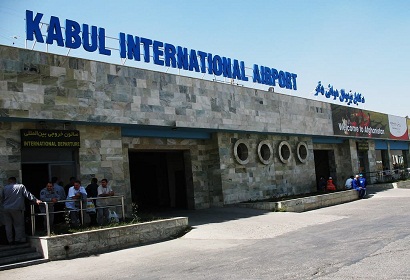
Afghanistan: Limited options for regional powers

The Taliban’s rapid advance towards Kabul shows clear signs of learning from previous failures. The chances of a revival of the old Northern Alliance are minimal. Regional powers are left with the option of maintaining diplomatic contact with the Taliban whilst not taking any assurances on trust.

jpg Courtesy: The Times of India
12 August 2021

Deep dive: The Quad

In an interview with Garrison Moratto of The New Diplomatist, Amb. Rajiv Bhatia, Distinguished Fellow, Foreign Policy Studies, counters China's claims that the Quad is an "Asian NATO." He highlights how the India-U.S.-Japan-Australia Quadrilateral initiative aims to increase cooperation in the Indo-Pacific on international law and security. This podcast delves into the history of the Quad's formation, current strategic characteristics, and future geopolitics, ahead of the fall in-person Leaders' Summit in the U.S.

Sanctions,-,Just,Ahead Courtesy: Shutterstock
5 August 2021

Are counter-sanctions effective against sanctions?

Sanctions are an important foreign policy tool, used especially by the West against its adversaries. Now, these rivals are retaliating with counter-sanctions. Are these effective? How does this impact global politics? Where does India stand in this free-for-all sanctions era?

Lisa Curtis and Surjit Bhalla Courtesy: CNBC-TV18 (Youtube)
5 August 2021

Quad collaboration on economics and technology

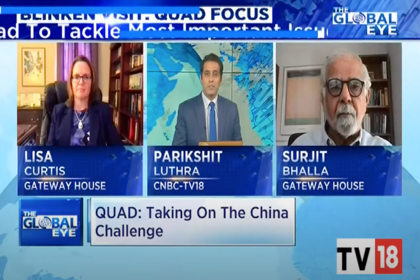
On 30 July 2021, Lisa Curtis and Surjit Bhalla, co-chairs of the Gateway House Quad Economy and Technology Task Force, spoke to CNBC-TV-18 on the various channels of cooperation between the Quad countries in technology, supply chains and undersea cables, and the need to counter China's dominance in the Indo-Pacific.

sanctions and counter-sanctions Courtesy: Shutterstock
15 July 2021

Sanctions and counter-sanctions

For years, Western countries have used sanctions as a means of economic warfare against their adversaries. Now, China and Russia are utilising the same tactic against the West. The United Nations Security Council is paralysed by differences between the five permanent members, leaving the tools of unilateral sanctions and counter-sanctions to proliferate at the cost of UN-approved multilateral sanctions.

Source: Shutterstock Courtesy: Shutterstock
15 June 2021

Shaping the Israel-India-U.S. defense technology partnership

The idea of a U.S.-India-Israel trilateral cooperation is not unknown, but rather unfulfilled. Diaspora associations have repeatedly raised the idea of a technology triangle amongst the three countries, and in 2020, the three countries explored a potential cooperation in 5G communication technology. On these terms, taking advantage of the bilateral synergies and establishing a start-up corridor between Tel Aviv, Silicon Valley, and Bengaluru, can launch this partnership.