INDIA-TAIWAN Courtesy: Shutterstock
29 July 2021

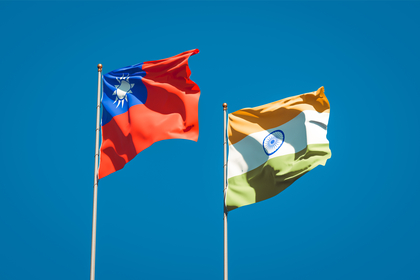
India can support Taiwan at the WHA

Taiwan was one of the few countries to successfully contain COVID-19 during the pandemic. But China's influence led to Taiwan losing its observer status in the World Health Assembly (WHA), the WHO's decision-making body, in 2017, preventing learnings from Taiwan to be implemented. The G7 and Japan have already backed Taiwan’s reinstatement. India can use its chairmanship of the WHA to rally more support and change the status quo.

Countering China's Maritime Greyzone activities Courtesy:
22 July 2021

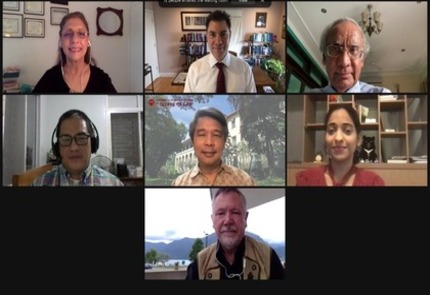
Countering China’s Maritime Grey Zone Activities

On 15 July, Gateway House co-hosted a webcast with Konrad-Adenauer-Stiftung (KAS) on 'Countering China’s Maritime Grey Zone Activities'. The panel discussed the potential strategies that smaller nations in the region can adopt to overcome the challenges of Chinese maritime grey zone activities, and the role of regional maritime powers in capability-building of maritime law enforcement agencies.

sanctions and counter-sanctions Courtesy: Shutterstock
15 July 2021

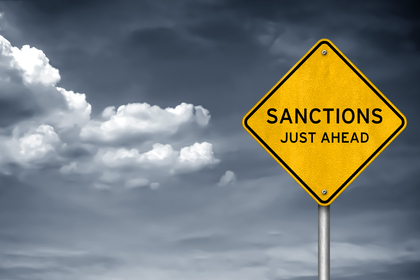
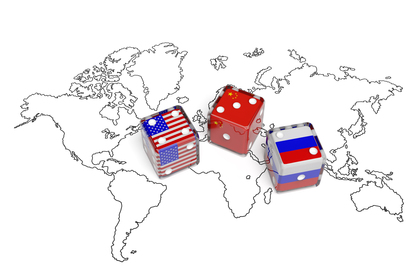
Sanctions and counter-sanctions

For years, Western countries have used sanctions as a means of economic warfare against their adversaries. Now, China and Russia are utilising the same tactic against the West. The United Nations Security Council is paralysed by differences between the five permanent members, leaving the tools of unilateral sanctions and counter-sanctions to proliferate at the cost of UN-approved multilateral sanctions.

Securing India's energy needs Courtesy: Shutterstock
8 July 2021

Securing India’s energy needs

India’s oil consumption and imports are likely to resume their upward trajectory as the economy opens up, after a temporary drop due to the pandemic. To secure its energy needs, the country should shift course from investing in oil and gas assets of emerging economies to those of developed nations. The oil-rich Organisation for Economic Co-operation and Development (OECD) countries, such as Canada, Norway, and the U.S. can be given special consideration.

Source: Shutterstock Courtesy: Shutterstock
15 June 2021

Shaping the Israel-India-U.S. defense technology partnership

The idea of a U.S.-India-Israel trilateral cooperation is not unknown, but rather unfulfilled. Diaspora associations have repeatedly raised the idea of a technology triangle amongst the three countries, and in 2020, the three countries explored a potential cooperation in 5G communication technology. On these terms, taking advantage of the bilateral synergies and establishing a start-up corridor between Tel Aviv, Silicon Valley, and Bengaluru, can launch this partnership.

Source: Shutterstock Courtesy: Shutterstock
3 June 2021

The Quad hits its stride

As China’s global competitive edge is sharpening across the military, economic, diplomatic, and technological domains, it is clear that the extent to which the Quad countries (Australia, India, Japan, and the United States) can collaborate across all four domains will be an important factor in determining whether China’s hegemonic designs on the Indo-Pacific will succeed.

eu-india: intentions, with results Courtesy: Shutterstock
13 May 2021

EU-India: Intentions, with results

The India-EU summit held May 8, was more ambitious than previous ones. Now the summit’s words must turn into action, an effort that will require continuous discussion, patient negotiation and uninterrupted dialogue between Delhi and Brussels. Will the two capitals be willing to compromise and find common ground that they have not managed to demonstrate before?

P051085-560456 Courtesy: European Commission
13 May 2021

India-EU: Everything is in place

This India-EU summit was different from the ones past, and India is a significant gainer. A trade agreement and connectivity partnership aside, the EU has stepped up to help India during this emergency, viewing it not as a weak state but as a partner in distress. The geopolitical indicators for an enhanced engagement are now also in place.