Maritime India’s Global Destiny
With the 21st century being heralded as the 'century of the seas', there is much need for India to reclaim its historically dominant maritime position in civilian and military endeavours.

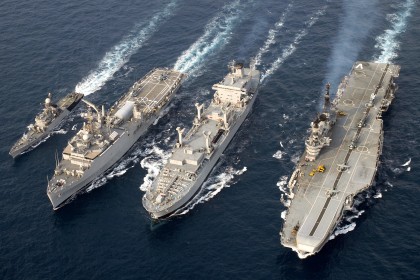 Courtesy: http://nausena-bharti.nic.in/
With the 21st century being heralded as the 'century of the seas', there is much need for India to reclaim its historically dominant maritime position in civilian and military endeavours.
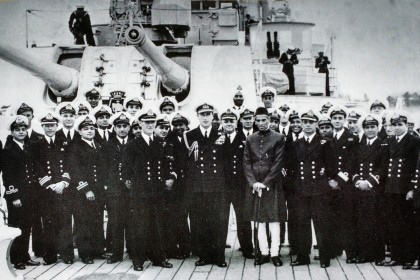 Courtesy: A Salute to the Sword Arm
15 August 1947 saw the division of more than a country. There were other spoils that were split: the Royal Indian Navy was one of them. This included not just a division of assets, but also of staff, whom the British Royal Navy had trained. This led to a piquant situation
 Courtesy:
Gateway House: Indian Council on Global Relations, in partnership with Istituto Affari Internazionali (IAI) – one of Italy’s leading think tanks on international affairs, participated in the European Union- India Think Tanks Twinning Initiative for the year 2016. Titled: ‘Moving forward the EU-India Read more
 Courtesy: Wikipedia
Does India plan to remodel its Andaman & Nicobar Islands as a launching pad for future security operations to check growing Chinese inroads in the Indian Ocean Region? Development of the islands has long been ignored to India’s detriment, and their strategic position in the Indian Ocean, underutilised.
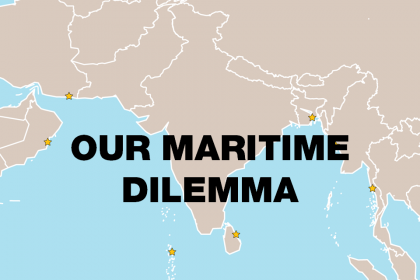 Courtesy:
After decades of passivity, India is beginning to assert itself in the maritime arena. There is a whiff of salt in the usually 'sea-blind' corridors of Delhi, where the Modi government clearly sees the linkage between the possession of maritime wherewithal, both civilian and military, and the furthering of national prosperity, through ever-increasing trade.
 Courtesy: Wikimedia commons
China's belligerence in the South China Sea is causing anxiety in India. India needs to strengthen its stance on the situation to maintain preponderance in the region which holds great significance to its trade.
 Courtesy: qdkfqsz.com
Prime Minister Modi's Fiji visit is a chance to broaden and deepen the relationship between India and the South Pacific. Promoting an inclusive policy that engages civil society and the private sectors of both countries, will be a step in the right direction in order to regain lost ground due to years of neglect
 Courtesy: U.S. Navy photo/Journalist 1st Class Todd Macdonald
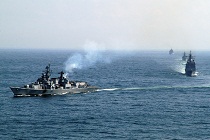
India’s invitation and the subsequent participation of the Japanese navy in the Malabar 2014 exercise is a sign of the deepening of the political-security relationship between India and Japan. However, an actual fruition of the potential requires both the administrations to be more flexible, especially on the nuclear deal and defence purchases
 Courtesy: Seaman James R. Evans/Wikimedia Commons
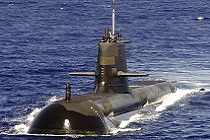
Australia is the second largest naval power among the Indian Ocean states and its submarine fleet represents its principal strategic force. Australia will be replacing its fleet with some of the largest and most capable conventional submarines in the world. Its decisions could hold important lessons for India
 Courtesy: Eugenio/Wikimedia Commons
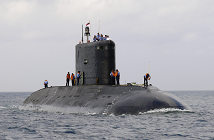
A string of tragic accidents, an ageing fleet of sub-marines and a lack of vision are hampering the Indian Navy’s growth as a regional force. The new government will have to rethink the system of defence purchases and invest in indigenisation to optimise the strength of the Indian armed forces