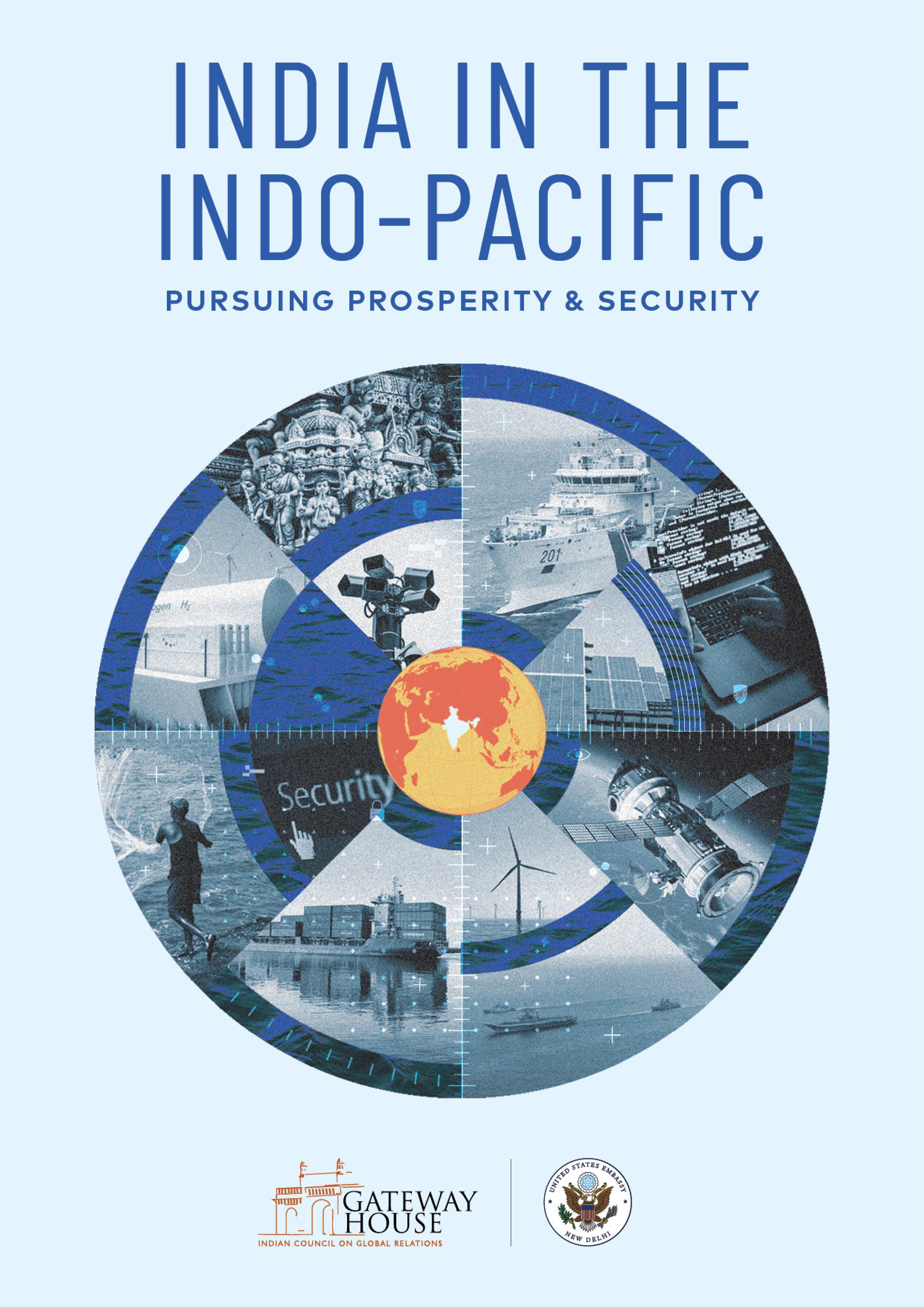
India in the Indo-Pacific cover Courtesy: Gateway House
1 February 2022

India in the Indo-Pacific: Pursuing Prosperity and Security

The Indo-Pacific has become an important part of global geopolitics in the recent past, with several great powers implementing concerted Indo-Pacific policies to create economic, social and security linkages with the region. India can use its development experience and futuristic technology to secure stability and prosperity. This compendium of essays explores the comprehensive role that India can play in the Indo-Pacific, from energy and environment, to trade, security, technology and a vibrant diaspora.

Geopolitical contestations in cyberspace
27 December 2021

Geopolitical contestations in cyberspace

On 20 December 2021, the Gateway House-FLAME Policy Lab organised a webcast on geopolitical contestations in cyberspace. Gateway House’s Sameer Patil moderated the discussion with former deputy National Security Advisor Latha Reddy, National Law University’s Gunjan Chawla and cybersecurity expert Atul Khatavkar.

Pakistan is India's new cybersecurity headache Courtesy: Technology Times
11 November 2021

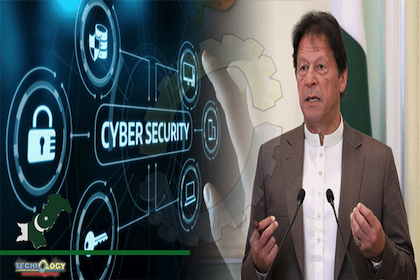
Pakistan is India’s new cybersecurity headache

Cyberattacks from Pakistan-based hacker groups targeting India have increased. The stepped-up cyber activity comes in the backdrop of Islamabad's new cyber security policy and expanded digital cooperation with China. India must bolster its existing abilities in cyber forensics and regulations to counter the enhanced Pakistani threat.

GrandStrategy-Cover (1) Courtesy: Brick Tower Press
14 October 2021

American tech companies in China

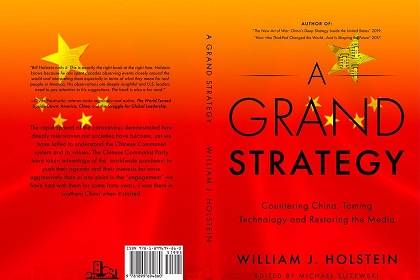
Xi Jinping's crackdown on private tech companies in China has shattered hopes of Beijing being a 'responsible stakeholder' in a U.S.-led world order. American CEOs are also silent on how their tech products are used in China, especially artificial intelligence. The Federal Government should engage with these CEOs to moderate the proliferation of sensitive technology and prioritise national security.

quad_ 420x280 Courtesy: Twitter | @narendramodi
14 October 2021

Cyber resilience in the Quad

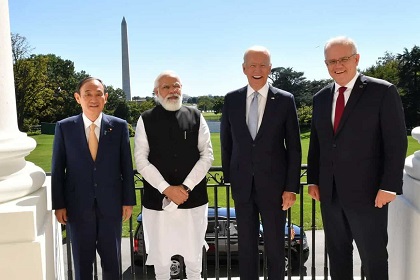
The recent Quad Leaders' Summit set cybersecurity cooperation as a priority for the four countries. The Quad leaders also announced the creation of a Senior Cyber Group, a joint effort on establishing cyber standards and security. This builds on an already-robust collaboration, especially since Quad members have shared cyber threat perceptions.

jpg Courtesy: The Times of India
12 August 2021

Deep dive: The Quad

In an interview with Garrison Moratto of The New Diplomatist, Amb. Rajiv Bhatia, Distinguished Fellow, Foreign Policy Studies, counters China's claims that the Quad is an "Asian NATO." He highlights how the India-U.S.-Japan-Australia Quadrilateral initiative aims to increase cooperation in the Indo-Pacific on international law and security. This podcast delves into the history of the Quad's formation, current strategic characteristics, and future geopolitics, ahead of the fall in-person Leaders' Summit in the U.S.

Sanctions,-,Just,Ahead Courtesy: Shutterstock
5 August 2021

Are counter-sanctions effective against sanctions?

Sanctions are an important foreign policy tool, used especially by the West against its adversaries. Now, these rivals are retaliating with counter-sanctions. Are these effective? How does this impact global politics? Where does India stand in this free-for-all sanctions era?

Lisa Curtis and Surjit Bhalla Courtesy: CNBC-TV18 (Youtube)
5 August 2021

Quad collaboration on economics and technology

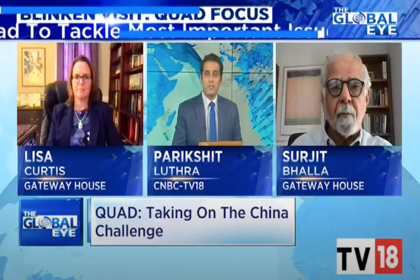
On 30 July 2021, Lisa Curtis and Surjit Bhalla, co-chairs of the Gateway House Quad Economy and Technology Task Force, spoke to CNBC-TV-18 on the various channels of cooperation between the Quad countries in technology, supply chains and undersea cables, and the need to counter China's dominance in the Indo-Pacific.

attributing cyber-attacks Courtesy: Shutterstock
15 July 2021

Attributing cyber-attacks

A ransomware attack recently targeted Kaseya, a software services company in the U.S., for $70 million, incapacitating hundreds of its clients globally. There is an increasing incidence of such attacks, with perpetrators targeting government agencies and high-tech companies, leading to considerable economic losses. How can governments mitigate these threats and attribute responsibility to those accountable?

sanctions and counter-sanctions Courtesy: Shutterstock
15 July 2021

Sanctions and counter-sanctions

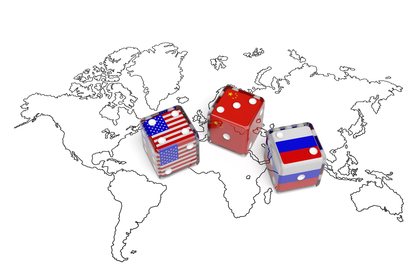
For years, Western countries have used sanctions as a means of economic warfare against their adversaries. Now, China and Russia are utilising the same tactic against the West. The United Nations Security Council is paralysed by differences between the five permanent members, leaving the tools of unilateral sanctions and counter-sanctions to proliferate at the cost of UN-approved multilateral sanctions.