Israel-Saudi Courtesy: Wikipedia
13 July 2015

Reassessing our Israel, Arab engagement

The announcement in June of a Saudi-Israeli alliance against Iran has to be seen in the context of the strategic dimensions of India’s relations with Saudi Arabia, Israel, Iran, and the U.S. And it has far-reaching implications for India’s policy towards West Asia

Middle Powers Courtesy: Wikimedia Commons
2 July 2015

Why middle powers matter to India

Narendra Modi, who spent nearly two months abroad in his first year as prime minister, helped India cultivate a wide range of bilateral and multilateral relationships. But of these, it will be the middle powers that hold the key, economically and geopolitically to India’s growth and security, and Modi must continue to widen his middle powers arc

UN_Yoga_Day Courtesy: MEA Flickr
18 June 2015

International yoga day

The growing popularity of yoga across the world—highlighted by the International Yoga Day on June 21—is a triumph for those seeking to promote holistic knowledge systems and therapies for human well-being, and the recognition by the UN could strengthen public spending in support of such therapies across the world

Modi walking Courtesy: Ministry of External Affair, Flickr
11 June 2015

Bangladesh and beyond

Prime Minister Narendra Modi’s completion of the South Asia circuit demonstrates the importance of the neighbourhood in his government’s foreign policy. The improved perception of India in the neighbourhood, especially in Bangladesh and Sri Lanka, is a positive, but the neighbours must recognise that India’s federal structure makes decision-making slower and more difficult on issues that affect neighbouring Indian states like West Bengal and Tamil Nadu.

Iron ore Courtesy: Peter Craven/Wikipedia
3 June 2015

India-China deficit: beyond iron ore

A distinguished Chinese scholar, speaking at a BRICS forum in Moscow recently, ascribed the growing India-China trade deficit to India’s ban on iron exports. While this contention is partially true, the data does not validate this argument, and nor does his view account for the other reasons for the deficit

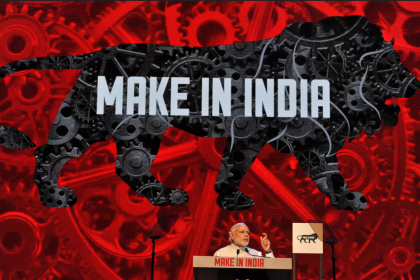
Indian Prime Minister Narendra Modi, center, unveils the logo of 'Make in India' initiative in New Delhi, India, Thursday, Sept. 25, 2014. Scores of business leaders from India and abroad attended the launch of the initiative where in the Indian Prime Minister called on manufacturers across the globe to come and make India a manufacturing hub. (AP Photo/Saurabh Das) Courtesy: Wikipedia
28 May 2015

Modi 365: Repositioning India globally

On the occasion of the BJP government’s one-year anniversary, Neelam Deo, director, Gateway House, delivered a series of lectures across the U.S., analysing Modi’s foreign policy. His energetic style, she said, has created several milestones—including a revival of relations with the U.S. and Russia, and a new approach to China and to India’s neighbourhood—that can cumulatively transform India’s growth trajectory. This is an abridged version of her lecture: