The Way Forward: Towards 25th Anniversary of ASEAN-India Relations
Ambassador Rajiv Bhatia participated as a panelist at edition VIII of the Delhi Dialogue hosted by IDSA.


Ambassador Rajiv Bhatia participated as a panelist at edition VIII of the Delhi Dialogue hosted by IDSA.
 Courtesy: PTI
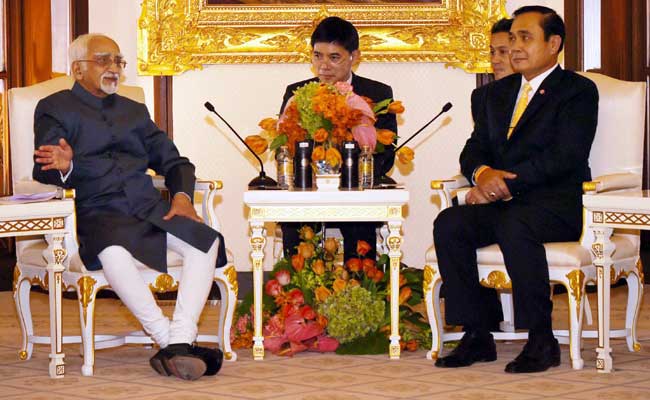
Vice President Ansari’s recent visits to Brunei and Thailand provided further clarity to the Act East Policy while advancing its implementation. He effectively showcased that the rationale for a strong India-ASEAN strategic partnership is sharper than before.
 Courtesy: Madaki/Wikimedia Commons
After respite from the U.S. government, Cuba now faces the daunting task of reviving its economy without having to give up on its political ideology. The Singaporean model of limited democracy is something Cuba could emulate.
 Courtesy: file photo/Xinhua, Wikipedia
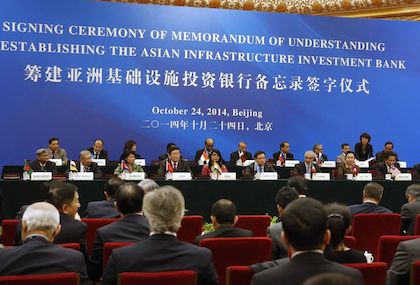
The AIIB is a step along a path that started with the Asian financial crisis, which defined ASEAN’s views about the U.S.’s commitment to the region. Although the bank may signal the rise of China, it is also a coming together of Chinese and ASEAN goals—ASEAN’s focus on infrastructure for growth requires another source of finance, and this forecasts its strong relationship with the AIIB
 Courtesy: Jennifer Le/Flickr
Lee Kuan Yew transformed a “pestilential and immoral cesspool” into a glittering global city with the world’s highest per capita income and the highest percentage of home ownership. Lee also had grand vision for the role that India could play in Asia.
 Courtesy: wikimedia
After bilateral meetings, the thrust for Prime Minister Modi will now change with various multilateral summits coming up, starting with India-ASEAN and the East Asia Summit next week. These are opportunities to expand India’s regional position and economic links, and address issues such as terrorism and a rising China
 Courtesy: MEA/Government of India
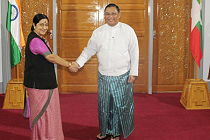
Myanmar, currently listed as one of the least developed nations by the UN, provides its neighbouring countries the opportunity to invest in one of the world’s last few business frontiers. Sushma Swaraj on her maiden visit to Nay Pyi Taw should continue to strengthen ties based on economic goals to develop largely underdeveloped areas along the common border as well use Myanmar’s increasing weight in the ASEAN grouping
Dr. Kanti Bajpai, Professor, Lee Kuan Yew School of Public Policy, Singapore, talks about the reasons for the breakdown in the India-U.S. bilateral. In an interview to Gateway House, he also examines the recent strides taken in deepening India-Japan ties and the new government’s priorities in East Asia
 Courtesy: Gateway House
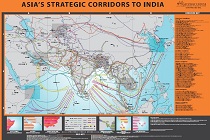
The map – Asia’s Strategic Corridors to India – has emerged from Gateway House’s study of India’s strategic links with other parts of Asia. It highlights the progress India has made in forging multiple links with six strategic regions – Central Asia, West Asia, East Africa, South-East Asia, East Asia, and our immediate neighbourhood
 Courtesy: Ministry of External Affairs, India
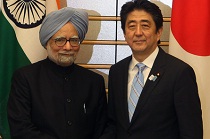
During his visit to Japan, Prime Minister Manmohan Singh spoke of the need to increase bilateral consultations on strategic issues. This, and other moves, indicate new developments in India’s Look East Policy, with alternative security and economic scenarios for regional actors in the context of the rise of China