On February 18, India and the United Arab Emirates (UAE) signed the Comprehensive Economic Partnership Agreement (CEPA). This is a modern trade agreement with its roots in the erstwhile Bombay Presidency’s administration of the nine Emirati kingdoms.
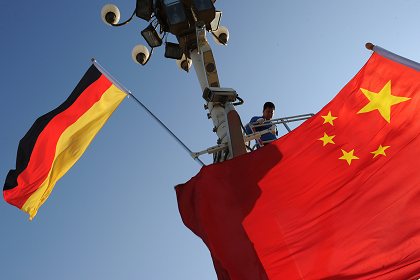
China has established a dominant presence in the Indo-Pacific through exploitative economic engagements. This has destabilised smaller nations in the region and made them dependent on Chinese support. For a free and open Indo-Pacific, India must press its advantage in human and economic capacity building.
The Sino-U.S. contestation is a central tenet of the Indo-Pacific. In this power tussle, the EU strategy for the region provides a new way to engage with partners in the "Third Space" for a free, open, and inclusive Indo-Pacific.
Pro-Khalistan organisations have collaborated with the ISI to disseminate anti-India narratives and influence the Indian diaspora. While this has little traction within the country, there is a need for India to extend support to those expatriate Indian communities which are actively countering the misinformation spread by these organisations and Pakistan-sponsored fringe groups.
The unprecedented consensus within the EU in accepting Ukrainian refugees presents it as a global humanitarian power. But is this truly a ‘paradigm shift’ or is it a continuation of the West European Cold War strategy, based on a moral high ground narrative, of accepting people who had fled the ‘evil and undemocratic’ Soviet-bloc countries during and after World War II?
On 16 March 2022, Foreign Secretary, Harsh Vardhan Shringla, delivered the keynote address at the first roundtable of the India-France Track 1.5 Dialogue, co-hosted by Gateway House and Ifri. He traced the achievements of the bilateral, particularly in the areas of digital cooperation and energy transitions. He highlighted the "infinite possibilities" for the India-France partnership given their unique positions in the Indo-Pacific.
India and France have been actively working together to solve various sustainability issues from renewable energy generation to the blue economy and biodiversity conservation. There is so much more to do bilaterally with climate finance and urban sustainability, and multilaterally with the G20. All the ingredients are in place for a robust climate partnership.
India and France have common interests bilaterally and multilaterally, and these are increasingly forging together. India must now step up its commitments to trade, technology and defence, all areas where France has an expertise and can make a greater contribution as India’s old allies like Russia become vulnerable.
The Quad Foreign Ministers' meeting held on February 11 is the latest example of growing geopolitical cooperation. Several loci of power have emerged, indicating the end of the post-Cold War western hegemony. China's rise and alliance with Russia hints at a bipolar tendency in this nascent global multipolarity. India must ensure power distribution in Asia by sharpening its diplomacy to achieve its own interest - true multipolarity in Asia.
On 1 February 2022, Gateway House and the U.S. Embassy, New Delhi, co-hosted a panel discussion on India in the Indo-Pacific: Pursuing Prosperity and Security. The panelists explored the comprehensive role that India can play in the Indo-Pacific from the perspective of business, think tanks, academia and diplomacy.