ASEAN-India Connectivity
The following remarks were given by Ambassador Rajiv Bhatia, Distinguished Fellow, Foreign Policy Studies, Gateway House as a speaker at the ASEAN-India Business Summit on November 27, 2018.
Courtesy: MEA/Flickr
The following remarks were given by Ambassador Rajiv Bhatia, Distinguished Fellow, Foreign Policy Studies, Gateway House as a speaker at the ASEAN-India Business Summit on November 27, 2018.
Courtesy: Gateway House
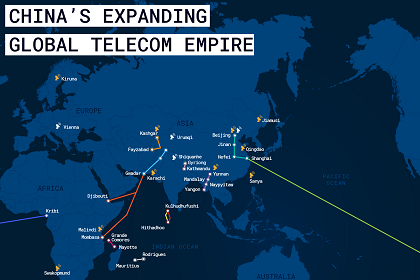
This version of the Gateway House Map on China’s Expanding Global Telecom Empire identifies some more telecommunication assets -- optic-fibre and satellite ground stations -- that Beijing is working on in South and Central America, Africa, Myanmar, the Indian Ocean Region and mainland China besides the existing ones, such as the Pakistan East Africa Cable Express (PEACE). It shows the direction China’s investment is taking, its diplomatic overtures and the larger geopolitical implications of its growing telecom empire
Courtesy:
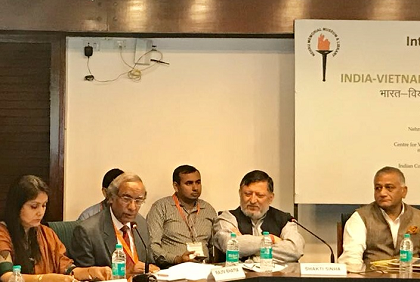
The following remarks were given by Rajiv Bhatia, Distinguished Fellow, Foreign Policy Studies, Gateway House at the international conference on India-Vietnam: Strengthening Economic Ties July 26-27, 2018.
Courtesy: Zee News
Indonesia and Malaysia appreciate India’s leadership role in the Indo-Pacific, but are also aware of all that keeps it from delivering on its commitments. A policy visit to the two countries enabled a closer look at some key issues, such as ASEAN’s centrality, the Quad and India’s stand on the Regional Comprehensive Economic Partnership
Courtesy:
The following remarks were given by Rajiv Bhatia, Distinguished Fellow, Foreign Policy Studies, Gateway House as chair of the session on Tourism Cooperation at Delhi Dialogue X on July 20, 2018
Courtesy: MEA/ Flickr
Change and uncertainty have marked geopolitical equations in the East Asian segment of the Indo-Pacific in the last six months. India-China relations changed visibly for the better while the U.S.-China trade war became more polarised. The Quad remained inert as did negotiations on the proposed Code of Conduct for the South China Sea. An analysis of some of the major trends
Courtesy: Narendra Modi/ Twitter
Religion is an important component of the soft power countries use in their foreign policy. Yet, no Indian government has given Islam adequate prominence, especially in its interactions with South-East Asia, where the majority of people are Muslim
Courtesy:
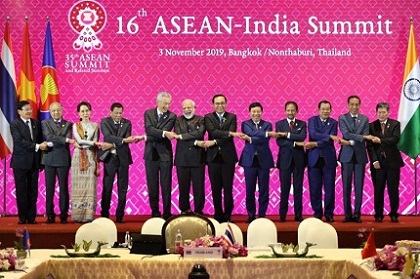
Prime Minister Modi's Act East policy is taking visible shape as leaders of the 10 Association of South East Asian Nations (ASEAN) take their place as chief guests at India's 2018 Republic Day celebrations. This is unprecedented as New Delhi’s January 26 celebration has never had this large a number of chief guests. The year 2017 marked 50 years of ASEAN’s creation, and also 25 years of India-ASEAN relations.
Courtesy: MEA/ Flickr
This is a partnership that has been based on mutuality, economic cooperation and undisputed political closeness ever since ASEAN’s inception. Now, the path into the future has to be different: creating a new security architecture and determining ASEAN’s role in the Quad are overarching questions that cannot be wished away
Courtesy:
Ambassador Rajiv Bhatia, Distinguished Fellow, Gateway House gave a presentation on ‘Regional and Bilateral Co-operation’ at the Conference on India-ASEAN Partnership@25, New Delhi