BRI: reviving Turkish business?
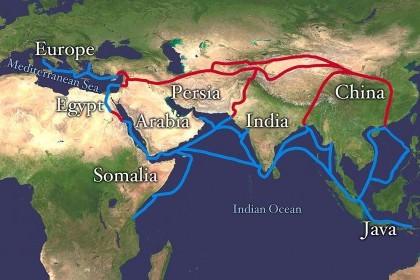
Experts at a recent conference on China’s Belt and Road Initiative, hosted in Istanbul, spoke of its many advantages to the region, but also on the challenges involved in attracting financing

 Courtesy: Wikipedia
Experts at a recent conference on China’s Belt and Road Initiative, hosted in Istanbul, spoke of its many advantages to the region, but also on the challenges involved in attracting financing
 Courtesy: Haaretz
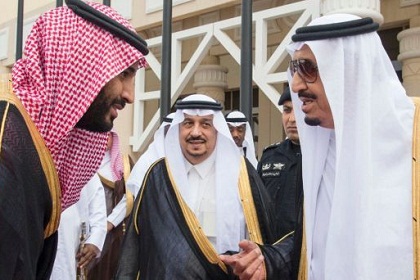
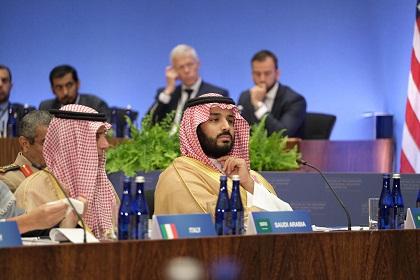
Dynasty has its own reasons and the 40 decrees that King Salman issued last month were designed to hand more power to the Salman branch of the House of Saud. Is a promotion in the offing for his son, the deputy crown prince, Mohammed bin Salman? What does this bode for the country’s foreign policy? President Trump’s first foreign visit will be to Saudi Arabia later this month
 Courtesy: MEA/ Flickr
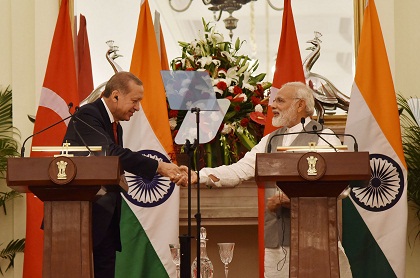
The newly powerful Turkish president’s visit led to both sides committing to a stronger economic relationship and boosting people-to-people contact, but it had its unacceptable moments, and India had prepared for its unpredictability of outcome
 Courtesy: Flickr
Prince Salman’s accession to the throne after the death of Saudi King Abdullah on 23 January 2015 has been a game changer, both domestically and in West Asian politics. Within days, he sidelined rivals within the House of Saud, and took on Iran with a confrontational policy. But two years later, the results of his new strategy disappoint
 Courtesy: MEA/Flickr
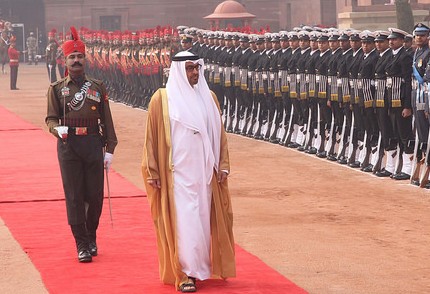
The West Asian monarchies are being forced to ‘look East’ due to a range of factors: the rise of the Islamic State, their need to boost falling oil revenues and doubts about the United States continuing to remain a guarantor of regional stability. Quite coterminously, India is looking towards the Gulf for energy security besides fulfilling other geostrategic goals: this is an ‘East’ and ‘West’ where the ‘twain will meet
 Courtesy: MEA flickr
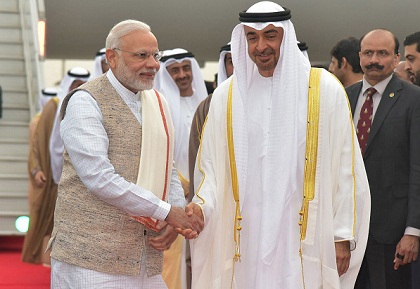
The choice of the Crown Prince of the United Arab Emirates (UAE) to be the chief guest at India’s 2017 Republic Day celebrations is an indication of the enhanced attention that the Indian government is according the Gulf countries. Many trade interests ally India to the UAE, but a deeper engagement is called for even as instability grows in the region
 Courtesy: Flickr/ResoluteSupportMedia
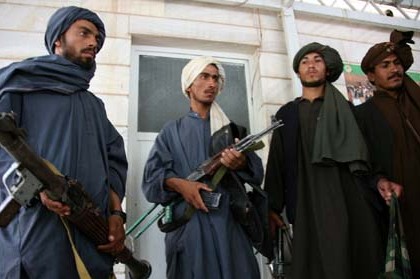
The Russians have concluded that the Afghan Taliban offer a better shield against the Islamic State than the old Northern Alliance. A negotiated settlement in Afghanistan could be achieved if Washington and New Delhi join Moscow, Beijing, Islamabad and Tehran in a joint effort.
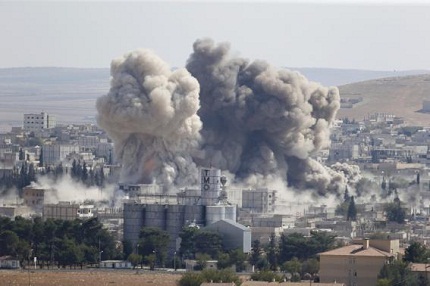
Aleppo is back under the control of the Syrian government, the Russian ambassador to Ankara is assassinated for his country’s role in Syria, and U.S. President-elect Donald Trump wants to cooperate with Russia to fight ISIS in Syria. These momentous events in modern history compel an assessment of the geopolitics surrounding Syria.
 Courtesy: Getty
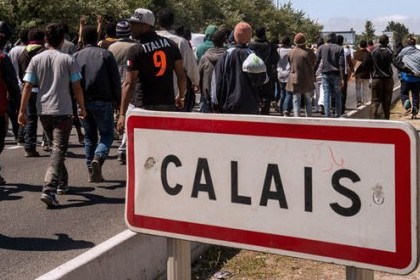
The French city, bordering the English Channel, is a symbol of the tension between Paris and London and the crisis in Europe as a whole. The dismantling of one refugee outfit here just made an already thorny issue pricklier.
 Courtesy: Reuters
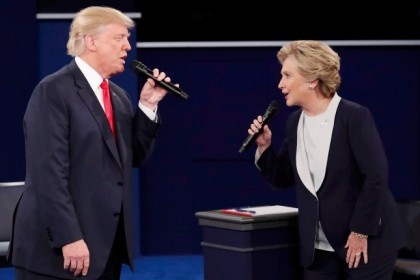
This excerpt was transcribed from The Gateway House Podcast episode, 'U.S. Elections: Trump’s down but not out' which is part of the special miniseries on the U.S. election and its foreign policy implications. In the episode, Ambassador Neelam Deo discussed the larger foreign policy implications mentioned by the presidential candidates at the second Presidential debate on Sunday night