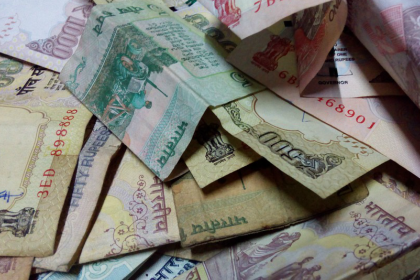
India must build the capacity to make its G20 presidency in the future a success
Our Director of Research, Akshay Mathur provides his views on India’s G20 presidency in 2022 in an op-ed for The Indian Express. Read the full article here.

 Courtesy:
Our Director of Research, Akshay Mathur provides his views on India’s G20 presidency in 2022 in an op-ed for The Indian Express. Read the full article here.
 Courtesy: Imarticus
A G20 discussion around fintech is needed because of the emergence of global technology giants as data intermediaries which are expanding into the financial services industry. This is resulting in regulatory risks and challenges. The panel on Fintech at the official Think20 Mumbai Roundtable, organised by Gateway House on 28 January 2019, could not be more timely
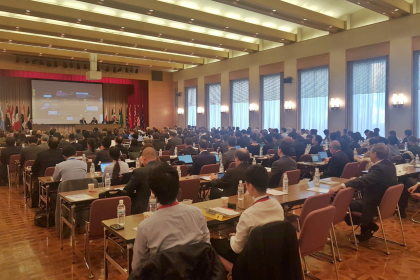 Courtesy: Gateway House
The Think20 Inception conference, held in Tokyo on December 4-5, 2018, kicked off the research process for 2019 for the leading think tanks from G20 countries that work on issues of global economic governance. The author participated in the conference as an observer.
 Courtesy: Competitive India
'Strategic OFDI’ is outward foreign direct investment made by nations in their strategic interests. China leads the way, but the U.S. has also just announced a new agency for strategic OFDI. It will now gain increasing salience in global foreign policy.
 Courtesy: Lifeforex
Basing the global oil trade on the Yuan instead of the U.S. Dollar is one leg of China’s bid to convert its currency into the international reserve currency, replacing the dollar-dominated global financial architecture. But many factors impede the Yuan from reaching the maturity required for its global adoption.
Economist Surjit S. Bhalla, who sits on the Prime Minister’s Economic Advisory Council, says all currencies, not just the rupee, have fallen against the U.S. dollar. Speaking to Gateway House’s Manjeet Kripalani, he elaborates on some diplomatic and domestic tools to stem the fall, even in an election year
 Courtesy: Legal Entity Identifier
Ten years after the global financial crisis, some reform has come about. To further transparency, the Legal Entity Identifier (LEI), proposed by the G20, is a code used to identify the parties that participate in financial transactions around the world. While its benefits and applications are abundant and will reduce systemic vulnerability, its global implementation is complex and slow. This primer shows why – and also why the LEI should be urgently and widely adopted
 Courtesy: Global Environment Facility
Since Independence, India has been consumed by its domestic priorities. Now, with increasing integration with the world and a huge stake in global stability, it is time to focus on the global commons. India has a seat on the hightable to design and shape the rules for the governance of the global commons. In this special Independence Day Briefing, Gateway House examines India’s engagement with four global commons – technology, outer space, cyber and the oceans – and makes recommendations on how best they can be governed for our collective future.
 Courtesy: Pexels
On the face of it, these digital or virtual currencies seem to be a brave new way to transact business or make an investment, but they also have inherent risks. A T20 proposal is seeking that the G20 devise a regulatory framework that places them on a level playing field with other financial instruments
 Courtesy: T20 Argentina 2018
In a policy brief for Argentina's G20 Presidency in 2018, K.N. Vaidyanathan, Akshay Mathur and Purvaja Modak discuss the challenge and propose policy recommendations for transparency in cross-border financial transactions