Developing the Hangzhou Action Plan
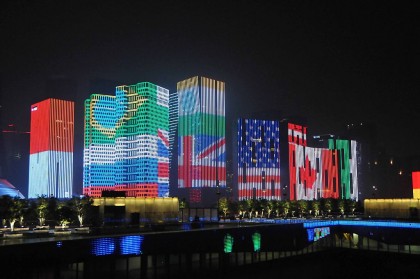
Global growth has become weaker than expected. Did the G20 at the Hangzhou Summit in September focus on reversing this trend and help build consensus in this direction?

 Courtesy: Getty Images
Global growth has become weaker than expected. Did the G20 at the Hangzhou Summit in September focus on reversing this trend and help build consensus in this direction?
 Courtesy: AP
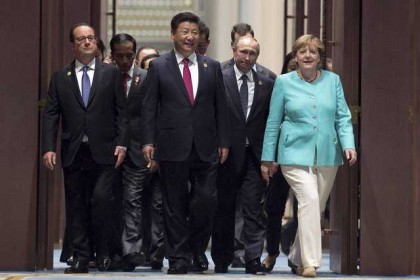
The IMF warned at the G20 Summit, held last week-end, that the world economy was growing “too slow for too long” and the G20, as a group, needed to provide some clear answers. What did the Chinese G20 presidency achieve? And what will Germany have to look at in 2017?
 Courtesy:
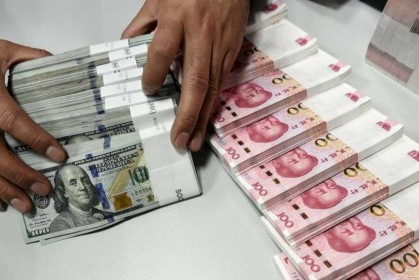
At the G20 summit in Hangzhou, leaders are expected to discuss the potential for strengthening the international monetary system and the conditions under which SDR could play an important role in this regard. This is a step that is well overdue but will require a major leap in international policy coordination.
China will be hosting the G20 Summit in Hangzhou on the 4-5 September 2016. Huang Wei, Director of Research, Department of Global Governance, IWEP-CASS, gave an interview on the sidelines of T20 Mumbai where she discussed how structural reforms can add energy to the world economy and help stabilise financial markets.
 Courtesy: Quartz
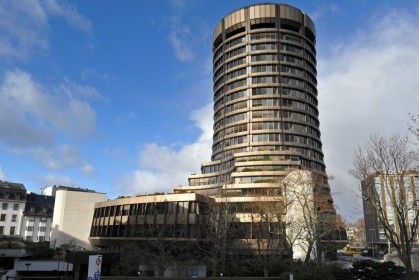
Regulations are the new focus of economic statecraft. Their increasing importance is reflected in the negotiations on global financial standards, plurilateral trading rules, and regional economic unions.
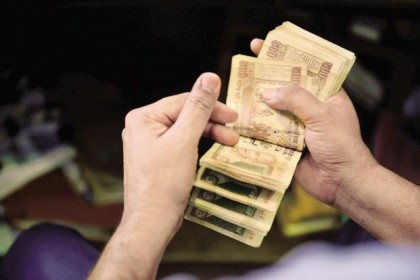 Courtesy: Livemint
Indian infrastructure financing has for long suffered from rating concerns, but recent changes to credit enhancement are helping to plug this gap, enabling investment by foreign insurance and pension companies, and stimulating project exports.
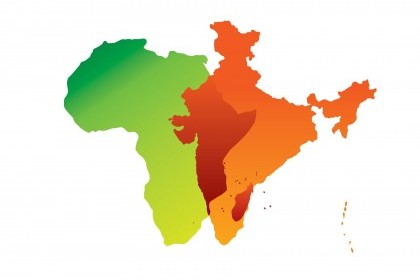 Courtesy: India Africa Forum Summit 2015
Prime Minister Modi’s tour of four African countries will seek to build upon recent high-level visits to the continent, providing fresh impetus for the reinforcement of India-Africa relations in matters of diplomacy, business, security, and energy while putting to rest criticism of India’s visibility deficit in Africa. However, the onus to harness this momentum now lies with other stakeholders.
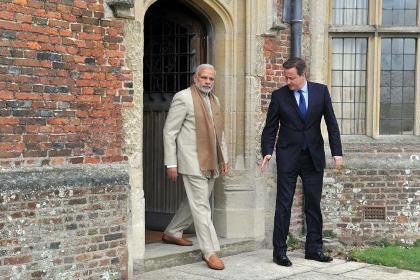 Courtesy: MEA / Flickr
The result of the Brexit referendum is nothing less than a body blow to Bretton Woods organisations, International Monetary Fund-North Atlantic Treaty Organisation (NATO)-World Bank, that originated at the end of the Second World War. The possibility of an Asian century becomes more feasible, if India can be nimble enough to make the most of the opportunity which has presented itself in Europe.
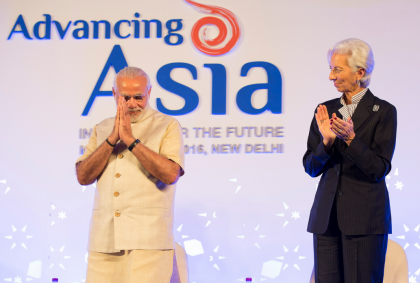 Courtesy: IMF / Flickr
India must be fully engaged in the emerging G20-led international policy agenda being developed to deal with global structural weaknesses and raise public investment where fiscal space is available. India and other emerging markets offer higher investment returns---partly because of their demographics---and their deepening international integration makes them attractive.
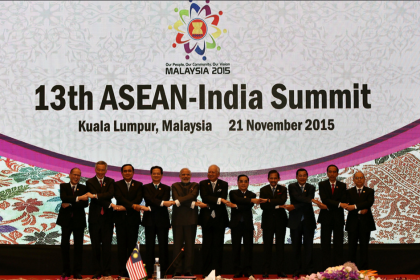 Courtesy:
In two years, the Modi government’s Act East Policy has gone well beyond the focus on economic ties of its predecessor, the Look East Policy. It has made progress on many wider fronts, including connectivity and defence collaboration. India must now build on this success and further consolidate relations and trade links with ASEAN and beyond