Website articles  (18) Courtesy: Reuters photo
28 May 2025

Strategy meets statecraft: Trump in Riyadh

Presidential visits abroad are high-level instruments of statecraft and, more often than not, signals of geopolitical priorities. The recent visit of U.S. President Donald Trump to the United Arab Emirates, Saudi Arabia, and Qatar, exemplified this, indicating the administration's policy orientation.
Getty (1) Courtesy: Gateway House
15 May 2025

The New Geopolitics and South Asia’s Trade Architecture – What Next?

Geopolitics is increasingly intertwined with the economic destiny of South Asia. Even before the U.S. tariffs were rolled out, growing polycrises had hit the global economy, which has been struggling since the pandemic. South Asia seems a relatively bright spark of regional trade and growth. This paper analyses South Asia’s trade architecture in the backdrop of a sluggish world economy in the 2020s, and makes recommendations for closer regional economic integration.

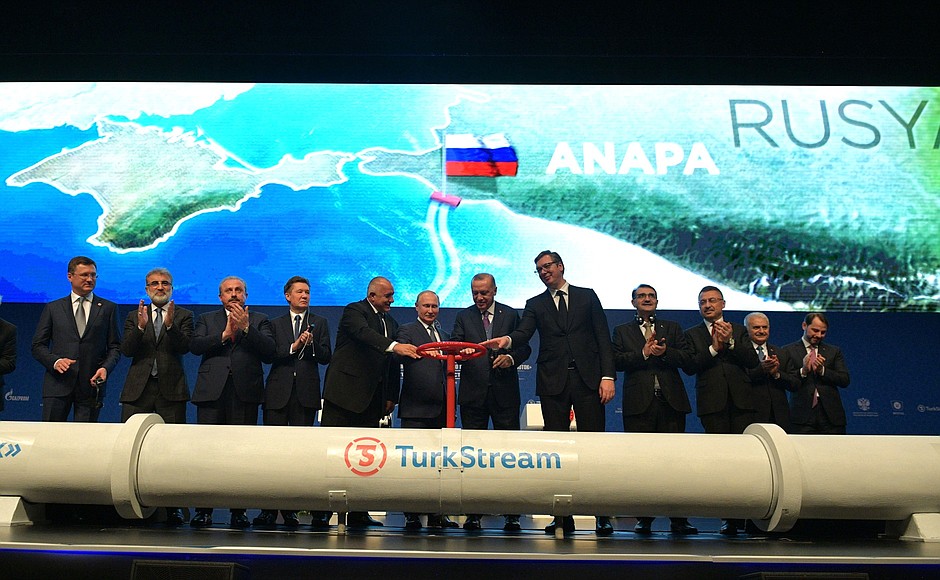
Turkstreampipe Courtesy: President of Russia-Events website
30 January 2025

LNG: winners and victims

Europe has reduced its reliance on Russian gas following the war in Ukraine, and its chief supplier Russia is mired in western sanctions. What does it mean for Russia? It has certainly changed the fortunes for American gas to be sold to Europe: as of 2023, the US had become the world’s top exporter of gas.

Screenshot 2024-12-19 114823 Courtesy: Business Standard
19 December 2024

India’s oil strategy in the Trump era

The advent of the pro-oil Donald Trump in the U.S. and the strong pushback by developing countries to the unsatisfactory COP29 proposals, has opened opportunities for India in the energy sector. Instead of investing in overseas oil facilities, India will be better served as a financial investor in listed companies in large economies. This approach will help forge closer ties with strategic partners. 

Colombo-port Courtesy: The Wire
3 August 2023

India-Sri Lanka: Connecting grids

India and Sri Lanka recently signed six energy agreements, including plans for an oil pipeline from India to Sri Lanka, electricity grid connectivity, and cooperation in renewable energy. Sri Lanka can benefit from India's cost-effective oil sourcing and processing and pay for it in rupees, easing its balance of payments crisis. Its wider use of the Rupee fulfills a long term objective for Indian policymakers.

tim cook website Courtesy: Nikkei Asia
26 July 2023

India: a rising supply chains hub

China-centric global supply chains are being disrupted by rising geopolitical tensions between the U.S. and China and multiple global shocks, forcing multinational companies to rethink are global sourcing strategies. India can leverage this moment to become a complementary manufacturing hub in Asia by reaping gains from technology transfers and creating value-adding jobs.

mw website fin Courtesy: The Times of India
20 July 2023

India and Sri Lanka: Hard work ahead

On July 21, Sri Lankan President Ranil Wickremesinghe is set to visit for the first time since taking office. India has already provided $5 billion in economic assistance to Sri Lanka, and is now looking to expand its investment in the nation. Sri Lanka is also seeing interest from Indian private investment. The visit presents an opportunity for the two countries extend this relationship in new areas of cooperation, especially energy, infrastructure, and tourism.

27010605639_d03ddf44a5_o Courtesy: The Dahrendorf Forum
17 July 2023

Central Asia, the new corridor

The Russia-Ukraine conflict has led to the resurgence of interest in Central Asian as an alternate trade corridor between Europe and Asia. Timely investment in connectivity projects like the Middle Corridor and the INSTC by regional stakeholders, as well as by the EU, China and India, must now build on this interest to create new regional, international, and cross-continental transport corridors.

Supply-chains-cover Courtesy: Gateway House
5 July 2023

The Great Supply Chain Shift from China to South Asia?

Supply chains are central to the new chapter of India-U.S. relations. Simultaneously, China-centric global supply chains, which underpinned East Asia’s prosperity, are changing as multinationals re-assess risks in the post-Covid era. Is the shift to India and the rest of South Asia occurring? This paper finds that South Asia supply chain pessimism could be changing, and India can spread gains through regionalising supply chains in its neighbourhood.