India in the Indo-Pacific cover Courtesy: Gateway House
1 February 2022

India in the Indo-Pacific: Pursuing Prosperity and Security

The Indo-Pacific has become an important part of global geopolitics in the recent past, with several great powers implementing concerted Indo-Pacific policies to create economic, social and security linkages with the region. India can use its development experience and futuristic technology to secure stability and prosperity. This compendium of essays explores the comprehensive role that India can play in the Indo-Pacific, from energy and environment, to trade, security, technology and a vibrant diaspora.

amit cover Courtesy: Routledge India
5 January 2022

India and the Changing Geopolitics of Oil

India is the world's third largest importer of oil after China and the U.S. and a major player providing demand security for oil exporters. The technological changes and geopolitical shifts in the oil economy from the West to the East, highlights India's position as a valuable partner in renewable energy, and oil security and production. The book explores the various elements of India's dependence on imported oil, and how it can turn to an advantage. This excerpt analyses the alternatives to the current West-dominated oil markets and industry that are available to India as a leading consumer.

DRUK HYDRO DAM Courtesy: Druk Green Power Ltd
18 November 2021

Bay of Bengal connectivity

The Bay of Bengal is gaining relevance as a significant sub-region within the Indo-Pacific. Despite its importance to regional security, there is inadequate financial, physical, and energy connectivity. India must use its strategic and political pre-eminence and influence in the sub-region to pursue deeper connectivity with Bangladesh, Myanmar, Thailand, Nepal, and Sri Lanka and to block China's growing influence.

Unfinished Connectivity in the Bay of Bengal Courtesy: Gateway House
21 October 2021

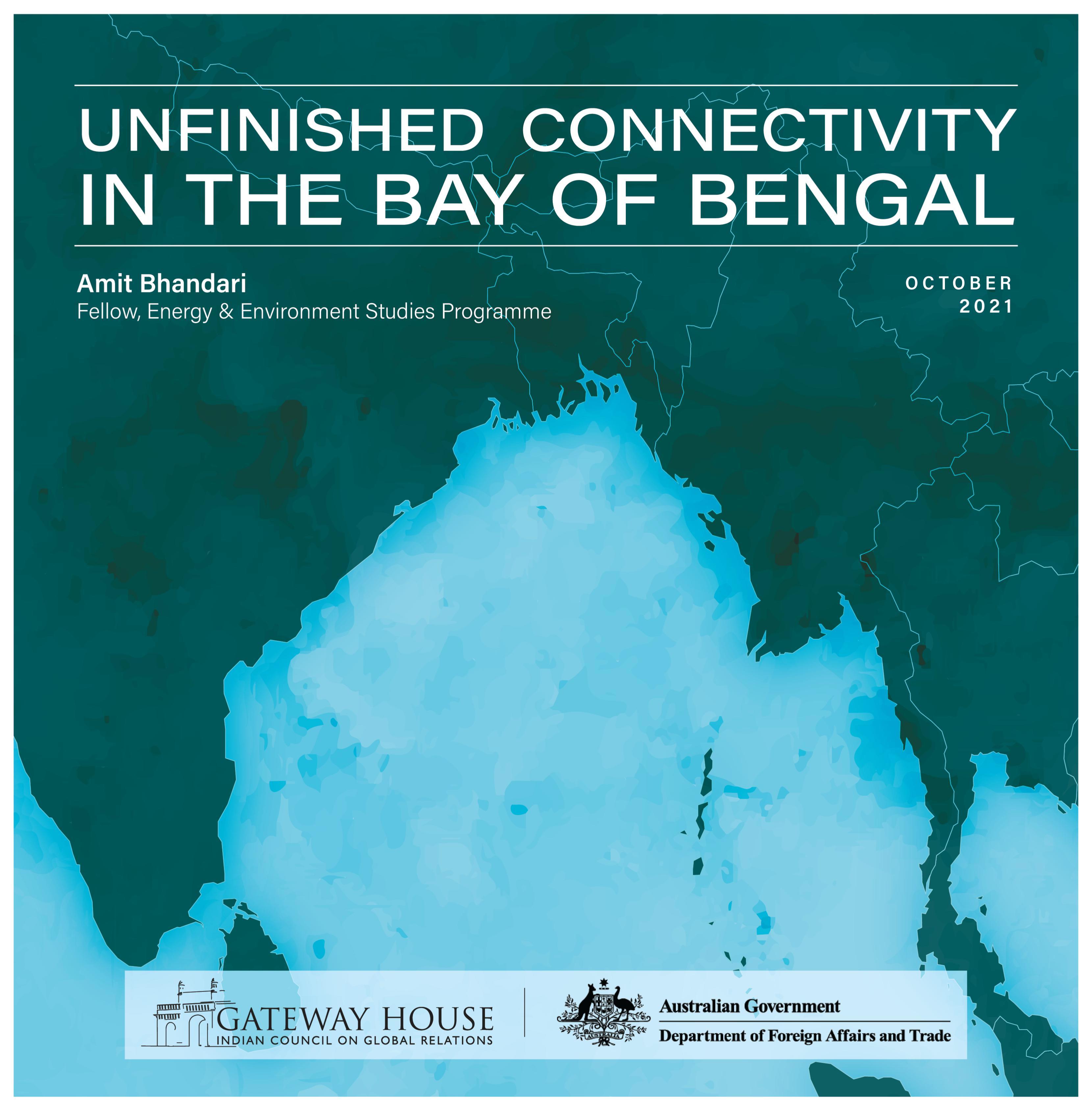
Unfinished Connectivity in the Bay of Bengal

The Bay of Bengal is a bridge between the Indo-Pacific and the Indian Ocean, and with a population of 1.4 billion, an increasingly important economic zone in its own right. India has been slow to build regional connectivity. The space has been filled by China's Belt and Road Initiative projects, which have not always been beneficial for host countries. The region may be better off pursuing digital connectivity by enabling tech startups – areas of India’s strength. This research uses maps to explore the potential for energy, transport, and financial connectivity across the Bay of Bengal.

Lisa Curtis and Surjit Bhalla Courtesy: CNBC-TV18 (Youtube)
5 August 2021

Quad collaboration on economics and technology

On 30 July 2021, Lisa Curtis and Surjit Bhalla, co-chairs of the Gateway House Quad Economy and Technology Task Force, spoke to CNBC-TV-18 on the various channels of cooperation between the Quad countries in technology, supply chains and undersea cables, and the need to counter China's dominance in the Indo-Pacific.

Cover with black border Courtesy: Gateway House
29 August 2019

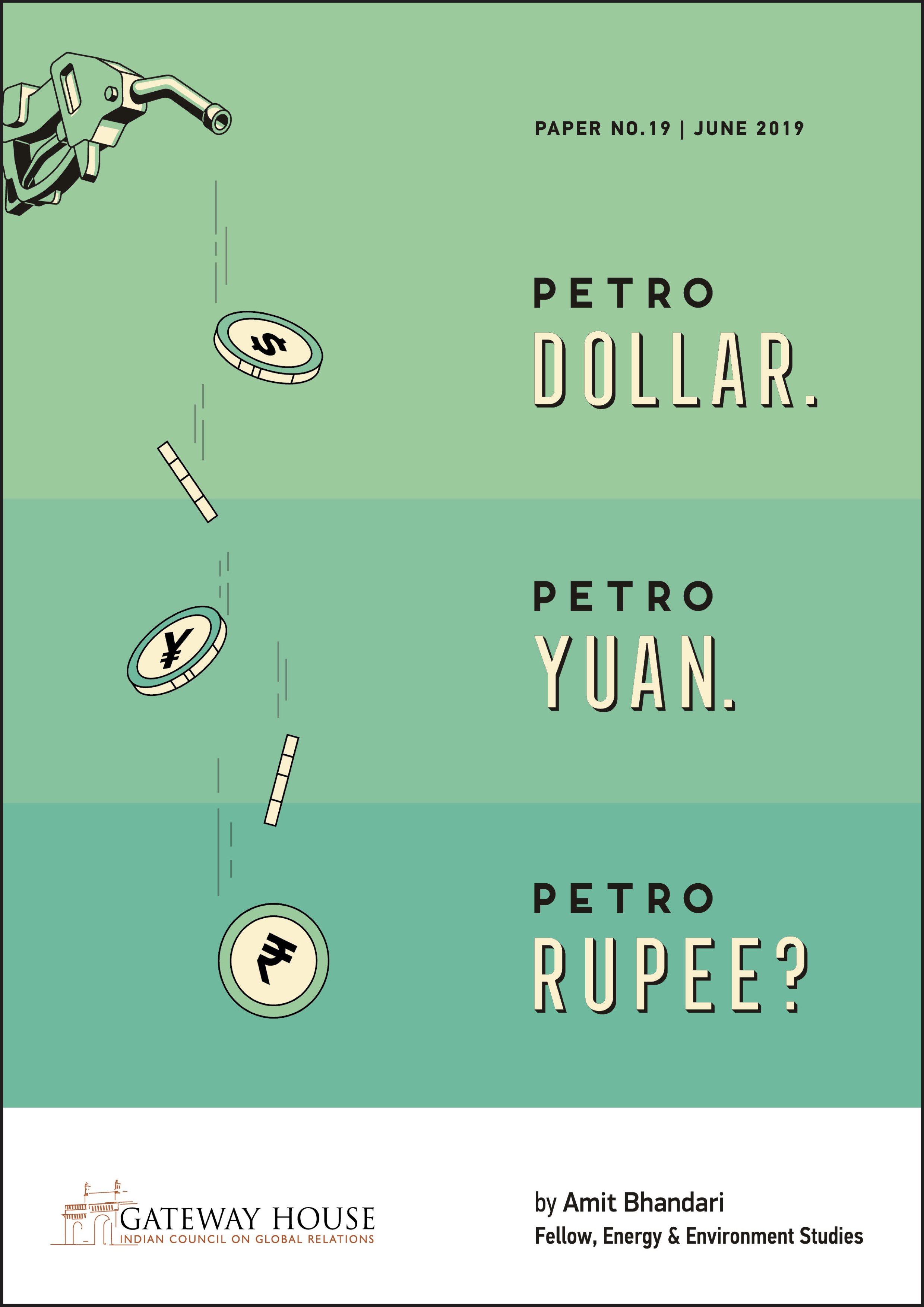
Petro Dollar. Petro Yuan. Petro Rupee?

The global energy scenario has changed in every way – be it in demand, supply or energy type – in the last two decades. The only unchanged component has been the currency of energy trade: the U.S. Dollar. Lately, though, the Chinese Yuan has emerged as a challenger. Can the Indian Rupee be a third contender?

shutterstock_1042231621 Courtesy: Shutterstock
1 August 2019

A case for the petro rupee

India can catalyse trading in oil on its domestic exchanges, and thereby adjust global oil prices so they reflect the changing patterns of global trade. In the process, this can help Indian companies and government reduce the risks arising from high energy prices. And in the long run, it can give India a more central position in the global financial system

ibc-center-oil-gaz-4-696x392 Courtesy: ibctrain.com
2 April 2019

India & the influential SCO Energy Club

The main objective of the Shanghai Cooperation Organisation’s (SCO) Energy Club, when Russia formed it, was to market its member states’ substantial oil and natural gas reserves. This map shows some of the important natural gas pipelines, originating from Russia and its neighbouring countries that are not members of the SCO. What can India do to secure supplies from these abundant but currently inaccessible natural gas reserves?

chineseoil-1 Courtesy: Lifeforex
11 October 2018

Petro-Yuan, the new speculation

Basing the global oil trade on the Yuan instead of the U.S. Dollar is one leg of China’s bid to convert its currency into the international reserve currency, replacing the dollar-dominated global financial architecture. But many factors impede the Yuan from reaching the maturity required for its global adoption.