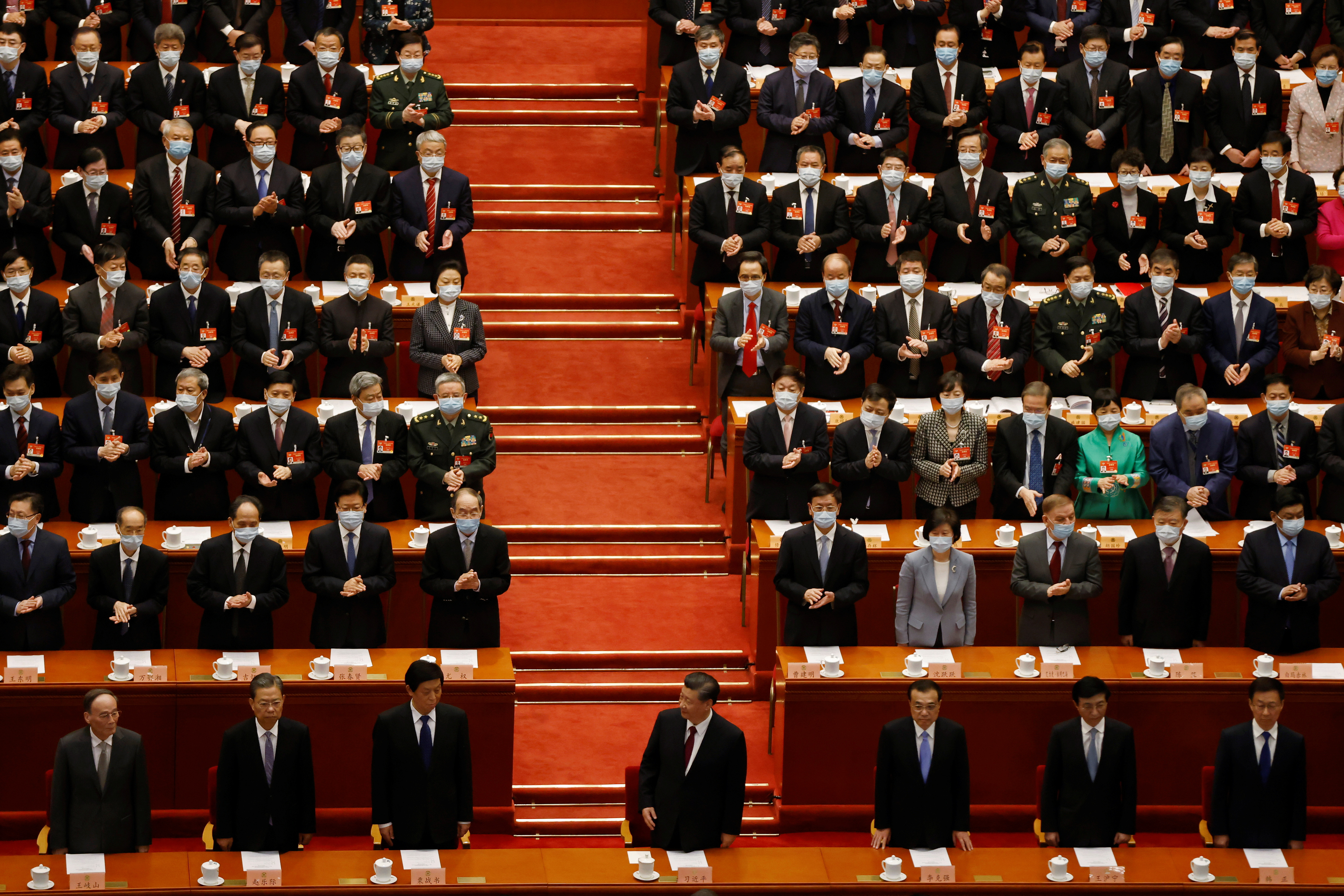
FILE PHOTO: Chinese President Xi Jinping (C), Vice President Wang Qishan, Politburo Standing Committee member Zhao Leji, National People's Congress (NPC) Standing Committee Chairman Li Zhanshu, Premier Li Keqiang, Politburo Standing Committee member Wang Huning and Vice Premier Han Zheng arrive for the closing session of the Chinese People's Political Consultative Conference (CPPCC) at the Great Hall of the People in Beijing, China March 10, 2021. REUTERS/Carlos Garcia Rawlins/File photo Courtesy: Reuters
16 January 2025

Preparing China’s economy for 2025

Two important conclaves held in December 2024 - a Politbureau meeting and the Central Economic Work Conference – set the tone for China’s economic focus in 2025. The economy needs a resurgence, given the domestic environment of low spending and the external threat of high tariffs – the outcome of swapping development for security. In 2025, China’s mandarins will try and find a balance between the two.

longmen Courtesy: UNESCO
9 January 2025

India-China: learning from each other

India and China are the world’s most populous countries, with much in common and much divergence. Reform, discipline, long-term thinking and scale brought China to its present near first-world conditions; India is accommodative with its democracy, cultural diversity and all-round religiosity to achieve development, wealth creation, cultural preservation and self-respect. There’s a great deal that the two Asian giants can learn from each other.

Screenshot 2024-10-22 at 10.39.46 PM Courtesy:
23 October 2024

China’s emergence in the global order

There is much discussion these days on the world order and the continuation or demise of the current format. To understand why this powerful agglomeration of states and rules is now being questioned, it is necessary to understand the role of China, its co-option of the institutions and rules of the world order, and the parallel order it is creating centred around itself.

3d25bf28-0a5a-4e50-ad23-96c8659aca34 Courtesy: Bayerischer Rundfunk
16 May 2024

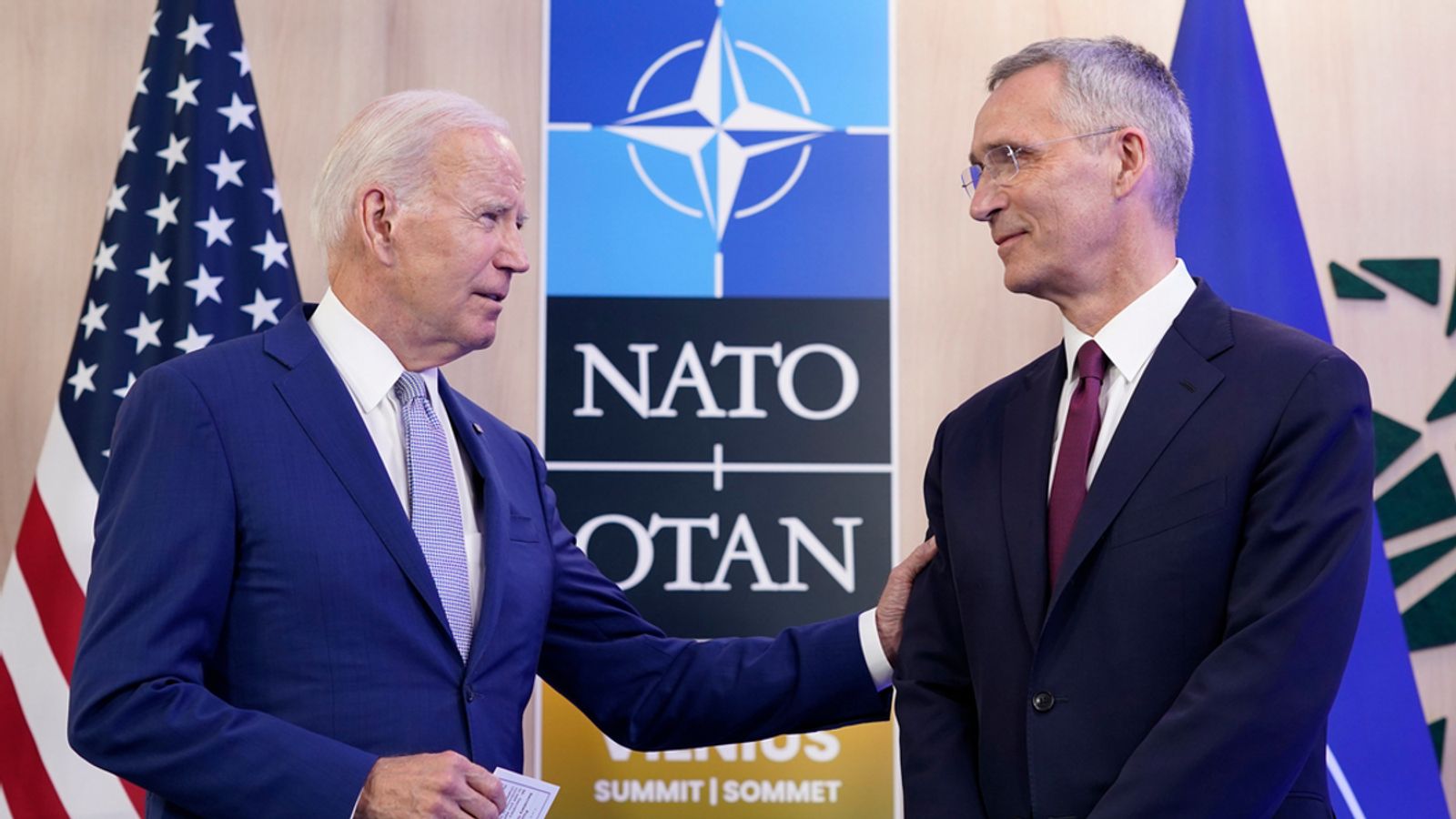
NATO@75

The North Atlantic Treaty Organisation turns 75 this year. It has exceeded its original mandate of a collective defence for Europe and is expanding rapidly. From restraining the rise of Russia, it is now seeking non-NATO allies in Asia who wish to restrain China. This requires a nimbler, more dynamic alliance. Can NATO respond to the transformation?

Sikkim border Courtesy: Manjeet Kripalani
11 April 2024

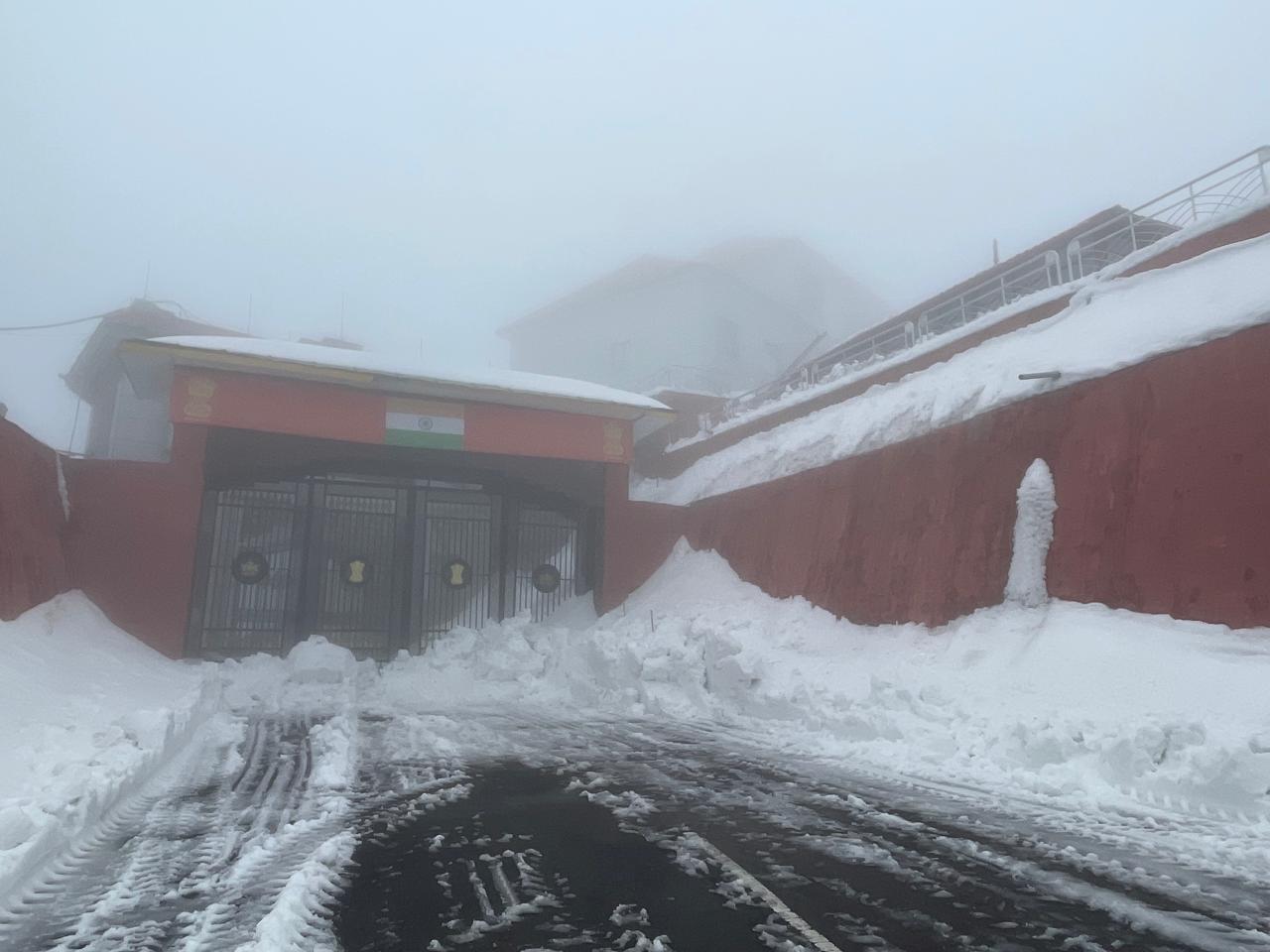
Sikkim: paradise visited

Sikkim is India’s second smallest state, yet one of its best, with twice the nation’s GDP. It is surrounded by three of India’s neighbours – China, Bhutan and Nepal – making it one of the country’s most strategic regions. Yet its geopolitical positioning and ongoing border aggression by China have not affected Sikkim's calm or confidence: it is still defined by its beauty and its good governance.

Report Photo Courtesy: Körber-Stiftung
18 March 2024

Listening Beyond the Echo Chamber: Emerging Middle Powers Report

Divergent global reactions to major crises such as those sparked by the war in Ukraine and NATO’s Afghanistan withdrawal have widened the chasm between Western countries and emerging middle powers. This survey, conducted among nearly 1,000 experts from India, Brazil, South Africa and Germany, examines key foreign policy priorities in these countries, and reveals that despite differences, dialogue is possible.

crosswinds Courtesy: Amazon India
14 March 2024

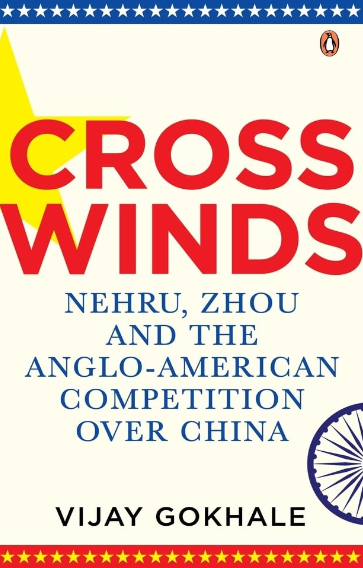
Crosswinds: Nehru, Zhou and the Anglo-American Competition over China

In his new book, former Indian Foreign Secretary and Ambassador to China, Vijay Gokhale analyzes how newly independent India navigated Anglo-American competition and the Cold War ideologies of China in the 1940s and 1950s. The author focuses on key events from the recognition of the Peoples’ Republic of China to the two Taiwan Straits crises. His insights of the period resonate with today's U.S.-China rivalry, and highlights India's evolving role in the Indo-Pacific.

160067 Courtesy: Al Majalla
17 January 2024

Unfolding Geopolitics | Episode 3, Understanding the Maldivian position

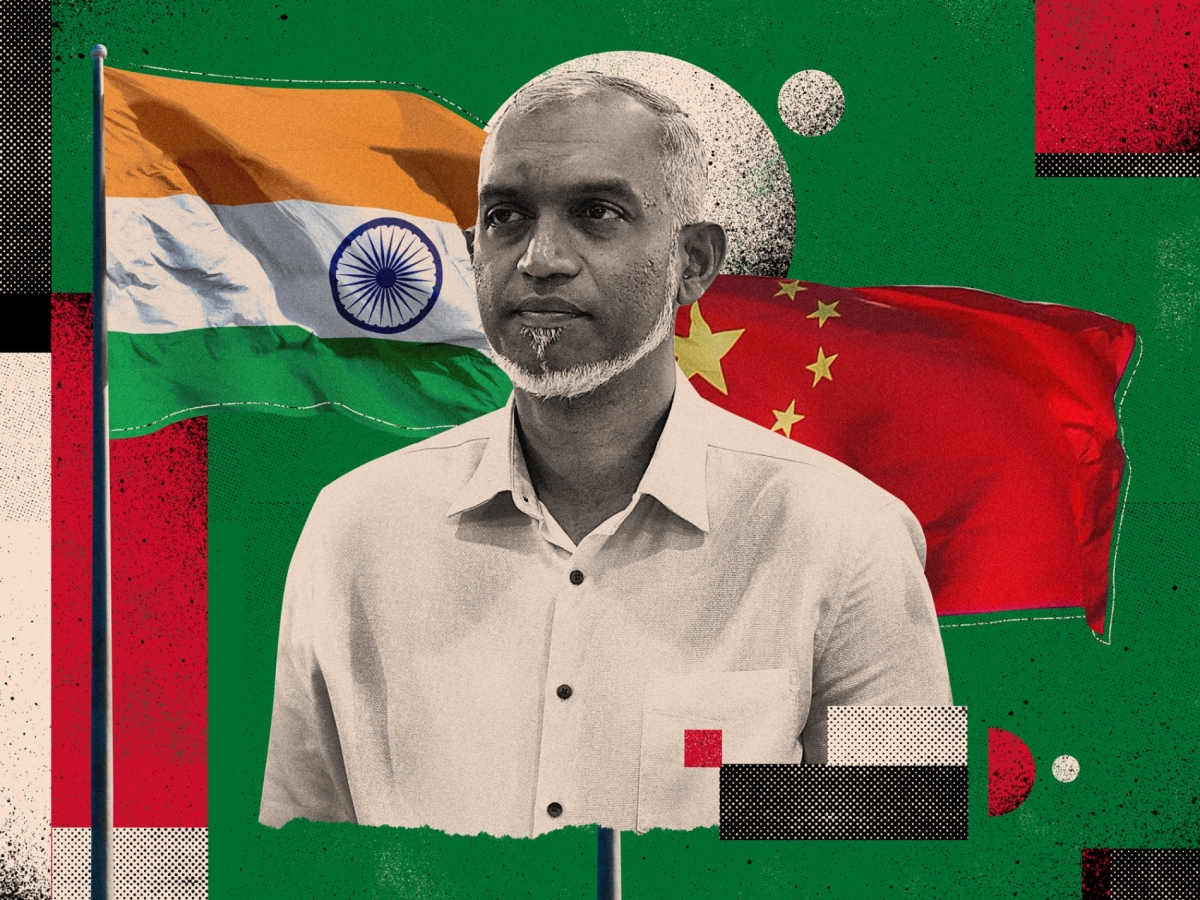
Maldives’ President Mohammed Muizzu’s desire to have an independent foreign policy has steered it away from India and closer to China. It has added a new dimension to the strategic contestation in the Indian Ocean. Rajiv Bhatia, Distinguished Fellow, Foreign Policy Studies, shares his insights on the Maldives’ strategic importance in the region, the ‘India Out’ campaign, and the way forward for Indian diplomacy in South Asia.

BRICS 2 website Courtesy: Fox News
31 August 2023

BRICS-XI, the new configuration

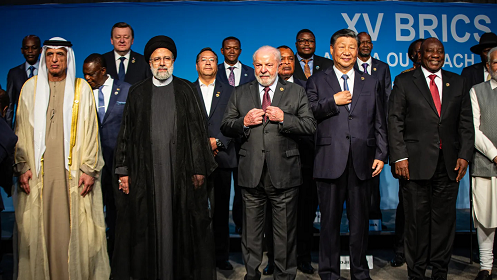
The decision to invite six countries — Argentina, Egypt, Ethiopia, Iran, Saudi Arabia, and the UAE — to join BRICS as full members has opened the grouping to a new geopolitical era. India can now play a seminal but challenging role in this evolved dynamic, given its growing cooperation with the West on the one hand and its active pursuit of the interests of the Global South on the other.