PM Modi’s five-nation tour
PM Modi's five-nation tour highlights that despite geopolitical conflicts, New Delhi remains confident in its ability to balance relationships with the North and South.

 Courtesy: X / PMOIndia
PM Modi's five-nation tour highlights that despite geopolitical conflicts, New Delhi remains confident in its ability to balance relationships with the North and South.
 Courtesy: X / PMOIndia
PM Modi's multi-country visit from 15-19 June to Cyprus, Canada, and Croatia demonstrated India's expertise in nurturing ties with great powers, middle powers and state powers. The common thread was twofold: to represent India at the still-important summit of the Group of Seven in Alberta, and to push India’s strategic partnership with the EU, by forging closer ties with the countries of eastern and central Europe.
 Courtesy: East Asia Forum
Most multilateral and plurilateral institutions have lost their significance and ability to shape the trajectory of international relations today. The G7 is no exception. It is impacted by the shift of power from the Atlantic to the Pacific, and an intra-Atlantic rift. The G7 discussions reflected this. More positive were the sideline discussions on repairing the India-Canada bilateral.
 Courtesy: U.S. Embassy & Consulates in India
The July 2 meeting of the QUAD foreign ministers in Washington, D.C., restated all the commitments of the grouping, including a condemnation of the April 22 terrorist attacks on Pahalgam. Yet, none of the QUAD countries actually came to the aid of India, despite China being a present player in the fight, in full support of its partner Pakistan.
 Courtesy: Ludovic MARIN / AFP
Macron’s 2025 tour of Southeast Asia was intended to reinforce France’s strategic commitment to the Indo-Pacific. By engaging with three key ASEAN members - Vietnam, Indonesia, and Singapore - France wants to forge partnerships beyond its traditional transatlantic ties. Its Indo-Pacific vision is based on its territorial presence, economic interests, and diplomacy values, which it hopes will be an alternative to the binary logic of U.S.-China rivalry.
 Courtesy: News Arena India
Canadian Prime Minister Carney can use the upcoming G7 summit he is hosting to advance the North-South dialogue and cooperation and also to discuss the strained bilateral with India. India can articulate the viewpoint of the Global South, stressing its conviction that the G7 is better served by constructively working with developing and emerging economies.
 Courtesy: Embassy of India, Berlin
New German Chancellor Friedrich Merz’s early decisions suggest that foreign and security policy will be defining features of his chancellorship. The coalition agreement reflects a conservative yet pragmatic response to changing global dynamics.
 Courtesy: India Today
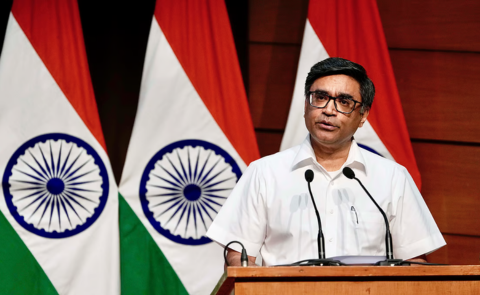
The Pahalgam attack has changed India’s strategic calculus. With Operation Sindoor, the country is moving towards a more assertive posture, consolidating its strategy around an evolving doctrine of Proactive Deterrence underpinned by Calibrated Coercive Capability. A strategic practitioner’s viewpoint is below.
 Courtesy: The New Indian Express
Studying the reaction of key stakeholders to the India-Pakistan conflict, and how India’s diplomatic machine coped with it, is revealing. Some of the major powers like the U.S., raised the temperature, China expectedly stood by Pakistan while Russia once again proved a dependable friend. Unsurprisingly, South Asia had a consistently neutral stance toward the conflict.
 Courtesy: AFP
The victory of Mark Carney and the Liberals in the Canadian elections is a turnaround from the party's diminished position just four months ago. The former banker's campaign ran on a strong, independent Canada able to stand up to the new U.S. administration’s tariff provocations. Now come the challenges. The Carney government has much work to do in rebuilding ties abroad and bridging Canada's internal divisions.