shutterstock_1091235845 Courtesy: Shutterstock
15 October 2020

UN: Necessary but reformed

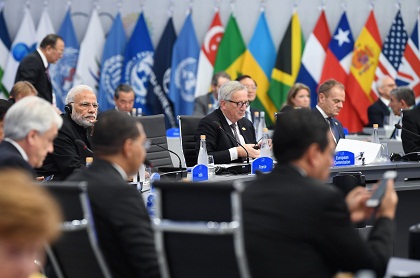
The UN turned 75 this year but instead of grand celebrations, the world witnessed an empty UNGA with world leaders addressing it via video screening because of the pandemic. The UN is under unprecedented stress and being shown up for its inability to tackle the challenges of today like the pandemics, climate change, terrorism or global peace and security. The institution's key governing structures, especially the UN Security Council, are inadequate and demand reform. India must now use gritty resolve to ensure its place in these governing structures.
RB_1 Courtesy: B20 Saudi Arabia/Twitter
23 July 2020

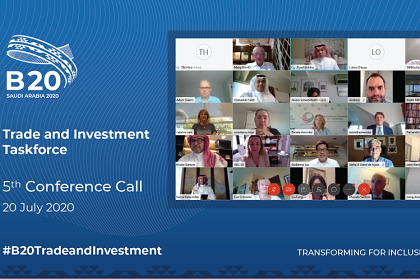
The B20: Riyadh and beyond

The COVID crisis compelled a change in the Business20 (B20) focus areas to reviving health, health facilities and business activity in 2020. India must start work now to give the B20 even greater responsiveness and relevance as the prospective G20 chair in 2022.

QUAD Courtesy: Shutterstock/Gateway House
18 June 2020

Quad, China and the Indo-Pacific churn

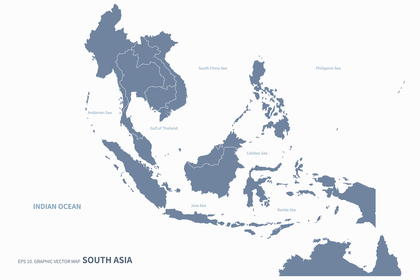
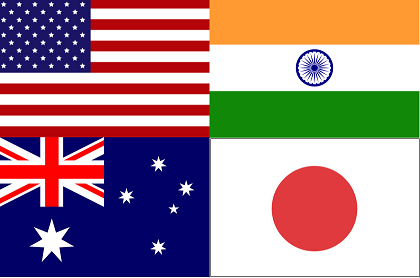
China’s escalating actions in the wake of the COVID-19 catastrophe is a calculated strategic diversion and risk. In the Indo-Pacific, tensions between China and the U.S., Australia, India and others are building momentum. As a geopolitical partnership, the relevance of the Quad is now proven. There are clear ways to empower it immediately, and make it a resilient grouping.

45874457001_77239716a2_c Courtesy: MEA/Flickr
11 June 2020

A critical logistics agreement with Canberra

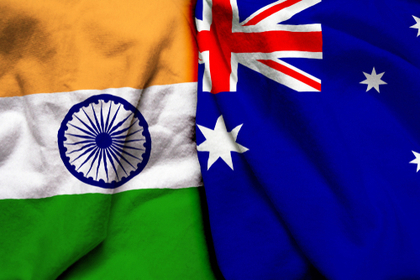
At the 4 June, India-Australia, virtual summit, one of the most critical, among several agreements signed, was the Mutual Logistics Support Agreement (MLSA). India has logistics support agreements with many countries. How is the MLSA with Australia any different? Given the geo-strategic maritime competition with China, this agreement is uniquely significant and could be especially beneficial for the Indian Navy.

shutterstock_132894758 Courtesy: Shutterstock
25 May 2020

Globalisation: good-bye to the hype

Globalisation has resulted in the interdependence of nations through the largely unimpeded transmission of investment capital and information, and integrated business operations. The leading beneficiaries have been the global 1%, and China. While it is too late and not possible to roll back an interconnected world order, globalization as we know it will recede, as will China’s standing in the world.

G20 Courtesy: Ministry of External Affairs
2 April 2020

The action imperative for G20

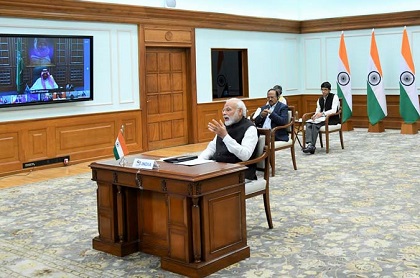
COVID-19 unified G20 leaders at an extraordinary summit last week. An idea given a nudge by Prime Minister Narendra Modi, here was an opportunity for all participants to put together a plan and make a pledge for international cooperation, focusing on four main themes. Next, will they be able to turn words into action?

49012249412_d8b02bb141_c Courtesy: MEA/Flickr
7 November 2019

Goodbye, RCEP

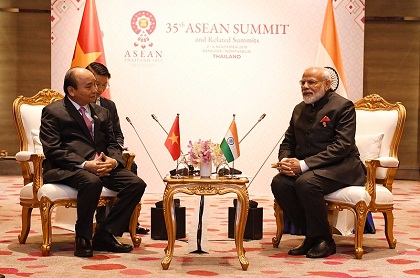
There have been mixed reactions to India’s not signing on to the Regional Comprehensive Economic Partnership. India is often criticised for abstaining from trade agreements and being a protectionist nation, but in fact, the reverse is true. The country’s trade to GDP ratio of 43% is higher than China’s 38% and the U.S.’ 27%. This shows how important trade is for India, particularly if it wants to reach the 2024 goal of being a $5- trillion economy.

shutterstock_1457421710 (1) Courtesy: Shutterstock
26 September 2019

Quad in the Indo-Pacific

The foreign ministers of the Quad countries meet for the first time in New York today even as the Indo-Pacific has turned into a keenly contested geopolitical arena. Some countries are offering to play a mediatory role while other triangular equations are also undergoing change. An analysis of some of the relationships at work here

46118329451_16cf134eac_o Courtesy: MEA/Flickr
27 June 2019

Gateway House on the G20

The 2019 G20 Summit in Osaka on June 28-29, is the 14th meeting of the Group of 20 leaders. The G20 is the world’s most influential economic multilateral forum. It is the agenda-setting forum that develops and guides rules of global economic governance. Under the Japanese Presidency, this summit will be the first to discuss and establish the rules for the worldwide governance of data, including current hot-button issues like data localisation and data sovereignty. India has both a preparatory and a contributory role to play in the G20 this year. For in 2022, it will be the President of the G20. India must identify its agenda early on; its a weighty responsibility but also an opportunity to set the global economic agenda.

shutterstock_1043745040 Courtesy: Shutterstock
27 June 2019

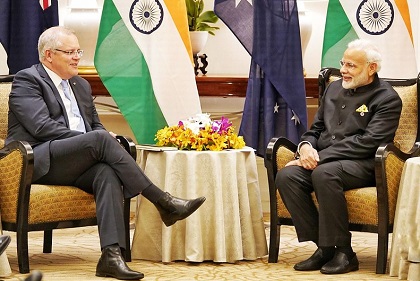
An amplified India-Australia security

The U.S.-China trade dispute and Australia’s concerns about China’s growing influence in its internal affairs and the neighbourhood present an opportunity for New Delhi and Canberra to step up their security engagement, bilaterally, and in the Indo-Pacific