Bin_Salman__Reuters_ Courtesy:
9 November 2017

Saudi purge: Arab Spring 2.0?

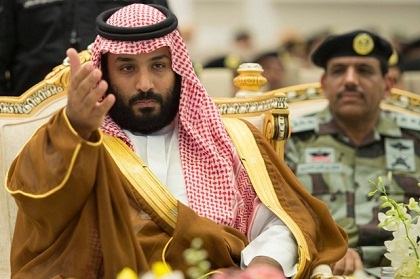
The removal of 11 top ministers in the Riyadh government last week by the young crown prince Mohammad bin Salman, is a geopolitical upheaval, the implications are serious. Domestically, the kingdom is seeking to liberalise its conservative society and move away from oil-dependency – evident from the expected listing of its crown jewel Aramco. For India, which imports oil largely from West Asia, instability could cause a spike in prices, leaving less for its ambitious reforms. Globally, there is now space for new alignments – in the Great Power plays, in the Shia-Sunni rivalry, and in the war on terrorism.
5374e4111fc116307d4e734013dfc175 Courtesy: Yahoo
18 August 2016

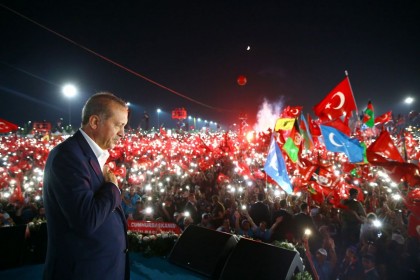
Turkey’s fight for democracy

The July coup in Turkey did not achieve its objective of eliminating President Erdogan, who has, ironically, emerged a ‘national hero.’ Does this signal a new beginning? An analysis of the factors impending upon the colossal repair-and-rebuild task before the country.

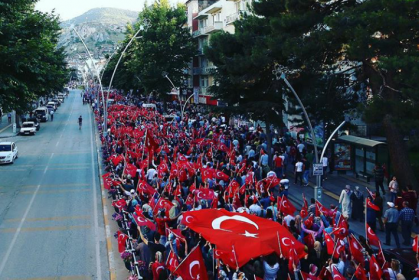
Tokat_darbe_karşıtları Courtesy: Wikipedia
27 July 2016

The beginning of the end for Erdogan

The attempted coup on July 15 in Turkey as well as its aftermath have irreparably dented President Erdogan’s international image and impacted Turkey's standing as a democratic state, a military power, a NATO member, an EU aspirant, and an emerging economy. This downtrend is unlikely to be reversed in the near future and the country is in for an extended period of instability

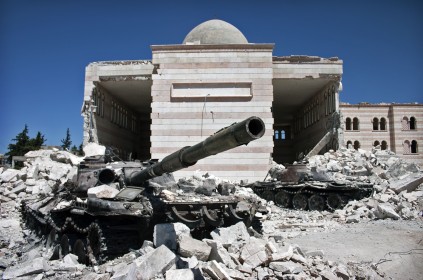
Azaz,_Syria Courtesy: Wikipedia
9 March 2016

India and the Syrian quagmire

With a cessation of hostilities been brokered by Russia and the United States, the conflict in Syria has entered a tense pause. India has had a bystander attitude to the conflict in Syria. However, with the truce expected to be short, does India have the incentive or the option to depart from its current position, and deepen its engagement in Syria?

EndISISFlickrDawn Endico Courtesy: Dawn Endico
3 December 2015

Can ISIS be defeated?

Today ISIS is the gravest international security threat. To defeat ISIS, the world should pay heed to India’s experience of the need to isolate state sponsors of terrorism. Ultimately, only when Saudi Arabia acknowledges the danger to its own survival from past policies of alleged support to extremist groups, can it be a reliable partner in the fight against ISIS.

UNSC Syria UNSC Courtesy: United Nations
4 October 2013

Decoding the UNSC Resolution on Syria

The recent UNSC Resolution, which mandates the complete destruction of Syria’s chemical weapons, demonstrates that after more than a year, a degree of international agreement on the Syrian issue has been possible. In the evolving situation, Russia will now emerge as a major player

assadobama Courtesy: Freedom House/Flickr
6 September 2013

Syria: An unwarranted intervention

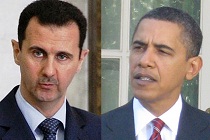
Despite rising international opposition, U.S. President Barack Obama is ready to penalise the Syrian regime for an alleged chemical attack in Ghouta, Syria, last month. The justifications given by the U.S. for an armed attack are questionable, and such retaliatory action will destabilise the entire region

Courtesy: FREEDOM HOUSE2/FLICKR
24 August 2012

Syria: What next?

With the Free Syrian Army being supplied aid by the West and the Gulf Cooperation Council countries, the endgame for the Syrian regime has begun. Does Assad's exit guarantee the replacement of autocracy with democracy? What implications will it have on regional politics?

Global Stability Map Courtesy: Gateway House
1 August 2012

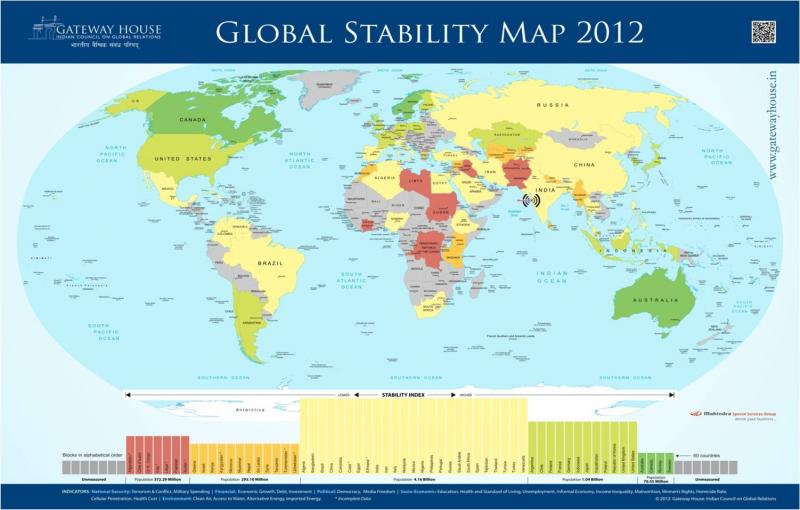
Global Stability Map 2012

Gateway House prepared a Global Stability Map, using 20 differing indicators, to analyze the stability of 60 countries around the world. Using criteria that are important to the emerging economies of the world, the map provides an Indian perspective of the world today.