Book review: Iran from a new Indian perspective
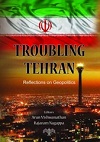
In the absence of a debate in India on Iran’s nuclear programme, ‘Troubling Tehran' is a significant first attempt to go beyond Western narratives and ask pertinent questions

 Courtesy: Pentagon Press
In the absence of a debate in India on Iran’s nuclear programme, ‘Troubling Tehran' is a significant first attempt to go beyond Western narratives and ask pertinent questions
 Courtesy: United Nations
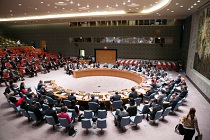
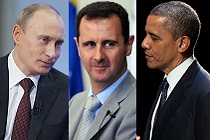
The recent UNSC Resolution, which mandates the complete destruction of Syria’s chemical weapons, demonstrates that after more than a year, a degree of international agreement on the Syrian issue has been possible. In the evolving situation, Russia will now emerge as a major player
 Courtesy: Office of the President of Iran
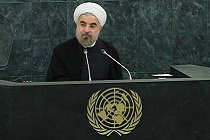
In recent days, both the U.S. and Iran have intimated that they seek a broad improvement in relations, signalling a welcome thaw in bilateral ties. What does this mean for Tehran and Washington, and more importantly, how will this development play out in the West Asian region?
 Courtesy: WikimediaCommons
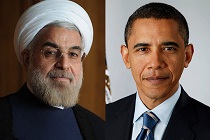
The positive advances made by newly-elected Iranian President Hassan Rouhani and U.S. President Barack Obama at the 68th UN General Assembly indicates a strong potential for a thaw in Tehran-Washington relations. However, it will take sincere efforts from both sides to turn this into concrete reality. Can India help?
 Courtesy: Jerchel/WikimediaCommons
India often finds itself in the right place at the wrong time or vice versa, as our dogma of non-alignment trumps honest calculations of self-interest in policy-making – rendering it unfavourable. The national interest, hence, calls for selective alignment on some issues with Washington and on others with Beijing
 Courtesy: WikimediaCommons
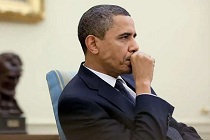
Can the world aspire to a future where the use of force is not seen as leadership? Can the U.S. and former colonial powers like France and UK, think differently and reject the use of force as first resort? Can China and India craft alternatives?
 Courtesy: Systemman/WikimediaCommons
Twelve years since the Taliban attacked the country, U.S. President Barack Obama is preparing for yet another war with a country in West Asia, for breaching a ‘red line’ he had drawn. However, the red line he needs to draw is about where the moral fiber of his presidency lies in the waning months of his tenure.
 Courtesy: Freedom House/Flickr
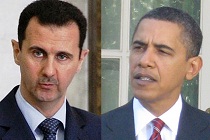
Despite rising international opposition, U.S. President Barack Obama is ready to penalise the Syrian regime for an alleged chemical attack in Ghouta, Syria, last month. The justifications given by the U.S. for an armed attack are questionable, and such retaliatory action will destabilise the entire region
 Courtesy: Harry S. Truman Library and Museum/ Wikimedia Commons
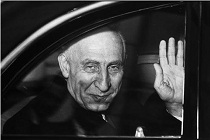
This daily column includes Gateway House’s Badi Soch – big thought – of the day’s foreign policy events. This Badi Soch deliberates on the timing of the CIA’s admission of involvement in overthrowing Iran’s Prime Minister Mohammed Mossadegh in 1953 and the implications of this disclosure
 Courtesy: Zeinab Mohamed/Flickr
Today, the role Wahabbism plays in geopolitics poses a severe security risk not just to the West but also to the Muslim world. The West needs to rethink its strategy of promoting Wahabbi International, and realise that Wahabbism cannot be a moderated geopolitical asset