Nawaz Sharif: Will he chart a new path?
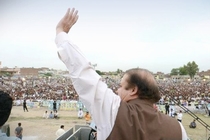
The high level of enthusiasm expressed by New Delhi – for former Prime Minister Nawaz Sharif’s expected return to power – may perhaps be premature. India be patient with the new government in Islamabad.

 Courtesy: PML-N
The high level of enthusiasm expressed by New Delhi – for former Prime Minister Nawaz Sharif’s expected return to power – may perhaps be premature. India be patient with the new government in Islamabad.
 Courtesy: Martin H./WikimediaCommons
Will former Pakistani Prime Minister Nawaz Sharif prove to be his country’s saviour, one that can make Pakistan the ambitious transit economy it can be? However, the most needed and least controversial angle from which India and Pakistan’s new government can begin to engage is through business and trade.
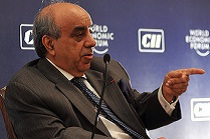
For the first time since 1947, Pakistan, on May 11, succeeded in transitioning from one elected government to another. Gateway House interviews Arun Nanda, Director, Mahindra Group, on the prospects of India-Pakistan trade in the new political environment.

This daily column includes Gateway House’s Badi Soch – big thought – of the day’s foreign policy events. Today’s focus is on the elections and new government in Pakistan.
 Courtesy: rwoan/Flickr
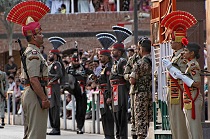
Pakistan’s national elections will take place in the backdrop of a troubled economy, severe energy crisis, and frequent terrorist attacks. Can these problems be solved if the next leadership agrees to open its territories for trade and transit purposes between India and Afghanistan?
 Courtesy: Dude1248/WikimediaCommons
This daily column includes Gateway House’s Badi soch – big thought – of the day’s foreign policy events. Today’s focus is on the election process, viewed through the Karnataka election in India, and the general elections in Pakistan and Iceland.
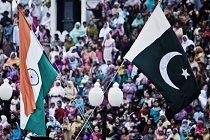 Courtesy: WikimediaCommons/Flickr
The road to reconciliation between India and Pakistan is likely to be a long and treacherous one. But perhaps economic compulsions can overtake political ones. That is the hope in Karachi, whose business community has started to make its journey across the border to India.
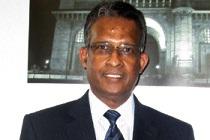
With India backing the United Nations resolution against Sri Lanka, New Delhi-Colombo relations appear to be in a tense phase. Gateway House interviews Prasad Kariyawasam, the High Commissioner of Sri Lanka to India, to discuss the implications of the UNHRC vote and the future of India-Sri Lanka relations.
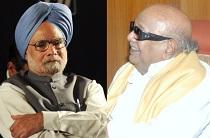 Courtesy: WikimediaCommons
New Delhi has taken some opportunistic actions, such as its vote against Sri Lanka in the UN Human Rights Council, to pacify internal political demands. But these extract a price in the international arena. Should we anticipate a further decline in India’s regional and international credibility?
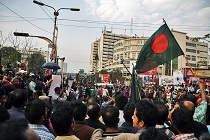 Courtesy: Rajiv Ashrafi/Flickr
The youth of Bangladesh, a generation born well after 1971, are now demanding long overdue accountability, secularism, and neighbourly friendship. If the movement is successful, Bangladesh will have shown all South Asian countries that to transcend the past it is necessary to be transparent and secular.