Turkey: Europe’s new gas hub?
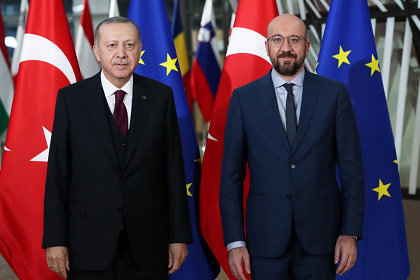
The Ukraine crisis has sent the EU scrambling for new gas supplies, generating fresh interest in gas pipelines from Central Asia and West Asia via Turkey. Practical difficulties make most of these new projects unviable.

 Courtesy: Reuters
The Ukraine crisis has sent the EU scrambling for new gas supplies, generating fresh interest in gas pipelines from Central Asia and West Asia via Turkey. Practical difficulties make most of these new projects unviable.
 Courtesy: telegraphindia.com
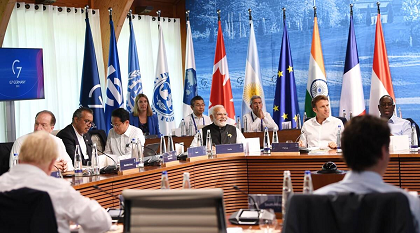
The G7 has reached out to emerging economies which have, of late, been facing challenges on the economic front, brought on by the lingering pandemic and the mismanagement of the Ukraine crisis. They are also seeking, from the global south, a broader acceptance of their world view. Will it be forthcoming?
 Courtesy: The Print
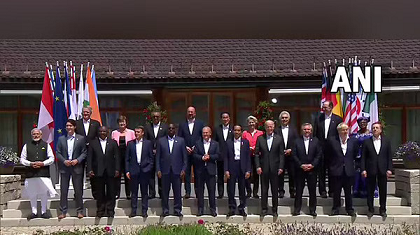
The shadow of the Ukrainian war was visible at the G7 summit. Anti-Russian formations were expected, but the extensive reference to China drew attention. The leaders did their part by extensively discussing challenges relating to climate, energy, environment, health, and food security. It is now for the G7 governments to deliver, to be taken seriously.
 Courtesy: Shutterstock
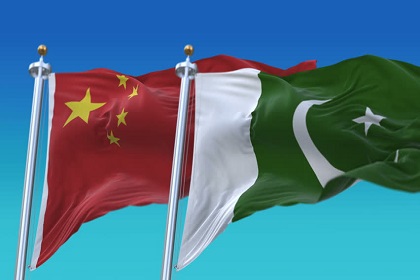
Pakistan’s latest economic survey reveals the extent of the country’s indebtedness to China. High-interest Chinese loans, reckless multilateral borrowing, and ever-increasing defence budgets have deleteriously impacted Pakistan’s finances. Any lasting solution to these problems will have to involve China.
 Courtesy: CRN India
On 31 May 2022, Amb. Rajiv Bhatia delivered keynote address at the panel discussion on Emerging and Critical Technologies in the Indo-Pacific: Opportunities and Challenges, organised by the Kalinga Institute of Indo-Pacific Studies. Amb. Bhatia elucidates on usage of technology in modern warfare, especially the Ukrainian war, while also stressing those critical technologies in the Indo-Pacific can provide a fillip to sustainable development in the region.
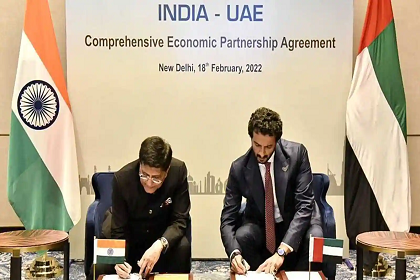 Courtesy: Mint
On February 18, India and the United Arab Emirates (UAE) signed the Comprehensive Economic Partnership Agreement (CEPA). This is a modern trade agreement with its roots in the erstwhile Bombay Presidency’s administration of the nine Emirati kingdoms.
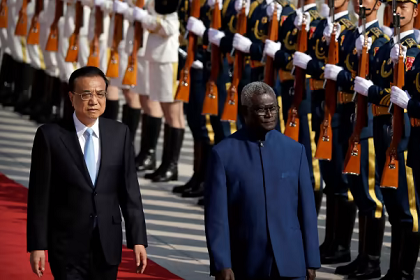 Courtesy: Financial Times
China has established a dominant presence in the Indo-Pacific through exploitative economic engagements. This has destabilised smaller nations in the region and made them dependent on Chinese support. For a free and open Indo-Pacific, India must press its advantage in human and economic capacity building.
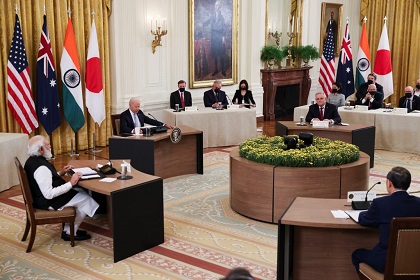 Courtesy: Atlantic Council
The Sino-U.S. contestation is a central tenet of the Indo-Pacific. In this power tussle, the EU strategy for the region provides a new way to engage with partners in the "Third Space" for a free, open, and inclusive Indo-Pacific.
 Courtesy: The Print
Pro-Khalistan organisations have collaborated with the ISI to disseminate anti-India narratives and influence the Indian diaspora. While this has little traction within the country, there is a need for India to extend support to those expatriate Indian communities which are actively countering the misinformation spread by these organisations and Pakistan-sponsored fringe groups.
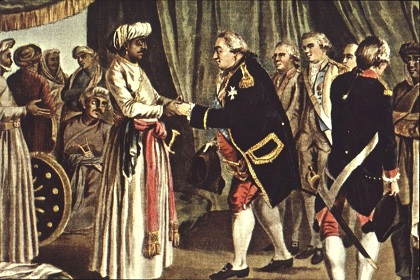 Courtesy: Wikimedia Commons
Three hundred years ago, the Anglo-French rivalry in Europe spilled over to India, and threatened the dissolution of the powerful Bombay Presidency. Three centuries later, India and France are in a different place, with economic ties blossoming and the bilateral upgrading in 1998 into a strategic relationship. The speed with which this has scaled up reflects the deep familiarity between the two nations rooted in colonial history.