

The future of India-Mexico relations
Karen Woodin-Rodriguez interviewed Jaime Nualart, Ambassador of Mexico to India, to discuss Indo-Mexican relations and the rapidly growing bilateral trade and investment between the two countries.

Karen Woodin-Rodriguez interviewed Jaime Nualart, Ambassador of Mexico to India, to discuss Indo-Mexican relations and the rapidly growing bilateral trade and investment between the two countries.
 Courtesy: Indian Embassy
Iran may become a litmus test for India's relationship with the U.S., where New Delhi must deftly balance its strategic relationship with the U.S. along with its energy interests in Iran.
India and Japan have designed their collaborations over the years to be a win-win for both sides. Now, they are willing to collaborate on long-term initiatives, based on intrinsic factors of inter-dependent competencies – rather than on the defence of an extrinsic threat of a common enemy.
 Courtesy: nazeah/Wikimediacommons - Ramesh Lalwani/Flickr
The year 2011 saw various events - the Arab Spring, anti- corruption protests, Europe's sovereign debt crisis - transform countries and reshape the world order. Gateway House takes a look at what these events mean for India, and presents India's top foreign policy cheers and jeers for the year.

Amidst myriad country groupings that already exist – BRICS, IBSA, APEC, SCO and many others – a new initiative in the Pacific is looking to integrate more powerful countries to form a multilateral free trade agreement – the Trans Pacific Partnership. How important is this towards the reshaping of trade and power?
 Courtesy: Ministry of External Affairs, Government of India
The U.S., post-9/11, has made large strides with their homeland security. In contrast, what has India done to counter terrorism? How have Indo-Pakistan relations unfolded?
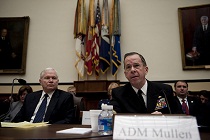 Courtesy: Chairman of the Joint Chiefs of Staff/Flickr
The 'double-dealing' of the U.S. and Pakistani army - all with the ambition of military dominance - has significantly aided various terrorist groups. After 26/11, there is no place to hide for the Mike Mullens and countless others who have been apologists for the Pakistan army and the state it controls.
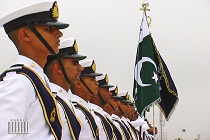 Courtesy: Kash_if/Flickr
In the aftermath of the Mumbai attacks, the Pakstani deep state role was highlighted. The U.S. has come to realise this reality too. Bilateral information sharing could prove to be vital to combat terrorism - both regionally and globally.
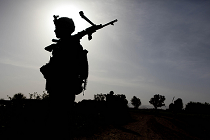 Courtesy: isafmedia/Flickr
Last May, U.S. citizen David Headley confessed to being a spy for the Lashkar-e-Taiba. What no one has tackled yet is whether there are other Headleys out there whose actions threaten India, or any other country. Even with thousands of intelligence agencies scouting for terrorist activities, are we really safer?
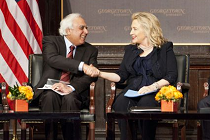 Courtesy: Phil Humnicky/Georgetown University
The first Indo-U.S. Education Summit held last week showed much promise. While education can be driving force of the strategic dialogue between the two countries, this is also an opportunity for business. India's massive education sector, estimated at $25 billion, is waiting to be tapped.