VOA Courtesy: VOA
2 October 2025

Time to re-burnish Global South credentials

The year 2025 is often compared to the Bandung moment of 1955, and for good reason. With the U.S. reordering traditional relationships, the opportunity for greater emphasis on the Global South is now. It is therefore time for India, Africa and ASEAN among others to re-burnish their Global South credentials and use that identity as a platform to engage each other more deeply.
Most popular Indian actors worldwide Courtesy: Gateway House
1 October 2025

Indian Cinema as Economic Catalyst

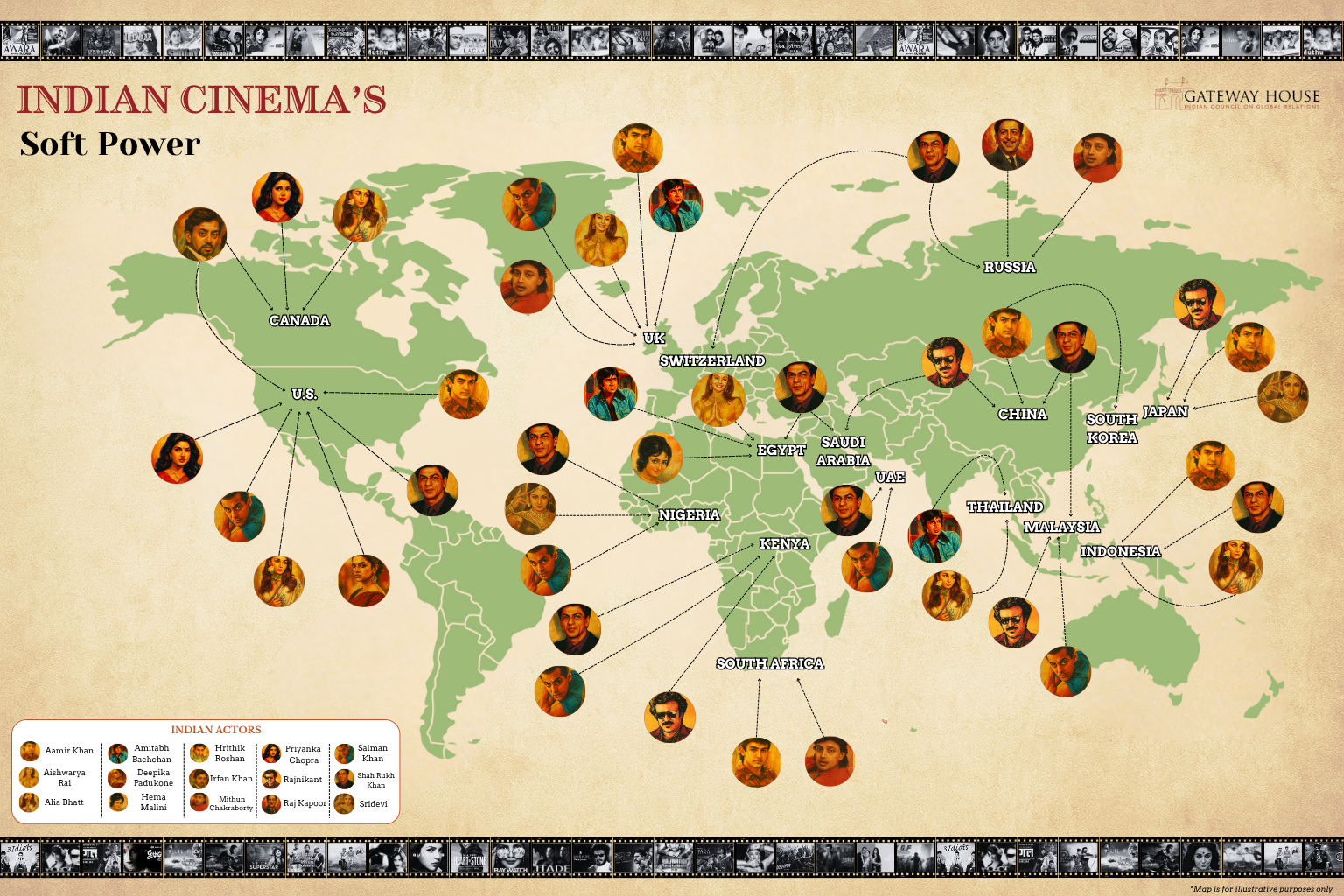
As India seeks leadership in a multipolar world, cultural credibility is as vital as economic clout. Cinema gives India an edge with vivid storytelling, music, and empowering narratives, fostering understanding in a polarised world. Its popularity correlates with trade, as seen in the U.S., Russia, and Middle East. The more popular the cinema, the bigger the boost to trade.

Gateway House (4) Courtesy: Gateway House
18 September 2025

A new momentum for middle powers

The world is undergoing a profound transformation - not driven by the U.S., China, or Russia, but by small and medium states carving out their rightful space in the emerging order. With UN reform stalled, middle-power cooperation must organise effectively to push for a responsive multilateral system that works for all, ensuring institutions are reformed and made fit for today’s world.

G20.Org Courtesy: G20.org
28 August 2025

Appraising Brazil’s G20 Presidency

The G20’s current cycle is unique, with four Global South nations presiding consecutively: Indonesia, India, Brazil, and now South Africa. Brazil’s 2023-24 presidency exhibited both achievements and struggles, prioritising social inclusion, hunger, energy transition, and governance reform. The handover to South Africa marks a significant milestone in G20 history. Will the momentum be followed by the U.S., the next G20 president but also a G20 sceptic?

IMEC map with source Courtesy: The China-Global South Podcast
19 June 2025

U.S.-China rivalry: Middle Powers’ playbook

In the current era of geopolitical uncertainty, the Middle Power states are deepening engagement with countries of the Global South while reducing their exposure to the U.S. and China. Manjeet Kripalani and Carlos Coelho spoke to Eric and Cobus from The China-Global South Podcast, on how countries like India and Brazil are navigating this increasingly contested world.

Report Courtesy: Körber-Stiftung
17 April 2025

Momentum for Middle Powers: Emerging Middle Powers Report

The world is undergoing profound transformations that are not being driven only by the United States, China or Russia. Small and medium-sized States are carving out a legitimate place for themselves in the emerging new order. This second edition of our annual Emerging Middle Powers Report is a reminder that the signs of the times are showing a new momentum for middle powers.

Chavda Pod Courtesy: Abhijit Chavda Podcast
11 April 2024

West must listen to emerging middle powers

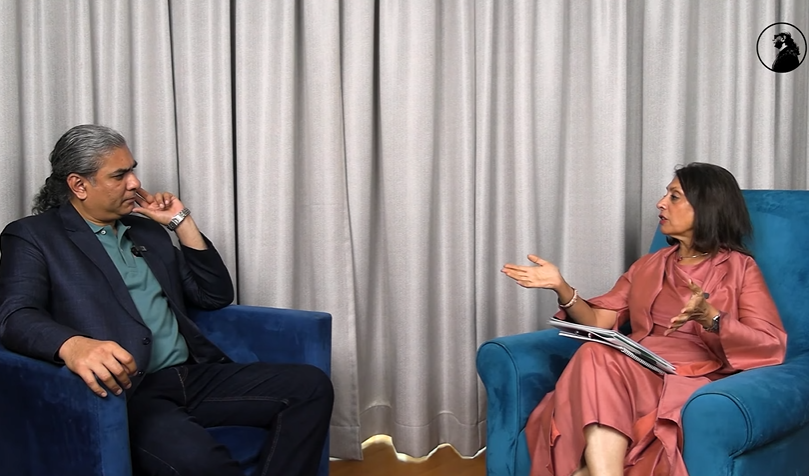
Emerging middle powers like India, Brazil and South Africa are articulating their interests on the global stage with growing assertiveness. Manjeet Kripalani, Executive Director, Gateway House, joins Abhijit Chavda on his eponymous podcast to discuss changing dynamics between the West and the Global South, and how western and emerging middle powers can collaborate on shared priorities like multilateral reform, technology transfer and international trade.

Report Photo Courtesy: Körber-Stiftung
18 March 2024

Listening Beyond the Echo Chamber: Emerging Middle Powers Report

Divergent global reactions to major crises such as those sparked by the war in Ukraine and NATO’s Afghanistan withdrawal have widened the chasm between Western countries and emerging middle powers. This survey, conducted among nearly 1,000 experts from India, Brazil, South Africa and Germany, examines key foreign policy priorities in these countries, and reveals that despite differences, dialogue is possible.