U.S. Tariffs on Brics+ countries Courtesy: Gateway House
25 September 2025

U.S. Reciprocal Tariffs on BRICS+ countries

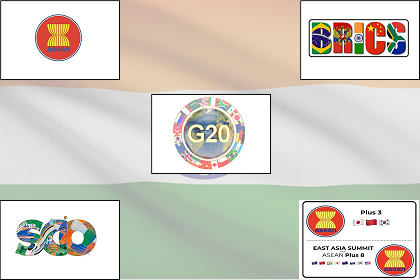
Under U.S. President Donald Trump’s reciprocal trade policy, the original five BRICS member countries account for the highest U.S. tariffs globally. India and Brazil are facing the highest tariffs of 50%, while China follows with a tariff of 34%, down from 145% earlier in the year. This infographic details the U.S. reciprocal tariff rates for each BRICS+ member and the sectors that are impacted.

indo pacific  (2) Courtesy: Getty Images
24 July 2025

India’s footprint in the Indo-Pacific region

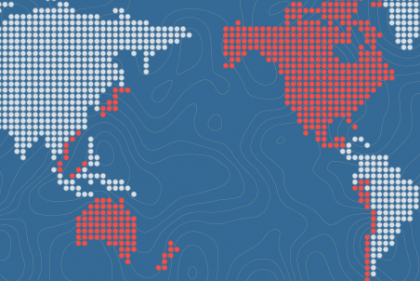
India is strategically expanding its influence across the Indo-Pacific region, positioning itself as a key player in regional affairs. Three elements anchor the effort: development aid, trade and the diaspora. The country now has 20 Free Trade Agreement partners in the Indo-Pacific. The 21.8 million-strong Indian diaspora across the region is a significant source of soft power for India.

shutterstock_1091235845 Courtesy: Shutterstock
15 October 2020

UN: Necessary but reformed

The UN turned 75 this year but instead of grand celebrations, the world witnessed an empty UNGA with world leaders addressing it via video screening because of the pandemic. The UN is under unprecedented stress and being shown up for its inability to tackle the challenges of today like the pandemics, climate change, terrorism or global peace and security. The institution's key governing structures, especially the UN Security Council, are inadequate and demand reform. India must now use gritty resolve to ensure its place in these governing structures.

shutterstock_1049895998 Courtesy: Shutterstock
10 September 2020

India and Asean in a VUCA world

Ambassador Rajiv Bhatia, Distinguished Fellow, Foreign Policy Studies Programme, Gateway House delivered the opening remarks at the 2020 Asia Economic and Entrepreneurship Summit, in the lead-up to the session, - The Future of Asia Pacific Economic Cooperation in a Sustainable VUCA World – What to Expect? What Next? The Summit was jointly organised by the KSI Strategic Institute for Asia Pacific (KSI), The Pacific Basin Economic Council (PBEC) and China Daily Asia Pacific (CD), Kuala Lumpur, 8 September 2020.

2-8-18 CableMap-02 - Copy Courtesy: Gateway House
2 August 2018

Version 2: Mapping China’s global telecom empire

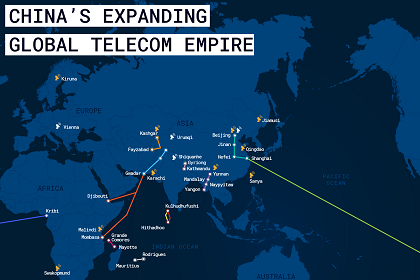
This version of the Gateway House Map on China’s Expanding Global Telecom Empire identifies some more telecommunication assets -- optic-fibre and satellite ground stations -- that Beijing is working on in South and Central America, Africa, Myanmar, the Indian Ocean Region and mainland China besides the existing ones, such as the Pakistan East Africa Cable Express (PEACE). It shows the direction China’s investment is taking, its diplomatic overtures and the larger geopolitical implications of its growing telecom empire

TPP Courtesy: ustr.gov
3 March 2016

A fine line: TPP and India

The Trans-Pacific Partnership has dropped strong Intellectual Property Rights regulations on India’s doorstep. The implications of these regulations could affect India’s own policies, as well as her global aspirations towards the potential Regional Comprehensive Economic Partnership.

TPP Courtesy: ustr.gov
26 November 2015

TPP & ISDS: new tests for India

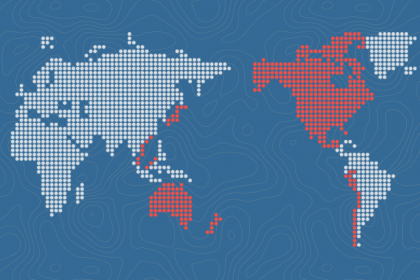
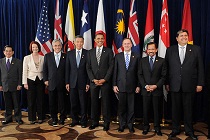
The U.S.-driven Trans Pacific Partnership agreement between 12 countries, which is aiming to become the new standard of world trade, impacts domestic systems globally. For India, it will skew investment and intellectual property rights, and especially the debate over the Investor State Dispute System which allows companies to challenge sovereign rights and public policy.

tpp Courtesy: Gobierno de Chile/Wikimedia Commons
24 January 2014

India and the TPP: Wait and watch?

Can India integrate more fully into the global economy and energise its trade by joining the Trans-Pacific Partnership? Or will negotiating an entry require significant concessions, not necessarily in India’s interests? These outcomes will depend on how TPP framework itself develops – inclusively or exclusively