G7GS Courtesy: telegraphindia.com
13 July 2022

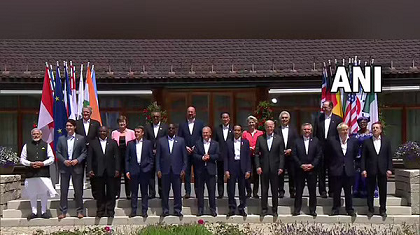
The G7 woos the global south

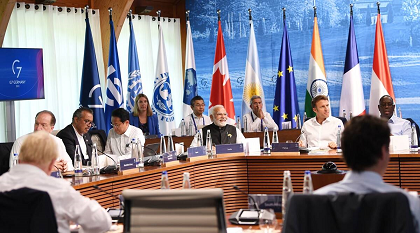
The G7 has reached out to emerging economies which have, of late, been facing challenges on the economic front, brought on by the lingering pandemic and the mismanagement of the Ukraine crisis. They are also seeking, from the global south, a broader acceptance of their world view. Will it be forthcoming?
G7s1 Courtesy: The Print
4 July 2022

What did the G7 achieve?

The shadow of the Ukrainian war was visible at the G7 summit. Anti-Russian formations were expected, but the extensive reference to China drew attention. The leaders did their part by extensively discussing challenges relating to climate, energy, environment, health, and food security. It is now for the G7 governments to deliver, to be taken seriously.

Untitled design (6) Courtesy: Gateway House
10 February 2022

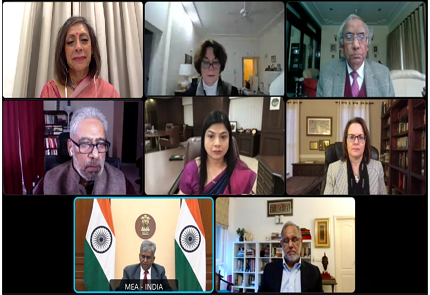
Panel Discussion on India in the Indo-Pacific

On 1 February 2022, Gateway House and the U.S. Embassy, New Delhi, co-hosted a panel discussion on India in the Indo-Pacific: Pursuing Prosperity and Security. The panelists explored the comprehensive role that India can play in the Indo-Pacific from the perspective of business, think tanks, academia and diplomacy.

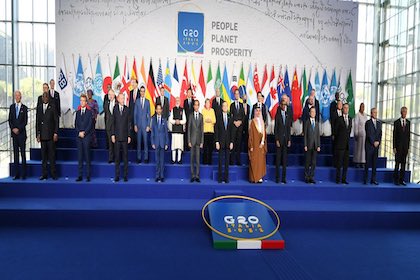
G20 Rome summit, marching ahead Courtesy: G20
4 November 2021

G20 Rome summit, marching ahead

The Oct 30-31 G20 Leaders’ Summit in Rome took several important steps to accelerate economic recovery and health security. In the absence of several Eurasian leaders, India played a significant role especially on climate and energy. The G20 will now acquire greater salience in India's foreign policy, as it readies to lead the grouping in 2023.

BigTech Report (1) Courtesy: Gateway House
1 July 2021

Regulating Big Tech: A Balancing Act

Big Tech is powerful and its profits are growing - by 105% over the last year. It dominates economies. This raises concerns about data protection and privacy, anti-trust, fintech and the specific role of intermediaries. India is leading the way on fintech, but is behind several countries and institutions on digital rules. It is important to establish laws and rules to govern technology – whether domestic or through multilateral bodies – with the aim to strike the right balance between innovation and regulation.

the bohra transcultural network Courtesy: Alvazarat
22 April 2021

The Bohra transcultural network

The Dawoodi Bohra diaspora is present in over 40 countries that are home to 500 sizeable communities. From a predominantly Indian Ocean merchant diaspora in the past, today, its young prefer to seek educational and professional opportunities in developed countries, like the United States. What remains unchanged is the Bohras' traditional way of life, as lived through its rich and composite cuisine and its unique, ever-evolving language – Lisan-ul-Dawat – both of which connect the community across continents.

Chai Courtesy: Wikimedia Commons
26 October 2020

India must back Developing World in Space20

The Space20 is the newest sub-forum of the G20 initiated by Saudi Arabia, with the support of the United Nations Office of Outer Space Affairs. India, on its way to the G20 presidency in 2022, should set a comprehensive Space20 agenda for the democratization of outer space, whereby it can share its space growth story with the developing world and achieve its goal to become a global knowledge epicenter.

shutterstock_1091235845 Courtesy: Shutterstock
15 October 2020

UN: Necessary but reformed

The UN turned 75 this year but instead of grand celebrations, the world witnessed an empty UNGA with world leaders addressing it via video screening because of the pandemic. The UN is under unprecedented stress and being shown up for its inability to tackle the challenges of today like the pandemics, climate change, terrorism or global peace and security. The institution's key governing structures, especially the UN Security Council, are inadequate and demand reform. India must now use gritty resolve to ensure its place in these governing structures.

shutterstock_777026497 Courtesy: Shutterstock
13 August 2020

We own your Face!

Facial recognition technology has emerged as an important identification tool. Big tech, social media companies and governments around the world use it and hold an unprecedented power over individuals and communities. Its use for surveillance purposes has brought it under public scrutiny. The technology has still not been perfected. Is it really ready for adoption?