Screenshot 2025-10-13 103335 Courtesy: Körber-Stiftung
13 October 2025

Bandung at 70: Multilateralism in a New Era of Multi-Alignment

The world is facing multiple crises which are shaking the foundations of multilateralism. The West’s structures are faltering, and the need for effective and equitable cooperation is greater than ever. Seventy years after the 1955 Bandung Conference, its principles of sovereignty, territorial integrity, cooperation and solidarity remain vital. This report revisits Bandung’s relevance for today’s reform efforts, urging renewed Global South–Europe collaboration for a sustainable global future.
Getty (1) Courtesy: Gateway House
15 May 2025

The New Geopolitics and South Asia’s Trade Architecture – What Next?

Geopolitics is increasingly intertwined with the economic destiny of South Asia. Even before the U.S. tariffs were rolled out, growing polycrises had hit the global economy, which has been struggling since the pandemic. South Asia seems a relatively bright spark of regional trade and growth. This paper analyses South Asia’s trade architecture in the backdrop of a sluggish world economy in the 2020s, and makes recommendations for closer regional economic integration.

Report Courtesy: Körber-Stiftung
17 April 2025

Momentum for Middle Powers: Emerging Middle Powers Report

The world is undergoing profound transformations that are not being driven only by the United States, China or Russia. Small and medium-sized States are carving out a legitimate place for themselves in the emerging new order. This second edition of our annual Emerging Middle Powers Report is a reminder that the signs of the times are showing a new momentum for middle powers.

task force cover 420 Courtesy: Gateway House
16 February 2023

G20 Energy Transitions and Climate Finance Task Force Report

Significant progress has been made globally in adopting green energy. Technological advances, easier availability of capital and regulatory measures have helped. But progress is likely to slow due to the shocks caused by Covid-19 and the Ukraine crisis. How to continue the green transition whilst ensuring that lower-income countries have access to affordable energy? This Task Force offers recommendations for India’s G20 Presidency.

ISRO satellite Courtesy: ISRO
26 May 2022

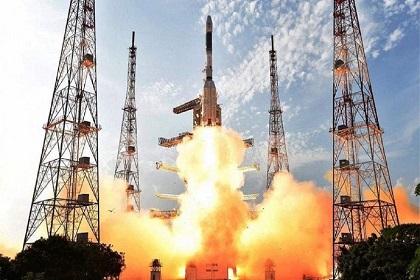
India’s EO satellites in the Indo-Pacific

The Quad has agreed to launch a satellite-based maritime security initiative to curb illegal fishing by China. India is a global leader in satellite launches, especially in Earth Observation (EO) satellites. The Indo-Pacific nations are looking at the Indian model because it is applicable, economical, and sustainable.

Narendra-Modi-Silicon-Valley-684x420 Courtesy: Twitter: Digital India Archives
19 May 2022

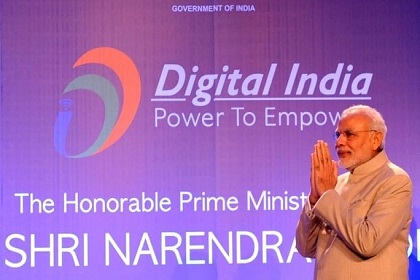
Digital public goods for the Indo-Pacific

With mass digitisation, India has proved that technology is not just for the educated, privileged, and wealthy. The country's open and secure digital public platforms can be significant for the Indo-Pacific, the world's most data-rich region. The Indian model is applicable because it is open-source, interoperable, auditable, and enshrines individual rights, ownership, and empowerment.

china-solomon Courtesy: Financial Times
21 April 2022

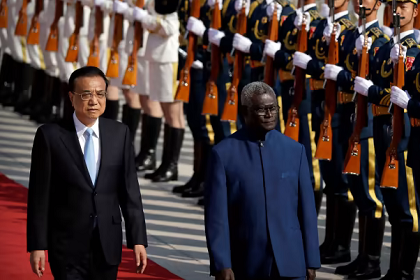
Economic and human security in the Indo-Pacific

China has established a dominant presence in the Indo-Pacific through exploitative economic engagements. This has destabilised smaller nations in the region and made them dependent on Chinese support. For a free and open Indo-Pacific, India must press its advantage in human and economic capacity building.

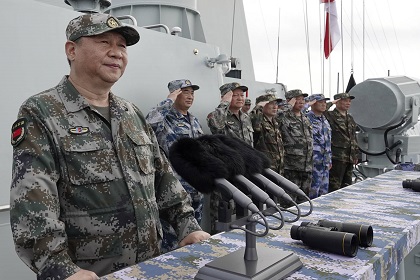
FILE - In this April 12, 2018, file photo released by Xinhua News Agency, Chinese President Xi Jinping, left, speaks after he reviewed the Chinese People's Liberation Army (PLA) Navy fleet in the South China Sea. From Asia to Africa, London to Berlin, Chinese envoys have set off diplomatic firestorms with a combative defense whenever their country is accused of not acting quickly enough to stem the spread of the coronavirus pandemic. (Li Gang/Xinhua via AP, File) Courtesy: The Japan Times
31 March 2022

China’s military modernisation

China's 2022 defence budget reflects the seriousness of the Communist Party aims to fully modernise the People’s Liberation Army by 2027. Given the on-going border competition, it is crucial for India too, to optimise budgetary resources, intensify restructuring and enhance indigenous defence production, thereby improve power projection capability.

suiso frontier Courtesy: TIME
24 March 2022

Green Hydrogen in the Indo-Pacific

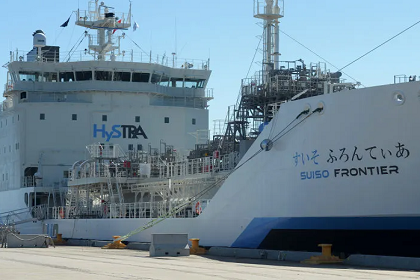
Last month, the Government of India released its Green Hydrogen Policy with the goal of boosting energy self-reliance and inspiring clean energy transitions. The time is right for the Indo-Pacific economies to finance green hydrogen projects and integrate them into supply chains.

Logistics,And,Transportation,Of,Container,Cargo,Ship,And,Cargo,Plane Courtesy: Shutterstock
10 March 2022

India in the Resilient Supply Chain Initiative

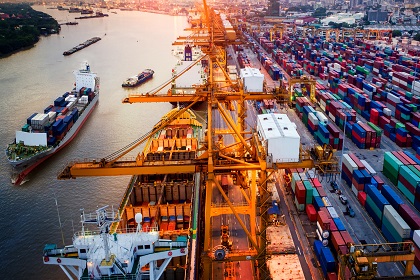
Concerns of global supply chains being overdependent on China has shifted the focus to India. This became clear in 2021 when Australia, Japan and India together launched the Resilient Supply Chain Initiative. India must now leverage its unique position in the Indo-Pacific region by incorporating well-planned industrial clusters and models.