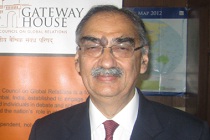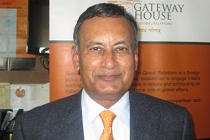
pankajsaran2 Courtesy: Prachi Bidaye/ Gateway House
21 August 2013

Charting a new route to Bangladesh

Pankaj Saran, India’s High Commissioner to Bangladesh, talks to Gateway House about the current relationship between the two countries and the prominent issues that need to be addressed for a durable partnership.

foriegn affairs sept 2013 Courtesy: Foreign Affairs
20 August 2013

The Rise of the Rest of India

In Indian politics, caste and religion still matter, but in many states, economic competence now matters more. Things look bad in New Delhi, but the capital is not the whole of India.

Mossadegh by Harry S. Truman Library and Museum - WikimediaCommons Courtesy: Harry S. Truman Library and Museum/ Wikimedia Commons
19 August 2013

Badi Soch: Behind the CIA-Iran revelations

This daily column includes Gateway House’s Badi Soch – big thought – of the day’s foreign policy events. This Badi Soch deliberates on the timing of the CIA’s admission of involvement in overthrowing Iran’s Prime Minister Mohammed Mossadegh in 1953 and the implications of this disclosure

pratap1  by Ronnie Hall Flickr Courtesy: Ronnie Hall/Flickr
14 August 2013

Liberalism in the large

Liberalism is a politics of hope, mutuality, compromise and reason. If that has been replaced by a politics of fear, egotism, polarisation and unreason, it is India’s elites that are responsible. How can liberalism be made an object of mass politics in India?

cyber security UK MInistry of defence Courtesy: UK Ministry of Defence/Flickr
14 August 2013

A war on terror or an assault on liberal values?

The war on terror and the global financial crisis have tilted the balance of authority on the side of the state, which the liberating forces of cyber space have only partially counteracted. Can the forces of liberalisation prevail over the forces of incipient oppression?

gandhi nehru ambedkar Courtesy: Wikimedia Commons
14 August 2013

Liberalism is not post-modern opportunism

Over the past 30 years, Indian liberals have shed their values of tolerance, reason and dialogue. The rise of fundamentalism, strident socio-political discourse, and post-modernist individualism also indicate the decline of the liberal ethos. This is a threat to India’s vibrant philosophical liberal tradition

onions leliebloem flickr Courtesy: Dipayan Bhattacharjee/Flickr
14 August 2013

In search of economic liberalism in India

The reforms of the early 1990s did not bring economic freedom to a majority of the population. That explains a large proportion of the economic and social ills that affect India today. Why is economic life in India of the ‘Taliban type’? Why is illiberal thought still our guiding principle?

protests Courtesy: India Kangaroo/Flickr
14 August 2013

Reformulating the liberal agenda

India needs a new liberal party, which trusts markets rather than officials for economic outcomes, and focuses on reform of the institutions of governance. This new party must be accompanied by a recovery of the moral authority of our Constitution, and by individual engagement with everyday politics

education kiruba shankar flickr Courtesy: Kiruba Shankar/Flickr
14 August 2013

For a liberal India, liberate education

Education is the most in-demand commodity amongst both the rich and the poor in India. Yet, the state is unable to ride this wave to create a more liberal society. If education is the gateway to taking India’s liberal agenda forward, then educational institutions must be free to pursue their own paths

school Courtesy: Sebastian Baryli/ Flickr
14 August 2013

A new ecosystem of liberal principles

Inclusive growth means inclusive reforms and equity in economic freedom, which empowers the formal sector as well as the huge informal sector in India. In the social sector, the government must fund beneficiaries, while in the political domain the ‘ruled’ and the ‘rulers’ must be equal