A futuristic agenda for India & Canada
India can draw Canada in a new direction – away from its trans-Atlantic fixation, into the Indo-Pacific and a tech and resources partnership that will benefit both democracies

 Courtesy: Financial Express
India can draw Canada in a new direction – away from its trans-Atlantic fixation, into the Indo-Pacific and a tech and resources partnership that will benefit both democracies
 Courtesy: Global Environment Facility
Since Independence, India has been consumed by its domestic priorities. Now, with increasing integration with the world and a huge stake in global stability, it is time to focus on the global commons. India has a seat on the hightable to design and shape the rules for the governance of the global commons. In this special Independence Day Briefing, Gateway House examines India’s engagement with four global commons – technology, outer space, cyber and the oceans – and makes recommendations on how best they can be governed for our collective future.
 Courtesy: PC Magazine
A massive technological revolution is in the offing in the next 20 years, with its maximum impact being on the future of work. Artificial Intelligence and robotics will change how the labour market operates and governments will have to review ethical standards for emerging technologies. India can show the way in creating inclusive economic growth
 Courtesy: Pexels
On the face of it, these digital or virtual currencies seem to be a brave new way to transact business or make an investment, but they also have inherent risks. A T20 proposal is seeking that the G20 devise a regulatory framework that places them on a level playing field with other financial instruments
 Courtesy: Gateway House
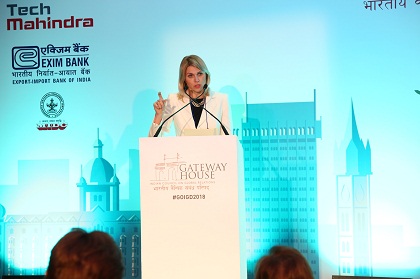
Digital development can bring significant economic gains – from a better business environment to job growth and improved public finances, said Urve Palo, Minister of Entrepreneurship and Information Technology, Republic of Estonia
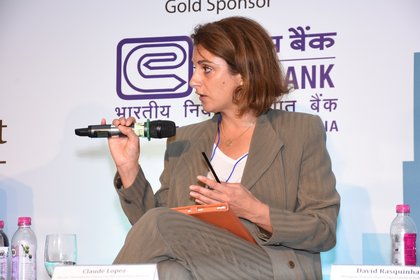
Claude Lopez, Director, International Finance and Macroeconomics Research, Milken Institute, spoke to Gateway House on how innovation in the financial sector does not come from finance, but from technology, and the private sector ought to take the lead in regulating the instruments of tomorrow
 Courtesy: Gateway House
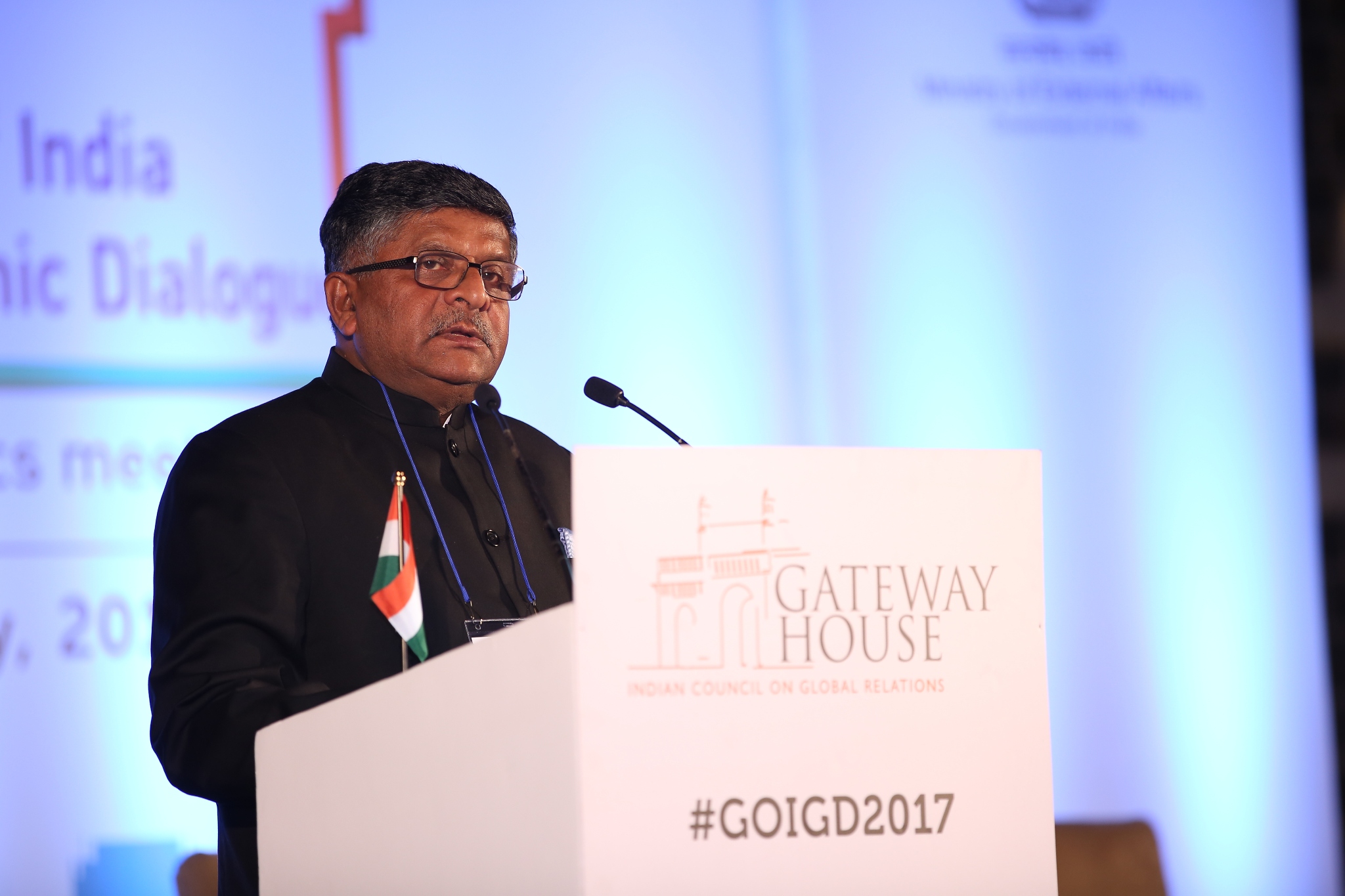
Hon’ble Ravi Shankar Prasad is the Minister of Law & Justice and Minister of Electronics & Information Technology at the Government of India. He delivered the Inaugural Keynote II at India’s second Gateway of India Geoeconomic Dialogue conference in Mumbai, organised in association with the Ministry of External Affairs.
 Courtesy: Medium
A new phase of globalisation has begun, driven by the rise of digital flows. This phase brings about new questions for the WTO and other global economic and trade governance. A multilateral approach must balance protectionist sentiments along with a desires for digital openness.
 Courtesy: Wikipedia
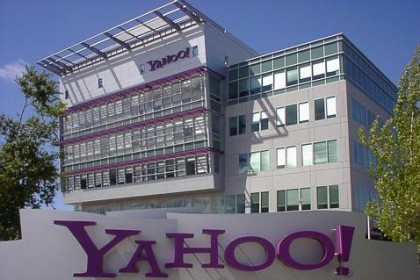
Popular analysis of the sale of Yahoo's online business to Verizon dwells on the company’s missteps, missing out the enormous, long term success that it is.
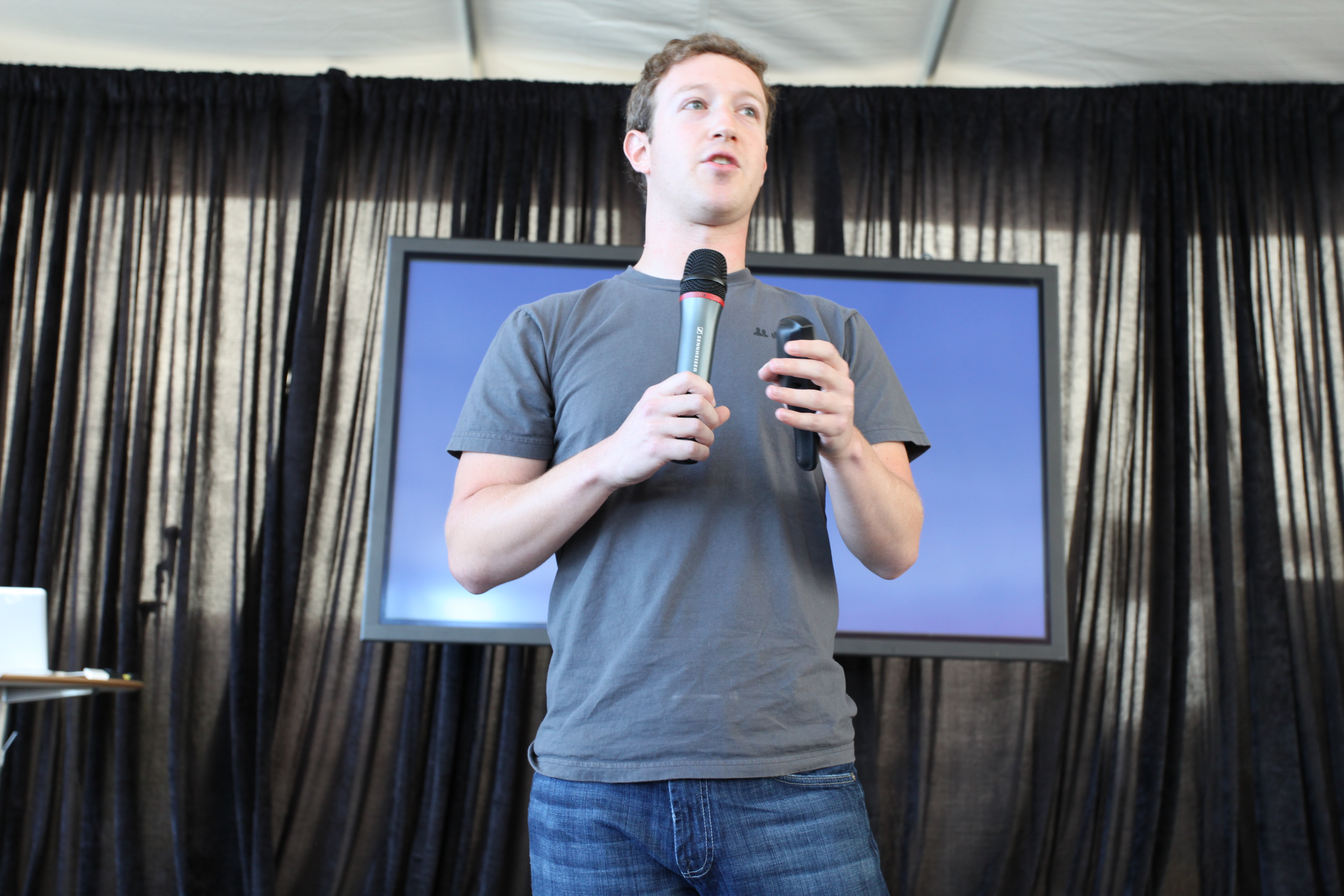 Courtesy: Flickr / Robert Scoble
The controversy surrounding Facebook’s Free Basics in India highlights a key dilemma currently faced by policy makers and private entrepreneurs who wish to foster, not just ‘inclusion’, but business models which foster economic democracy.