Latin America Update, October 2013
In 'Latin America Update' Gateway House lists some of the important events in Latin America over the past month

 Courtesy: Google Maps
In 'Latin America Update' Gateway House lists some of the important events in Latin America over the past month
 Courtesy: Roberto Stuckert Filho/Wikimedia Commons
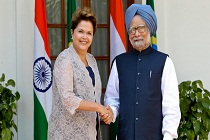
In 'India-Latin America Engagements', the Latin America Desk at Gateway House presents a selection of news of India’s engagement with the region during the previous month
 Courtesy: Ministério da Saúde/Flickr
After revelations that the U.S.’s NSA spied on her, Brazilian President Dilma Rousseff has ordered a series of measures to ensure online independence and called for an equitable global internet infrastructure. India can follow Brazil’s lead and make its communication systems less vulnerable
 Courtesy: glaubercavalcante
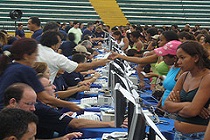
Like Brazil, many other countries in Latin America have implemented successful poverty-alleviation programmes, including cash transfers, as part of an overall strategy for reducing inequality. These programmes can be a model for other developing countries
 Courtesy: Knopf
In ‘The Blood Telegram’ Gary Bass jolts us into recalling one of the most horrific genocides of the last century that occurred during the creation of Bangladesh
 Courtesy: @Doug88888
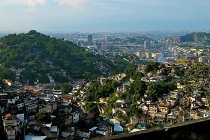
Gateway House’s Akshay Mathur recently visited Brazil to attend a BRICS-themed conference, organised by the National Association of Research and Graduate Programs in the Social Sciences. In this blog, he writes about his first impressions of the country and the similarities between India and Brazil that he observed.
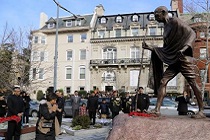 Courtesy: Indian Embassy, Washington D.C.
This daily column includes Gateway House’s Badi Soch – big thought – of the day’s foreign policy event. This Badi Soch analyses the implications of revelations about surveillance on Indian missions, by the U.S. government.
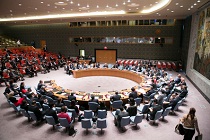 Courtesy: United Nations
The recent UNSC Resolution, which mandates the complete destruction of Syria’s chemical weapons, demonstrates that after more than a year, a degree of international agreement on the Syrian issue has been possible. In the evolving situation, Russia will now emerge as a major player
 Courtesy: United Nations ESCAP
Rajni Bakshi, Senior Gandhi Peace Fellow, Gateway House, delivered a lecture at the ‘International Day of Non-Violence’ at the UN Convention Centre in Thailand, on October 2. In her lecture, she spoke about the significance and the greater potential of non-violent means in achieving the goals of today’s world.
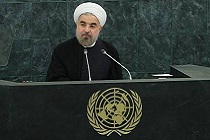 Courtesy: Office of the President of Iran
In recent days, both the U.S. and Iran have intimated that they seek a broad improvement in relations, signalling a welcome thaw in bilateral ties. What does this mean for Tehran and Washington, and more importantly, how will this development play out in the West Asian region?