Big FinTech is here!
The future is likely to see ‘Big FinTech’ replace ‘Big Tech’. But this time around, India can be part of the story from the ground up. India has been ahead of the fintech game on the technology, regulatory and consumer fronts.

 Courtesy: Shutterstock
The future is likely to see ‘Big FinTech’ replace ‘Big Tech’. But this time around, India can be part of the story from the ground up. India has been ahead of the fintech game on the technology, regulatory and consumer fronts.
 Courtesy: Hindustan Times
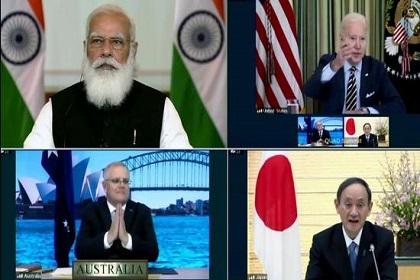
As China gains ground in a global competition across the military, economic, diplomatic, and technological domains, the Quadrilateral Security Dialogue (Quad) made up of Australia, India, Japan, and the US is finally finding its footing.
 Courtesy: Reuters
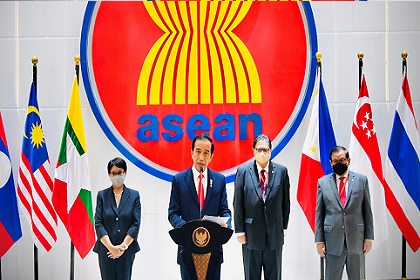
Since the military coup in Myanmar on February 1, violence and protests have broken out across the country and are continuing. Supported by India and Japan, ASEAN has played a key role, by calling the emergency summit in Jakarta. It has bridged internal gaps and helped navigate the international community to a reconciliation of the crisis. India must continue support to such efforts, which aim for immediate and long-term peace.
 Courtesy: European Commission
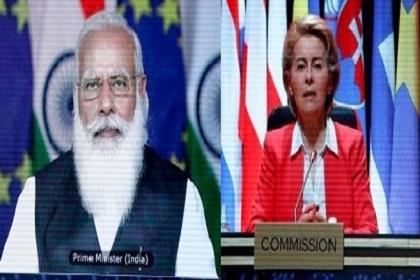
This India-EU summit was different from the ones past, and India is a significant gainer. A trade agreement and connectivity partnership aside, the EU has stepped up to help India during this emergency, viewing it not as a weak state but as a partner in distress. The geopolitical indicators for an enhanced engagement are now also in place.
 Courtesy: Gateway House
Digital Manufacturing in India can bring in a new age globalisation of manufacturing, and developing resilient, transparent and trusted supply chains. With the help of MNCs, start-ups and government in accelerating digital adoption, and India must become part of the emerging global trading system, using the COVID-19 pandemic to accelerate digitisation.
 Courtesy: ISRO
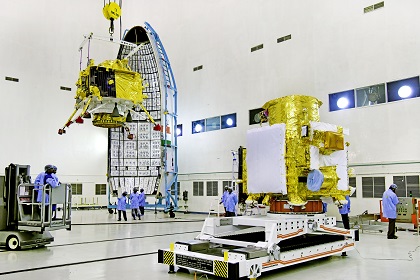
With the space sector being divided into astro-political blocs, India can't afford to stay non-aligned. A recent treaty between China and Russia makes it plain for India that leaving space exploration to a few science aficionados can be dangerous. India needs a national space exploration strategy with tangible economic and meta-strategic goals in sight.
 Courtesy: Shutterstock
As new technological advances take place every day, India must keep up. While the U.S. is still a front-runner in defence technologies, China and Russia are catching up quickly. In order to counter this, India can insert itself into the pre-existing bilateral co-operation between the U.S. and Israel. Sameer Patil, Fellow, International Security Studies Programme tells us how.
 Courtesy: European Union
The EU’s Indo-Pacific strategy comes better late than never. But it has to step gingerly. It cannot antagonize China, wants to build on the legacy of its members’ colonial past, give the region the infrastructure it needs, and make the trade agreements that it wants. Is it achievable?
 Courtesy: Gateway House
The Task Force led by Gateway House will study economic and technological cooperation between the four like-minded democracies in the Indo-Pacific.
 Courtesy: World Economic Forum
In March 2021, the World Economic Forum (WEF) announced the addition of 15 manufacturing facilities to the prestigious Global Lighthouse Network. Two Indian companies were on the list – the Tata Steel facility in Jamshedpur, and the ReNew Power facility in Hubli. This is twice the number of Indian companies on the list last year. Many more facilities will likely be added to the WEF list, as several prepare to graduate their manufacturing businesses to keep up with Industry 4.0.