morsi_0 Courtesy: gr33ndata/Flickr
9 August 2012

Islamism and democracy

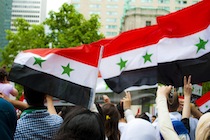
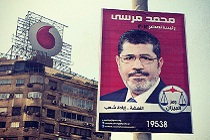
The involvement of Islamists in democratic movements is usually dismissed as a mere ruse to attain political power. However, evidence suggests that people in Muslim-majority democracies support Islamist groups which challenge a dishonest government, rather than those who seek to establish Islamic autocracy.
Neelam on Syria Courtesy: FreedomHouse2/Flickr
6 July 2012

The unique tragedy of Syria

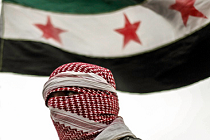
Simultaneous efforts to resolve the problem in Syria remain stymied even as more and more high level meetings and consultations take place. The more countries treat the situation as a proxy for political differences, the more it creates the conditions for a wider conflagration with an unpredictable outcome.

debnath shaw Courtesy: Gateway House
5 July 2012

“Russia still dominates Central Asia”

Though some countries like Russia gained a strong foothold in Central Asia and the Caucasus post-1991, India has been a late-comer. Gateway House interviews former Ambassador to Azerbaijan Debnath Shaw to discuss India’s energy interests in the region, the Shanghai Cooperation Organization and the TAPI pipeline.

tightrope india us Courtesy: The White House
13 June 2012

Iran tests India’s policy

Apart from bilateral ties, also at play at the India-U.S. Strategic dialogue is the difficult triangulation in India’s relations with the U.S. and Iran. It does not serve India to get enmeshed in the U.S-Iran confrontation. Instead, the relationship must develop on the basis of realpolitik and mutual interest.

iran talks Courtesy: IAEA Imagebank/Flickr
8 June 2012

All to play for in Moscow

Ahead of nuclear talks between Iran and the P5+1 in Moscow, the West seems confident that sanctions will induce Iran to settle on its uranium enrichment. But rather than arriving at a negotiated settlement by applying the principle of reciprocity, the West may look to anaesthetize oil markets.

human rights Courtesy: Flickr/tao_zhyn
1 June 2012

Rethinking human rights

The failure of Western military interventions to bring peace raises questions about the effectiveness of human rights and calls for its redefinition. Instead of stigmatizing non-Western democracies that do not necessarily support intervention, the West should initiate an inclusive dialogue with these countries.

Myanmar Sanctions Courtesy: Wikimedia Commons/Htoo Tay Zar
1 May 2012

Sanctions on Myanmar: Have they worked?

The West is quick to claim that their sanctions against Myanmar have forced the government to implement political and economic reforms in the country. However, such bans do not usually achieve their stated purpose of forcing regimes to change their behavior.

U.S.-Afghanistan agreement: A welcome start Courtesy: U.S. Department of Defense
27 April 2012

U.S.-Afghanistan agreement: A welcome start

An important take-away from the preliminary pact reached by Kabul and Washington is that unlike the 1990s, the Americans are not just packing their bags and leaving. This is good news in terms of regional stability, and the upcoming NATO summit may answer some questions this draft agreement raises.

bahrain piece neelam Courtesy: LGEPR
24 April 2012

The Bahrain formula

With turmoil in the Middle East, a drawdown in Iraq and Afghanistan, the Iran-Israel-U.S. conflict, the international community has paid little attention to the democracy of a small group of people - the Bahrainis. More worrisome, however, is that politics now responds to the elite.

5825395379_5d725a53f4_z Courtesy: Flickr/freeedomania
21 April 2012

UN: a return to ‘mandated colonialism’

By forcing regime change in Libya, and attempting the same in Syria, and by promiscuously arming disparate groups of Wahabbis and Salafists to achieve this aim, NATO is creating more room for instability in the region. What Syria needs is engagement, not isolation; it needs dialogue and not the arming of rebels.