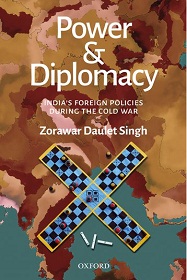
This account of India’s foreign policy under Jawaharlal Nehru and Indira Gandhi is an accomplished body of research into a period, usually studied primarily for India’s Non Aligned Movement. The author suggests that Nehru’s larger Asian, more global, view for India has therefore gone unnoticed
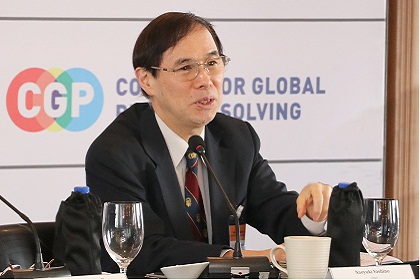
Naoyuki Yoshino, Dean, Asian Development Bank Institute, outlined some of the issues that will concern Japan, which is president of the G20 this year. He was in Mumbai for the India-Japan dialogue, organised by Gateway House recently
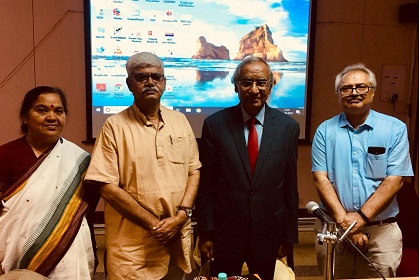
This lecture, which covers the genesis and much larger profile of the Act East Policy (AEP) in relation to its predecessor, also explains its defining points of divergence and emphasis
The main objective of the Shanghai Cooperation Organisation’s (SCO) Energy Club, when Russia formed it, was to market its member states’ substantial oil and natural gas reserves. This map shows some of the important natural gas pipelines, originating from Russia and its neighbouring countries that are not members of the SCO. What can India do to secure supplies from these abundant but currently inaccessible natural gas reserves?
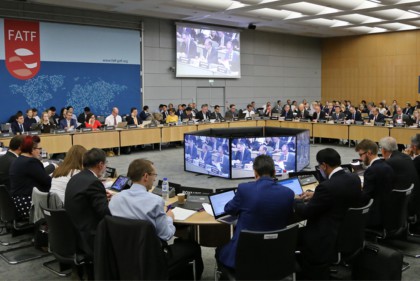
After the Pulwama attack of 14 February 2019, Pakistan has come under the international scanner for its support and financing of terrorist groups. At a meeting of the Financial Action Task Force (FATF) in Paris last week, it was pulled up for its inability to choke terrorist financing. This primer illustrates the role of the FATF in tackling terrorist financing and money-laundering, and studies its recent review of Pakistan
The key global powers are redefining their roles in the Indo-Pacific to promote national interest. China’s rise and increased activism in South Asia and the Indian Ocean region is an uncontested reality even as Asian countries worry about the new cold war in which the U.S. and China are locked. The Quadrilateral Dialogue has reemerged to prevent a unipolar Asia — these are some of the trends unfolding in this arena
Participants in a recent discussion on digital issues, hosted by Gateway House, brought to the fore some universal concerns about trust, tech imperialism and the militarisation of cyberspace
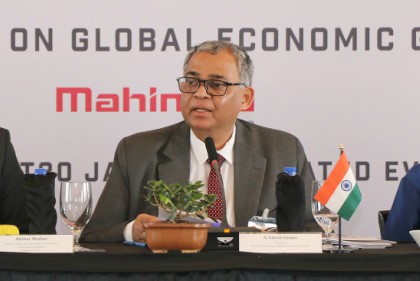
The following remarks were given by A. Gitesh Sarma, Secretary, Ministry of External Affairs, Government of India as the Keynote Speaker at the Think20 Mumbai 2019 roundtable discussion on January 28, 2019
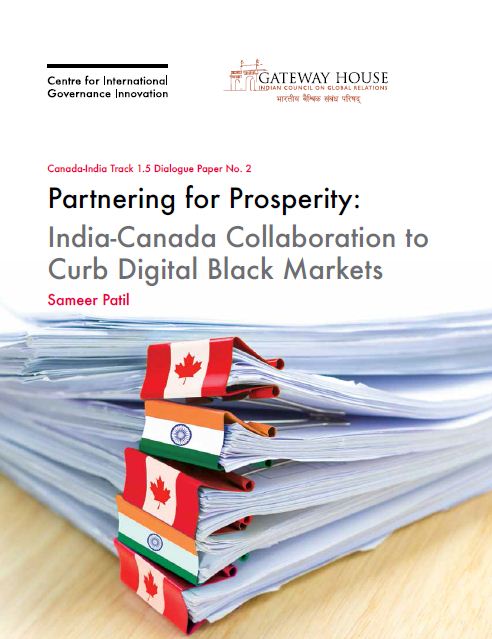
The virtual computer world holds tremendous potential for harm infliction, and cybercrime is a growing concern for India and Canada. Both countries have cracked down on digital black
markets, where transactions for contraband and illegal services take place, but such cooperation can be further deepened through advanced use of technology and informal collaboration, for example, thereby also contributing to international security at the multilateral level
The following remarks were given by Ambassador Rajiv Bhatia, Distinguished Fellow, Foreign Policy Studies, Gateway House as Distinguished Guest Lecturer at IIM Tiruchirappalli on February 3, 2019