Sifra_image Courtesy: Gateway House
12 November 2020

India and the SCO: Bound by Buddism

In November this year, India will be hosting the Shanghai Cooperation Organisation (SCO) exhibition “Shared Buddhist Heritage” to coincide with the SCO Council of Heads of Government Meeting and two Ministerial Level Meetings. This paper recommends a theme on India’s Buddhist legacy in the SCO, which ties together three important Buddhist historical narratives (based on archaeological evidence), that can add heft to India’s leadership in reviving people-to-people ties through Buddhism amongst the eight member nations
Ambika_Image Courtesy: Gateway House
12 November 2020

SCO: Time for a revised Charter

The expansion in membership of the Shanghai Cooperation Organisation (SCO) is an opportunity to review, possibly revise and widen the scope of its Charter to make it more suited to address the concerns of all its members, including new ones like India. This paper recommends what the changes in the SCO Charter ought to be by comparing it with the successful ASEAN charter.

Rajiv Bhatia_Image Courtesy: Gateway House
12 November 2020

India-SCO: New Platform, Common Ground

India will host the 19th meeting of the Council of Heads of Government on 30 November 2020. This will be the first meeting of the grouping’s second highest organ, hosted by India. The significance of the event lies in the timing – India’s relations with two fellow memberstates, China and Pakistan, are at an exceptionally low ebb; yet the clear message from the SCO Secretariat and other member-states is: India’s presence in the SCO is highly beneficial to the latter and should be fully leveraged to strengthen it as an important and upcoming intergovernmental organisation. This necessitates a fresh appraisal of options for India.

shutterstock_1091235845 Courtesy: Shutterstock
15 October 2020

UN: Necessary but reformed

The UN turned 75 this year but instead of grand celebrations, the world witnessed an empty UNGA with world leaders addressing it via video screening because of the pandemic. The UN is under unprecedented stress and being shown up for its inability to tackle the challenges of today like the pandemics, climate change, terrorism or global peace and security. The institution's key governing structures, especially the UN Security Council, are inadequate and demand reform. India must now use gritty resolve to ensure its place in these governing structures.

shutterstock2_1027256470 Courtesy: Shutterstock
13 February 2020

Pakistan under FATF’s critical review

The upcoming Financial Action Task Force (FATF) plenary session 16-21 February will be crucial for both Pakistan and Iran as the anti-money laundering and anti-terrorist financing measures undertaken by the two countries will be reviewed by the 39 member states of the FATF. Decisions will be taken on their retention or removal from the grey list and black list respectively

merlin_155315436_159aa613-01d1-4b5e-8c01-f33ad69d0626-superJumbo Courtesy: NY Times
30 May 2019

Foreign policy continuum with the BJP

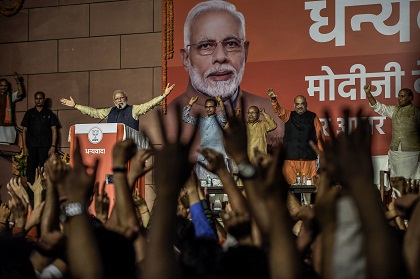
India’s foreign policy is increasingly blended in with its domestic agenda – and vice versa. Prime Minister Modi’s past proactive foreign policy has paid dividends in bringing global attention to India, a fact young voters have noticed and approved. In his second term, what will India’s foreign policy look like? A continuum of the past, but also new frameworks for the future

RadioFarda Courtesy: Radio Farda
28 February 2019

FATF: global terrorist financing watchdog

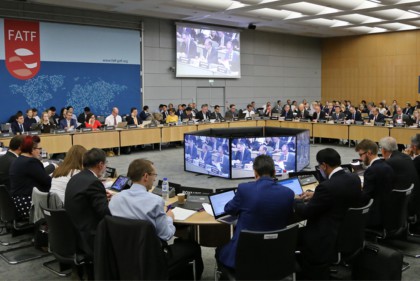
After the Pulwama attack of 14 February 2019, Pakistan has come under the international scanner for its support and financing of terrorist groups. At a meeting of the Financial Action Task Force (FATF) in Paris last week, it was pulled up for its inability to choke terrorist financing. This primer illustrates the role of the FATF in tackling terrorist financing and money-laundering, and studies its recent review of Pakistan

30362033555_a558fdf2cd_o Courtesy: Mea/ Flickr
23 August 2018

Boosting BIMSTEC’s visibility

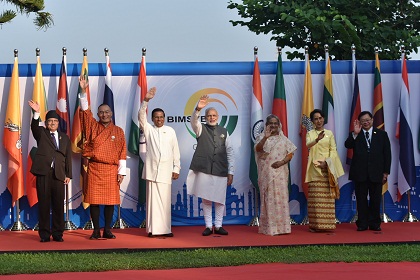
The 21-year-old regional organisation, which will hold its fourth summit on August 30-31, was formed because of the opportunities to make headway in economic and social development through cooperation, but it has achieved modest success. It has a relevance independent of SAARC or ASEAN and goals of its own to pursue