Indira Lyndon Jerchel wikimediacommons Courtesy: Jerchel/WikimediaCommons
24 September 2013

The case for India-Alignment

India often finds itself in the right place at the wrong time or vice versa, as our dogma of non-alignment trumps honest calculations of self-interest in policy-making – rendering it unfavourable. The national interest, hence, calls for selective alignment on some issues with Washington and on others with Beijing

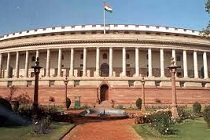
parliament Courtesy: Shwkyn231/Flickr
31 December 2012

India’s foreign policy: A year in review

The year 2012 has been a busy one for foreign policy: from escalating disputes in the South China Sea to alternate financial instruments from the emerging world. India’s foreign policy too has its shown strengths and weaknesses. We present our top foreign policy Hotspots, Sweet spots and Blind spots for 2012.

Myanmar Sanctions Courtesy: Wikimedia Commons/Htoo Tay Zar
1 May 2012

Sanctions on Myanmar: Have they worked?

The West is quick to claim that their sanctions against Myanmar have forced the government to implement political and economic reforms in the country. However, such bans do not usually achieve their stated purpose of forcing regimes to change their behavior.

Courtesy: IAEA Imagebank
9 April 2012

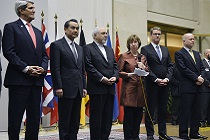
Iran: An opportunity for BRICS

The scope for any process on nuclear talks with Iran to founder on distrust, misunderstanding and political in-fighting in both Tehran and Washington remains formidable. Equally disturbing are the wider political realities. Can the upcoming talks in Istanbul launch a process that can, over time, lead to agreement?

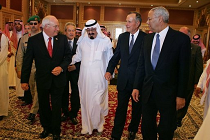
monus wahhabi piece Courtesy: White House photo/WikimediaCommons
29 November 2011

NATO vs Shias: A geopolitical miscalculation

The Wahhabis, who now merit NATO backing, continue on their global mission of converting the Muslim Ummah to its relatively harsh and antediluvian ways of thinking and living. For NATO, this is a geopolitical miscalculation that will have tragic security consequences for the alliance within a decade.

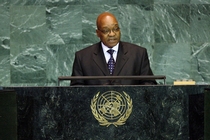
UN Photo Marco Castro_210x140 Courtesy: UNPhoto/MarcoDormino
12 April 2011

New trends in the management of upheaval

A new United Nations doctrine is revolutionising the manner in which Western powers achieve regime change. Under the pretext of “Responsibility to Protect” –as the doctrine is named –armed intervention does not depend on the aspirations of a populace but the facilitation of existing power equations

Frank Wisner Courtesy: GatewayHouse
26 March 2011

“No political connectivity between BRICS”

Frank Wisner, the legendary US diplomat who was not only President Barack Obama's special envoy to Egypt but also a former ambassador to India, discusses the outlook for Egypt, resolving the mayhem in the Middle East and India-Pakistan relations in a Gateway House exclusive.

Nina-no wIKIMEDIA Courtesy: NinaAldinThune/Wikimedia
7 February 2011

March of Follies in Egypt

There are more than Western interests at play in Egypt. The other catalysts for the unrest are a combination of Iranian adventures, hypocritical policies of West Asian regimes and resurgent commodity speculation in western markets, triggering a rise in prices of basic items in emerging markets