west asia Courtesy: Wikipedia.org
27 June 2014

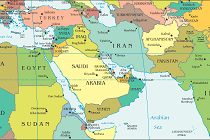
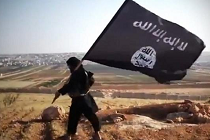
Will ISIS redraw the West Asia map?

The rise of the militant ISIS will alter the stability and future of all West Asian countries, and can impact India in multiple ways. India must re-evaluate its West Asia policy, and address the safety of its nationals in Iraq, the security of its oil supplies, and the fallout on South Asia of this resurgence of strife

ISIS Courtesy: AFP/Youtube/now.mmedia
24 June 2014

The Iraq crisis and India’s energy security

Professor Madhav Nalapat, the director of the School of Geopolitics at Manipal University talks of the Wahhabi winter sweeping West Asia. In an interview to Manjeet Kripalani, Co-founder, Gateway House, he speaks of the need to include regional experts and religious leaders to deal with its impact on India

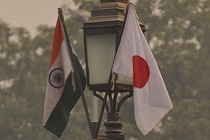
ind jap Courtesy: generalising/Flickr
6 November 2013

The new Indo-Pacific core

The India-Japan alliance needs to be viewed through a prism broader than that of "containing" China, and by treating the Indian and Pacific oceans as a single entity. Such an alliance has the potential to strengthen the geopolitical security of India and Japan, along with that of all their allies and associates

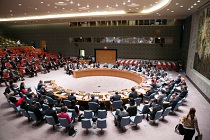
UNSC Syria UNSC Courtesy: United Nations
4 October 2013

Decoding the UNSC Resolution on Syria

The recent UNSC Resolution, which mandates the complete destruction of Syria’s chemical weapons, demonstrates that after more than a year, a degree of international agreement on the Syrian issue has been possible. In the evolving situation, Russia will now emerge as a major player

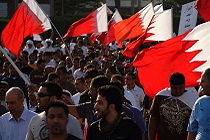
Bahrain protest1 Courtesy: Al Jazeera English/Flickr
16 May 2013

Policy and Prejudice: Shia Divisionism in Bahrain

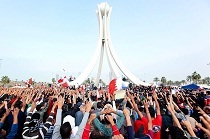
Two years ago, during the Arab Spring uprisings in several West Asian nations, youth and pro-democracy movements flared up on the Persian Gulf island of Bahrain. In light of these events, this paper assesses how Bahrain’s policies toward its Shia constituency have affected relations between Sunni and Shia groups.

Bahrain Activist/WikimediaCommons Courtesy:
8 February 2013

India navigates the Arab Uprisings

The Arab uprisings show no sign of closure, and have become amorphous. While New Delhi has so far been immunised from the political and religious dimensions of the uprisings, the rise of political Islam, Islamic governance, and continuing instability will impact India.

Www.Oic-Oci.Org Courtesy:
23 January 2013

India and the OIC: To join or not to join?

India’s relations with Islamic nations, many of which are members of the Organisation of Islamic Cooperation (OIC), have become even more prolific over the last decade. While India does not visualise becoming a member of a religious international body, many reasons militate against our formally joining the OIC.

Courtesy: FREEDOM HOUSE2/FLICKR
24 August 2012

Syria: What next?

With the Free Syrian Army being supplied aid by the West and the Gulf Cooperation Council countries, the endgame for the Syrian regime has begun. Does Assad's exit guarantee the replacement of autocracy with democracy? What implications will it have on regional politics?

ambassador abhyankar interview Courtesy: Gateway House
8 June 2012

“We are not in the business of ‘civilizing’ nations”

Over the past year, there has been a drastic change in the political scenario in Syria, which is now engulfed with violent sectarian conflict. Gateway House speaks to former Indian Ambassador to Syria, Rajendra Abhyankar, about the changing political scenario and the implications of the ongoing conflict in Syria.

IMG_4820 Courtesy: Gateway House
20 April 2012

Deciphering today’s Middle East

What are the implications for India if Iran is attacked? How effective has the response been by gulf nations to their own protests? Ambassador Talmiz Ahmad, India’s former Ambassador to Saudi Arabia, discusses the dynamics of West Asia with Gateway House’s Alisha Pinto and Azadeh Pourzand.