India-Japan Defence & Security Partnership
The infographic illustrates the extensive G2G engagement between India and Japan, which undergirds the strategic partnership.
Courtesy: Gateway House
The infographic illustrates the extensive G2G engagement between India and Japan, which undergirds the strategic partnership.
Courtesy: India Times
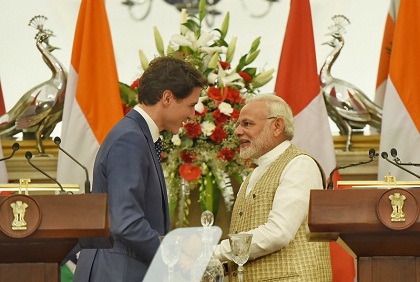
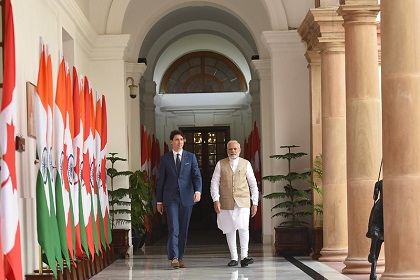
The recent opening of the Kartarpur corridor in Punjab and the release of a Canadian parliamentary report on the security breach during Prime Minister Justin Trudeau’s India visit are important developments. They present a good opportunity for New Delhi to step up cooperation with Ottawa on countering terrorism and violent extremism
Courtesy: Competitive India
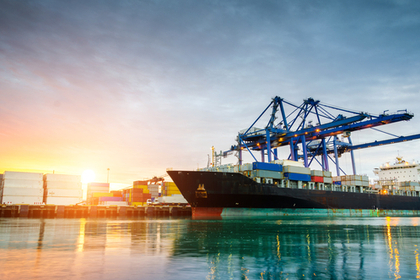
Ten years after the 26/11 terror attack, India’s maritime security is much stronger, with better inter-agency coordination and improved security structure. The Indian Navy was made responsible for maritime security overall, but no fool-proof and unambiguous command and control structure exists as yet.
Courtesy: Financial Express
India can draw Canada in a new direction – away from its trans-Atlantic fixation, into the Indo-Pacific and a tech and resources partnership that will benefit both democracies
Courtesy:
Our Fellow, National Security Studies and Director, Centre for International Security, Sameer Patil spoke at a panel discussion at the Central University of Gujarat discussing the immediate threats that India faces at it’s borders and beyond. The Times of India Read more
Courtesy: Indian Ocean Conference
If India wants to become a serious Indo-Pacific player, it has to prioritise implementation of the SAGAR initiative, look beyond the Quad to partner with smaller littoral states and provide alternatives to China’s investment strategies. This was the message from the recent Indian Ocean Conference in Hanoi, Vietnam
Courtesy: MEA/ Flickr
India and Brunei have a 34-year-old diplomatic relationship; but as yet no Indian president or prime minister has paid the country a bilateral visit to strengthen these ties. The strategically-located nation is rich in its history, with a unique political system. Its foreign policy approach is non-controversial, yet noticeably pragmatic.
Courtesy: MEA Flickr
The Indian Ocean has served as a keystone of global politics, economics and culture for centuries. In modern times, after World War II, it emerged as a focal point for great power competition and subsequently, of global commerce as the pivot of economic growth shifted from Europe to the Asia Pacific, a feature which has since remained constant.
Courtesy: Dantri.com
Every country has strategic goals to pursue and technology ecosystems play a vital role in achieving them
Courtesy: Global Environment Facility
Since Independence, India has been consumed by its domestic priorities. Now, with increasing integration with the world and a huge stake in global stability, it is time to focus on the global commons. India has a seat on the hightable to design and shape the rules for the governance of the global commons. In this special Independence Day Briefing, Gateway House examines India’s engagement with four global commons – technology, outer space, cyber and the oceans – and makes recommendations on how best they can be governed for our collective future.