India-Pakistan: false equivalency
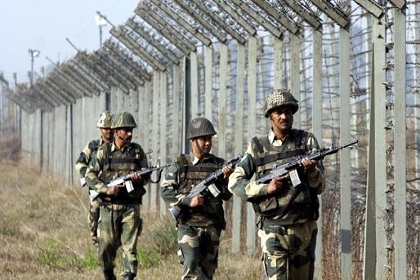
Pakistan's righteous indignation about national sovereignty—over India's Myanmar counterinsurgency program—is out of sync with the country's actions in the past. Experiences from history serve as proof
Courtesy: livemint.com
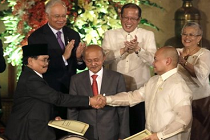
Pakistan's righteous indignation about national sovereignty—over India's Myanmar counterinsurgency program—is out of sync with the country's actions in the past. Experiences from history serve as proof
Courtesy: khabrsoutheastasia
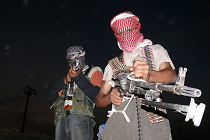
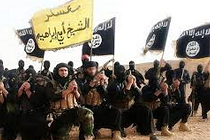
The Islamic State’s violence dominated 2014’s news headlines, masking important non-violent initiatives around the world. But endeavors for peaceful solutions are thriving, and India, with its legacy of a non-violent freedom struggle, must contribute to this process as a counter-force against the advocates of violence
Courtesy: Wikimedia Commons
This year has seen a disturbing increase in brutal violence by terrorist groups across the world—the Islamic State in Iraq and Syria, Boko Haram in Nigeria and the Tehreek-e-Taliban in Pakistan. With non-traditional terror targets like Belgium, Canada and Australia also being attacked this year, 2015 could see a more lethal spread of jihadist terror
Courtesy: Khuram Parvez
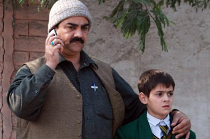
The massacre of 134 children in the early morning attack in Peshawar should prompt Pakistan’s military and political leaders to reconsider their conflicted approach to the insurgency that is threatening the entire region
Courtesy:
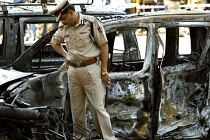
On 26 November 2008, Mumbai witnessed a horrific terror attack carried out by 10 young Pakistani men, killing 166 people and injuring over 300. The attack incited condemnation from countries around the world, and gave rise to several citizens’ movements in India. The attack also highlighted the complexities of the international law machinery in combating terrorism
Courtesy: wikimedia
Despite an early regional consensus on counter-terror, SAARC’s record in tackling terrorism remains dismal. With the widening network of terrorist groups in the subcontinent, it is imperative that India takes the lead in forging substantial counter-terrorism cooperation, particularly on the issue of financing
Courtesy: U.S. Staff Sergeant Aaron Allmon
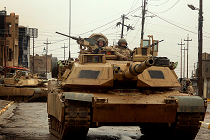
Obama’s strategy to target the IS in Syria within the framework of a U.S.-led international coalition has met with a tepid response. There are reports that the U.S may offer India a non-NATO ally status during Modi’s upcoming visit in a bid to seek greater support – a gesture that India will do well to disregard.
Courtesy: Joshua Martin
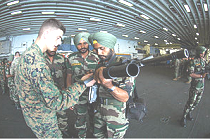
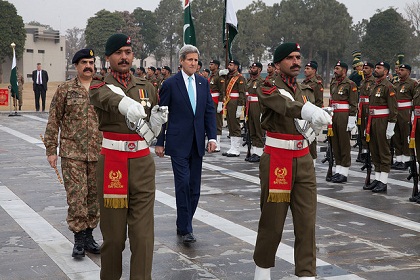
U.S. defence secretary Chuck Hagel’s visit is the third in a flurry of visits by top American officials before the scheduled Modi-Obama meet in September. Hagel’s visit will aim to enhance an already well-established defence-trade partnership and allay fears of the Pentagon’s bias towards Pakistan
Courtesy: Telegraph.co.uk
Indian security establishments are closely monitoring developments in West Asia in the wake of the recent threat against India by the Islamic State and the Al-Qaeda. While the possibility of terror violence cannot be ruled out, careful attention needs to be given to the attempts to spread Wahhabi ideology in India
Courtesy: Gateway House
The deliberations during a India-Pakistan young scholars’ workshop in the historic city of Istanbul held out a renewed hope for the bilateral relationship and a genuine desire for peace. The magnificent city of Istanbul offered an excellent backdrop to the serious, often heated discussions.