Sri Lanka: Debt-trapped
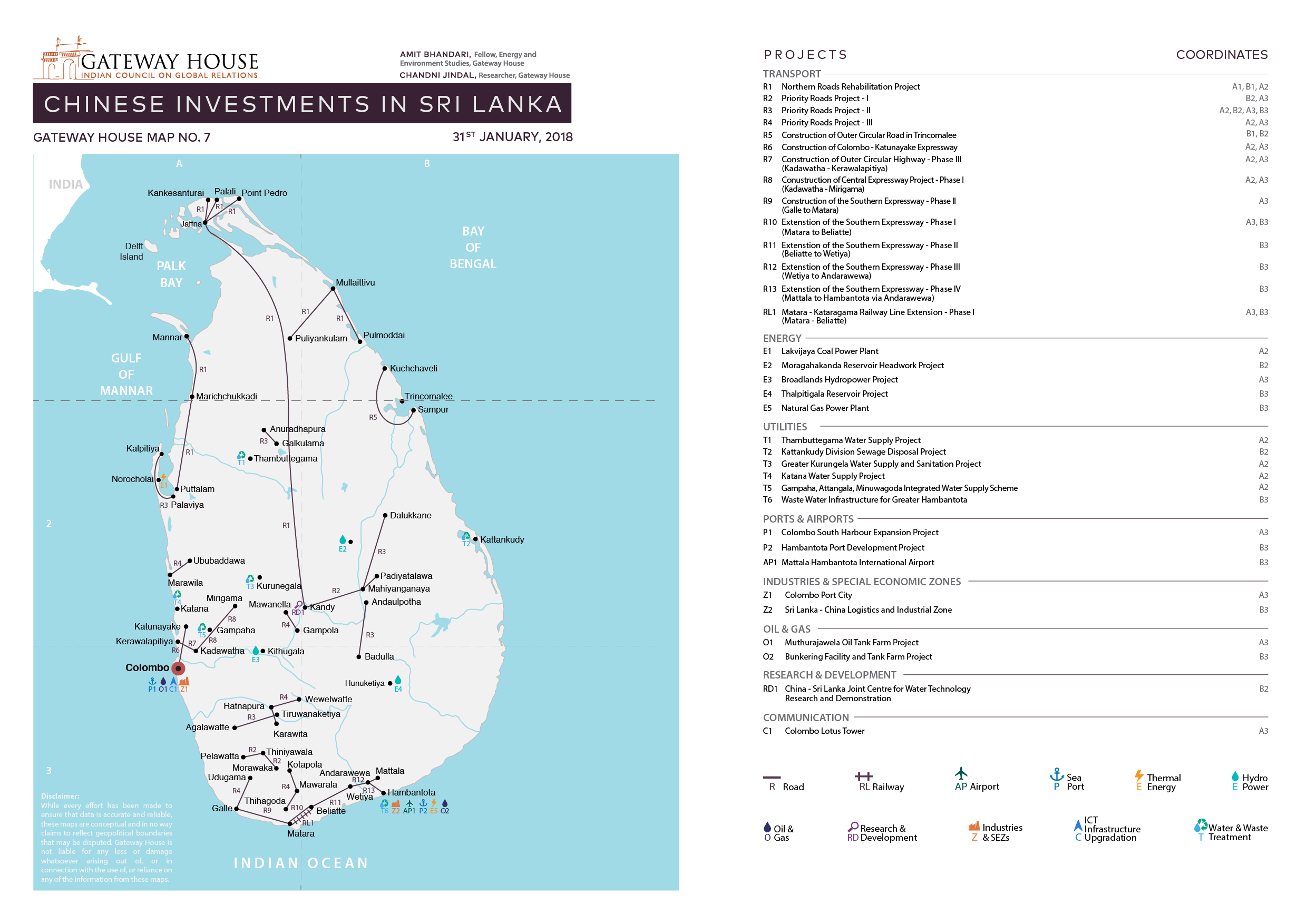
China has replaced India as Sri Lanka’s biggest economic partner. It is gaining control of Sri Lanka’s ports, which can give it leverage over India’s external trade

 Courtesy: Gateway House
China has replaced India as Sri Lanka’s biggest economic partner. It is gaining control of Sri Lanka’s ports, which can give it leverage over India’s external trade
 Courtesy: Stripes
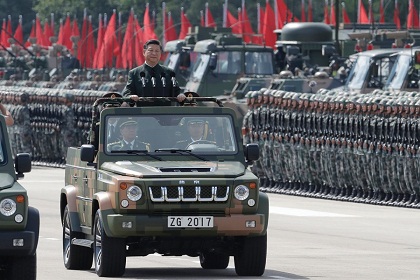
Chinese President Xi Jinping’s reforms, some of which have been effected in the run-up to the 19th Party Congress, have served to both modernise the People’s Liberation Army (PLA) and also strengthen his hold on it. They may also have resulted in adversely affecting the PLA’s combat efficacy
 Courtesy:
Indian President Ram Nath Kovind leaves for Africa on his first foreign visit as president on October 3. His first port of call will be Djibouti, which occupies a strategic location in the Horn of Africa. The country has assumed significance for hosting multiple foreign military bases on its territory, the latest entrant being China. This infographic illustrates Djibouti’s ‘military base’ diplomacy.
 Courtesy: Western Naval Command
China has expanded its presence in the Indian Ocean Region. President Xi Jinping has abandoned Deng Xiaoping’s conciliatory posture for an aggressive, money-fuelled search for super power status
 Courtesy: MEA/ Twitter
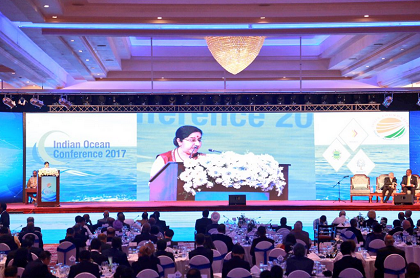
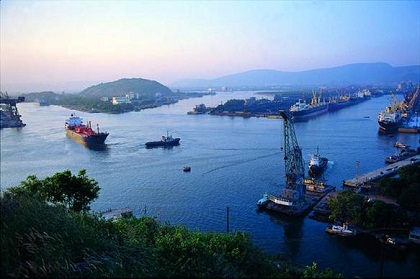
India must deepen its involvement with countries of the Indian Ocean Region on issues of security, commerce, and connectivity: this was the upshot of the second Indian Ocean Conference, held by the India Foundation in Colombo two weeks ago
 Courtesy: Wikimapia
The new global emphasis on the Blue Economy is attracting the interest of governments, development agencies, and more recently, social impact investors. A marked change from previous years is the increased participation of developing and coastal economies, which are its very beneficiaries
 Courtesy: PTI
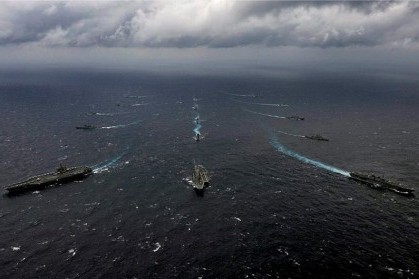
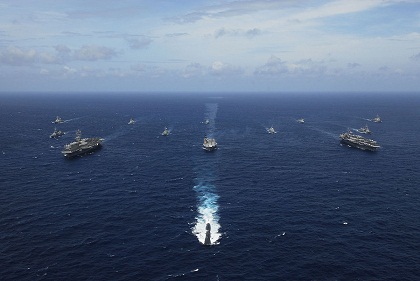
The historical evolution of the Malabar Exercise and the currently fraught relations between the participating countries and China created a much sharper context for the event, with the Chinese evincing a heightened interest in it
 Courtesy: China Daily
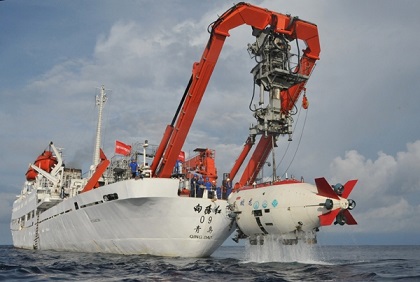
The People’s Liberation Army Navy (PLAN) has been steadily building its underwater infrastructure since the 1980s to undertake energy-efficient, long-range and dual-purpose reconnaissance and exploration missions. While the Indian Navy’s superiority is unquestionable, New Delhi should provide it the crucial futuristic paraphernalia
 Courtesy: MEA/ Flickr
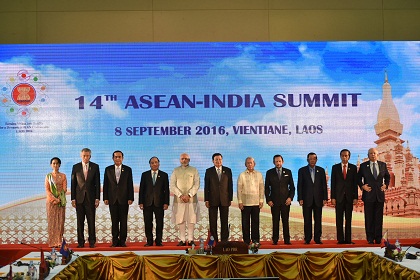
The Indo-Pacific region is home to some of the largest and most rapidly growing economies as also powerful military forces. Nuclear threats, international terrorism and climate change are some of the issues that define the region. Uncertainty dogs relations among the four nations in the top league—U.S., China, India and Japan—but what is emerging is a hawkish, policy stance from the U.S. as opposed to an isolationist outlook apprehended earlier
 Courtesy: Wikipedia
A strategic coming together of the U.S., Japan, Australia, and India was close to fruition some years ago, impelled initially by the tsunami of 2004. The spirit of the enterprise remains alive even now, and there are many merits in India joining the quad, but such an arrangement can skew existing Asian equations, jeopardising the Act East policy