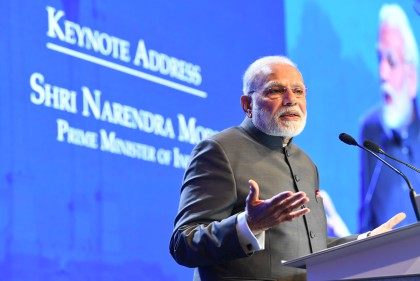
41608961145_bcfb0f1515_o Courtesy: MEA Flickr
26 February 2019

Indo-Pacific, the contested theatre

The key global powers are redefining their roles in the Indo-Pacific to promote national interest. China’s rise and increased activism in South Asia and the Indian Ocean region is an uncontested reality even as Asian countries worry about the new cold war in which the U.S. and China are locked. The Quadrilateral Dialogue has reemerged to prevent a unipolar Asia — these are some of the trends unfolding in this arena
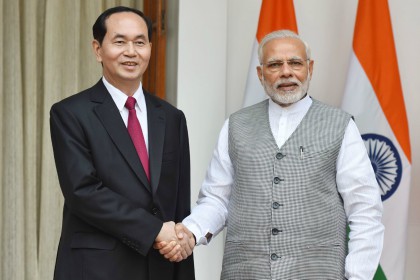
40587261961_58f400d0f5_o Courtesy: MEA Flickr
22 January 2019

Maritime Security for India and Vietnam

The following remarks were given by Ambassador Rajiv Bhatia, Distinguished Fellow, Foreign Policy Studies, Gateway House as the chair at a panel discussion on 'Geopolitics in the Indo-Pacific: Implications on Maritime Security for India and Vietnam', organised by the Centre for Indo-Pacific Studies, SIS, Jawaharlal Nehru University on January 22, 2019.

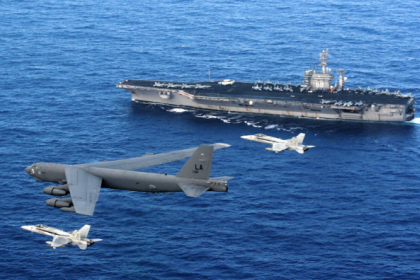
b52-bomber-over-ocean-600x400 Courtesy: Competitive India
29 November 2018

Maritime security: a decade after 26/11

Ten years after the 26/11 terror attack, India’s maritime security is much stronger, with better inter-agency coordination and improved security structure. The Indian Navy was made responsible for maritime security overall, but no fool-proof and unambiguous command and control structure exists as yet.

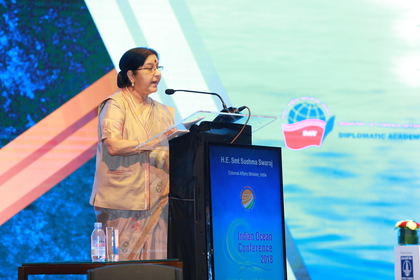
IOC Courtesy: Indian Ocean Conference
21 September 2018

SAGAR and security: leading in Indo-Pacific

If India wants to become a serious Indo-Pacific player, it has to prioritise implementation of the SAGAR initiative, look beyond the Quad to partner with smaller littoral states and provide alternatives to China’s investment strategies. This was the message from the recent Indian Ocean Conference in Hanoi, Vietnam

Webp.net-resizeimage (1) Courtesy: MEA Flickr
4 September 2018

A security architecture for the Indian Ocean

The Indian Ocean has served as a keystone of global politics, economics and culture for centuries. In modern times, after World War II, it emerged as a focal point for great power competition and subsequently, of global commerce as the pivot of economic growth shifted from Europe to the Asia Pacific, a feature which has since remained constant.

global-commons-870_0 Courtesy: Global Environment Facility
15 August 2018

India in the Global Commons

Since Independence, India has been consumed by its domestic priorities. Now, with increasing integration with the world and a huge stake in global stability, it is time to focus on the global commons. India has a seat on the hightable to design and shape the rules for the governance of the global commons. In this special Independence Day Briefing, Gateway House examines India’s engagement with four global commons – technology, outer space, cyber and the oceans – and makes recommendations on how best they can be governed for our collective future.

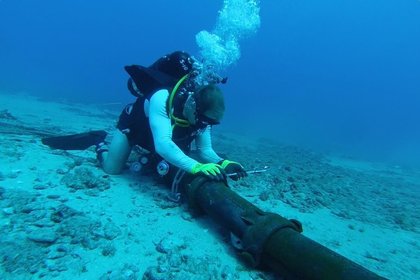
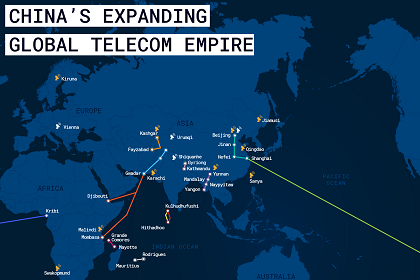
2-8-18 CableMap-02 - Copy Courtesy: Gateway House
2 August 2018

Version 2: Mapping China’s global telecom empire

This version of the Gateway House Map on China’s Expanding Global Telecom Empire identifies some more telecommunication assets -- optic-fibre and satellite ground stations -- that Beijing is working on in South and Central America, Africa, Myanmar, the Indian Ocean Region and mainland China besides the existing ones, such as the Pakistan East Africa Cable Express (PEACE). It shows the direction China’s investment is taking, its diplomatic overtures and the larger geopolitical implications of its growing telecom empire