

The clock is ticking for the Assad regime
Former Indian Ambassador to Syria, Rajendra Abhyankar, speaks to Gateway House’s Samyukta Lakshman about the developments in Syria, the impact on India-Syria relations and the future of the region.

Former Indian Ambassador to Syria, Rajendra Abhyankar, speaks to Gateway House’s Samyukta Lakshman about the developments in Syria, the impact on India-Syria relations and the future of the region.
 Courtesy: babasteve/Flickr
As the world welcomes it’s newest yet probably its poorest nation, South Sudan, Gateway House’s Renu Modi analyzes India’s engagement with the Sudanese – from historical political linkages to investments that can boost relations.
 Courtesy: FourthFloor/Flickr
Despite their economic downturns, domestic tensions keep developed countries from embracing the revitalizing potential of foreign workers. Ambassador Neelam Deo argues that India should continue to leverage its history of diversity and capitalize on a world more open to the free flow of goods and services.
 Courtesy: JonathanRashad/Flickr
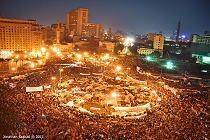
As the Arab world remains engulfed in protests, there may be lessons to be learned from other recent democratic converts. Latin America’s growth story may provide the Arab world with some recommendations on how to address socio-economic issues in the post-revolution scenario.
 Courtesy: WorldEconomicForum/Flickr
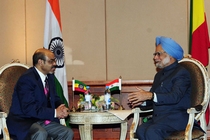
With the post for the head of the International Monetary Fund up for grabs, the emerging market countries are yet to unite and provide a suitable candidate who receives formidable support for his or her candidature. China, however, may boldly question the status quo and step ahead.
 Courtesy: PMO
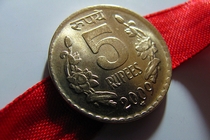
The India-Africa Conclave and other such platforms of interaction have played a pivotal role in engaging Africa with India’s growth story. Various Indian investments in agriculture and infrastructure, totalling over $20 billion, are soon to boost Africa's economies.
 Courtesy: TrilokRangan/Flickr
We need to deconstruct power and thus reconstruct India from the lower rungs of economy, of administration and of capability. It will heal the fissures of inequality and mitigate the evils of centralized power.
 Courtesy: Lear21,ThomasWolf/Wikipedia
Germany’s abstention on the UN Resolution on Libya heralds the mellowing of a nation blamed for last century’s most catastrophic wars. This time, Berlin may determine the history of Europe by choosing to pursue its national interests peacefully rather than subjugating an entire populace.
 Courtesy: UNPhoto/MarcoCastro
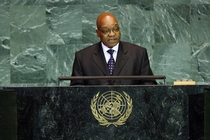
As the newest entrant of the BRICS group, South Africa's unpredictability in upholding the human rights dimension of its foreign policy agenda, by its stance to impose a ‘no fly zone’ over Libya, has brought about an incoherency between the BRIC countries and South Africa.
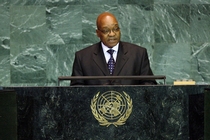 Courtesy: UNPhoto/MarcoDormino
A new United Nations doctrine is revolutionising the manner in which Western powers achieve regime change. Under the pretext of “Responsibility to Protect” –as the doctrine is named –armed intervention does not depend on the aspirations of a populace but the facilitation of existing power equations