Turkey: Europe’s new gas hub?
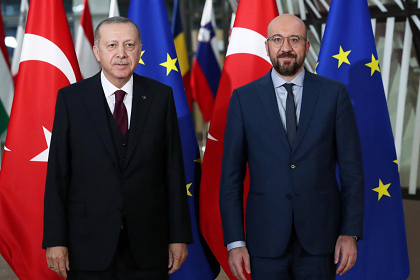
The Ukraine crisis has sent the EU scrambling for new gas supplies, generating fresh interest in gas pipelines from Central Asia and West Asia via Turkey. Practical difficulties make most of these new projects unviable.

 Courtesy: Reuters
The Ukraine crisis has sent the EU scrambling for new gas supplies, generating fresh interest in gas pipelines from Central Asia and West Asia via Turkey. Practical difficulties make most of these new projects unviable.
 Courtesy: telegraphindia.com
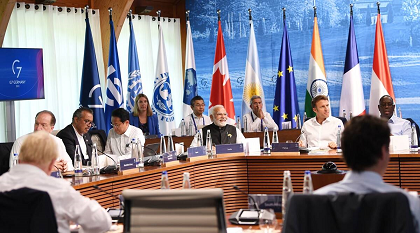
The G7 has reached out to emerging economies which have, of late, been facing challenges on the economic front, brought on by the lingering pandemic and the mismanagement of the Ukraine crisis. They are also seeking, from the global south, a broader acceptance of their world view. Will it be forthcoming?
 Courtesy: The Print
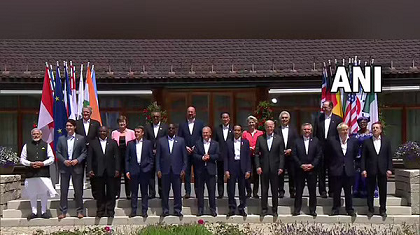
The shadow of the Ukrainian war was visible at the G7 summit. Anti-Russian formations were expected, but the extensive reference to China drew attention. The leaders did their part by extensively discussing challenges relating to climate, energy, environment, health, and food security. It is now for the G7 governments to deliver, to be taken seriously.
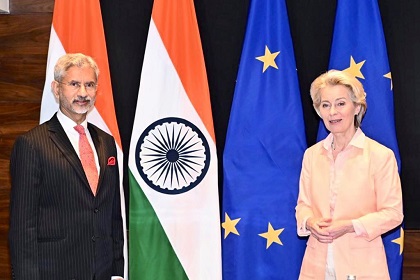 Courtesy: Twitter - Dr. S. Jaishankar
The EU has been working on an India engagement for two decades now – a strategic partnership and a free trade engagement. It is finally being realised – the outcome of the visit of European Commission President Ursula von der Leyen to Delhi this month. The upgraded, ambitious partnership Europe’s long overdue pivot to India.
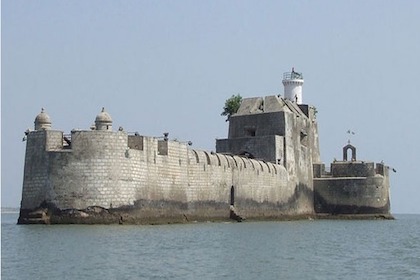 Courtesy: Diu Vanza Darji Samaj UK
Five hundred years before the ‘string of pearls’ or strategic naval bases surfaced as part of China’s global dominance plan, Imperial Portugal was a naval power which tried to impose its hegemony over vast swathes of the Indian Ocean. What informed this grand vision of a 16th-century Portuguese seaborne empire?
 Courtesy:
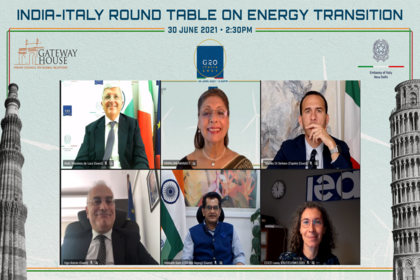
Gateway House and the Embassy of Italy in New Delhi co-hosted the India-Italy Round Table on Energy Transitions. Indian and Italian companies involved across in the energy ecosystem came together to discuss potential collaborations. India is energy dependent and Italy has an innovative energy industry. The two countries can partner on new technologies, trade, financing mechanisms and to update regulations for a new energy era.
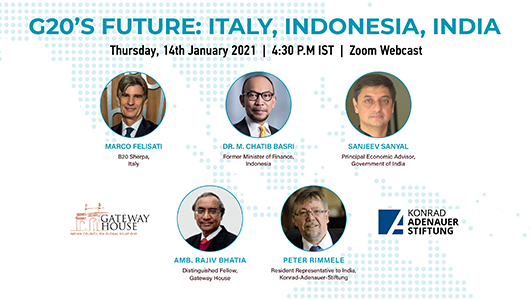
On January 14, 2021, Gateway House co-hosted a webinar with Konrad-Adenauer-Stiftung on G20’s future: Italy, Indonesia, India. The panel included Marco Felisati, B20 Sherpa, Italy, Dr. M Chatib Basri, Former Minister of Finance, Indonesia, and Sanjeev Sanyal, Principal Economic Advisor, Government of India.
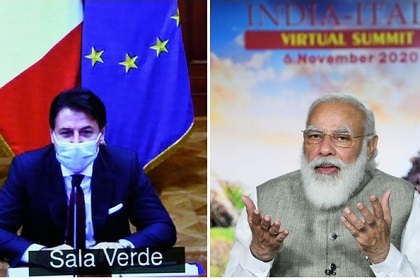 Courtesy: Twitter/Narendra Modi
The India-Italy bilateral is looking up again, after a hiatus. A digital summit of the two leaders was held on 6 November 2020, and assumes greater significance in light of the pandemic, and Italy’s upcoming presidency of the G20. The most promising outcome of this energetic diplomacy and summiteering, is that Italy is slowly being weaned away from its close economic embrace with China. Its trade and investment are unlikely to decouple soon, but Italy is now more in line with the EU initiatives on 5G and quality infrastructure - the right time for Italy and India to derive advantage from it.
 Courtesy: Shutterstock
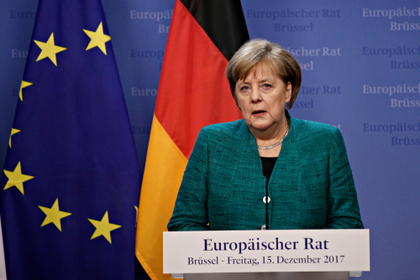
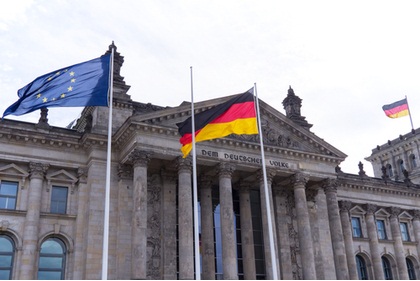
In July 2020, Germany takes over as President of the European Union. It’s a fraught time to lead the union which has been slow to react to COVID-19 and needs a new direction. With the pandemic, the U.S.- China stand-off, and a global economic crisis – Chancellor, Angela Merkel has her work cut out.
 Courtesy: Shutterstock
The results of the European Parliament elections, held late last month, served as an eye-opener for individual member states, such as Germany. A former ambassador to Germany offers an analysis of the leadership changes afoot, shifting coalitions – and also the prospect of stability amidst all the flux