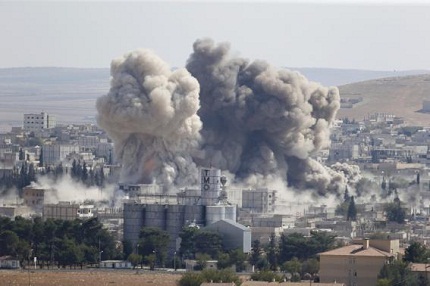
China in IOR: ‘peaceful rise’ no more
China has expanded its presence in the Indian Ocean Region. President Xi Jinping has abandoned Deng Xiaoping’s conciliatory posture for an aggressive, money-fuelled search for super power status

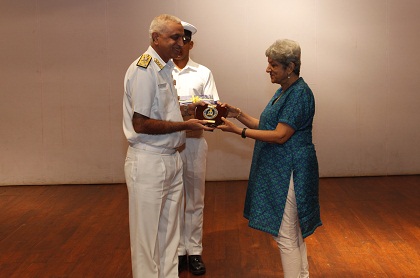 Courtesy: Western Naval Command
China has expanded its presence in the Indian Ocean Region. President Xi Jinping has abandoned Deng Xiaoping’s conciliatory posture for an aggressive, money-fuelled search for super power status
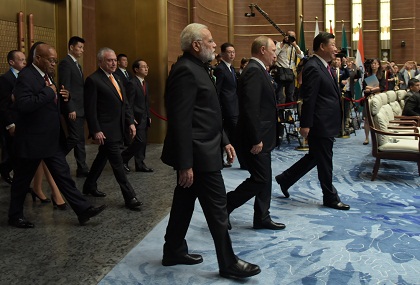 Courtesy: MEA/ Flickr
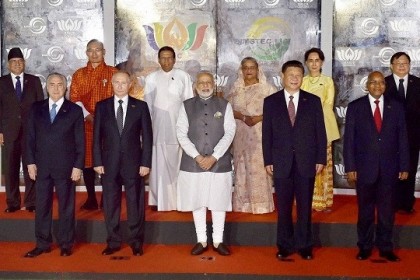
The ninth BRICS summit represented the victory of pragmatism over narrow nationalistic impulses. All BRICS members are likely to craft the grouping’s future script as it enters its second decade, but more crucially, the Big Three will have to show a large dose of statesmanship
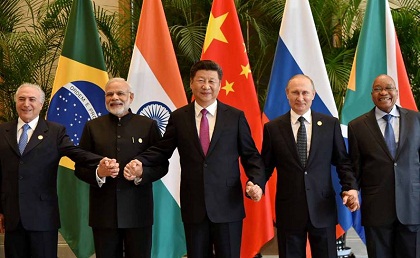 Courtesy: Narendra Modi/ Flickr
BRICS, which has always been committed to enhancing solidarity, is now entering its second decade – even as tensions between its two most consequential members remain unresolved and member states and other emerging markets are set to serve as “the main engine” of global growth

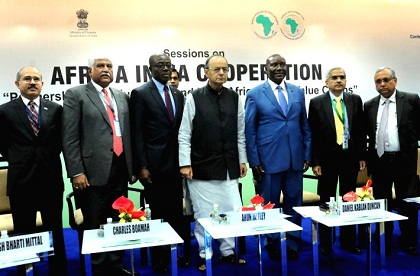
Remarks by Ambassador Rajiv Bhatia, Distinguished Fellow, Gateway House, as Chair of Session on “Reinforcing India’s Development Cooperation with Africa” at the 12th CII-Exim Bank Conclave on India-Africa Project Partnership New Delhi, 10 March 2017 Distinguished Ministers, panelists, Delegates, Ladies Read more
 Courtesy: Prokerala
India seems to have departed from catch-all, overarching initiatives in Africa to rather more nuanced ways of making its contribution felt, such as helping fashion G20’s ‘Compact with Africa’. Many countries are also keen to avail of Indian companies’ knowledge and experience of investing in Africa and the presence of the large diaspora—and such trilateral cooperation is to be welcomed
The past decade has witnessed an evolution of India-Africa relations especially since the implementation of Modi's Act East policy. There is also a growing realisation of the strategic and geopolitical value of the Indian Ocean region. This speech highlights the policies needed to strengthen India-Kenya relations and tap the wealth of resources in this Blue Economy.
 Courtesy: Flickr
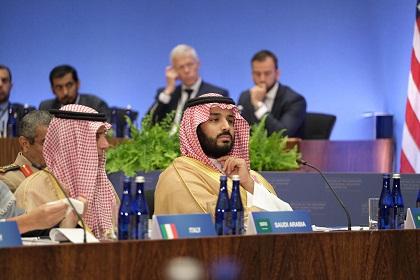
Prince Salman’s accession to the throne after the death of Saudi King Abdullah on 23 January 2015 has been a game changer, both domestically and in West Asian politics. Within days, he sidelined rivals within the House of Saud, and took on Iran with a confrontational policy. But two years later, the results of his new strategy disappoint
Aleppo is back under the control of the Syrian government, the Russian ambassador to Ankara is assassinated for his country’s role in Syria, and U.S. President-elect Donald Trump wants to cooperate with Russia to fight ISIS in Syria. These momentous events in modern history compel an assessment of the geopolitics surrounding Syria.
 Courtesy: Flickr/U.S. Army Africa
New Delhi now has the capacity to move beyond the basics of economic diplomacy by using the strengths of India's private sector in healthcare. Africa would welcome such an initiative, which will improve the health and development capabilities of African countries. This will also serve India’s geopolitical objectives and can precede a similar healthcare rollout to other regions
 Courtesy: MEA India / Flickr
Perhaps South Block did not gain as much as it had hoped to: there was a gulf in member states’ perceptions. One takeaway, therefore, for policy makers was that while noise has its uses, it is now time for some quiet diplomacy