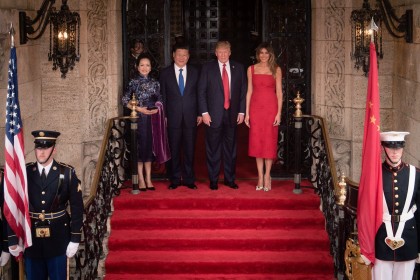
Trump-Xi: time to be forthright
China is coming in from a position of strength to challenge American primacy in the Asia-Pacific, and the Trump administration needs to abjure the hopeful, hesitant approach of its predecessors

 Courtesy: Wikimedia
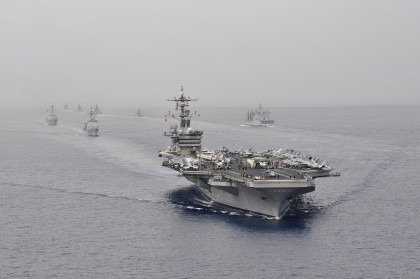
China is coming in from a position of strength to challenge American primacy in the Asia-Pacific, and the Trump administration needs to abjure the hopeful, hesitant approach of its predecessors
 Courtesy: Wikimedia
As the United States considers its policy options towards North Korea it must understand that Pyongyang has been thinking about military conflict for decades. It too will have military plans and they could pose major challenges for the U.S. This is why China and South Korea–and U.S. regional experts too–prefer the diplomatic route
 Courtesy: MEA/ Flickr
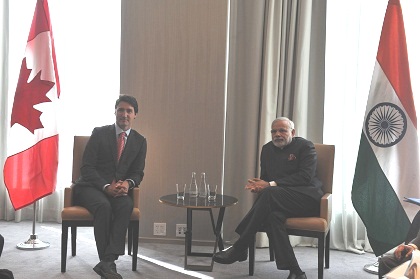
One is an advanced economy, the other an emerging one, and yet they share a striking complementarity of interests—from democracy and liberal values to a history of cordial relations. But two important economic agreements remain as chasms to be bridged
 Courtesy: Al Jazeera
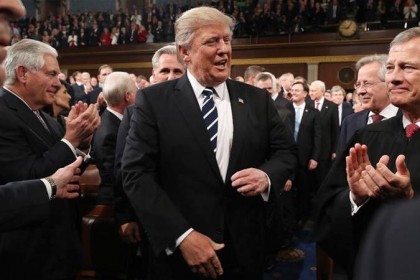
Forecasting uncertainty is a full-fledged task for security and foreign policy analysts, but when countries resort to being unpredictable then it is likely to backfire. Uncertainty about his next course of action seems to be Trump’s defining characteristic. How India will manage this to better relations will be critical
 Courtesy: AFP
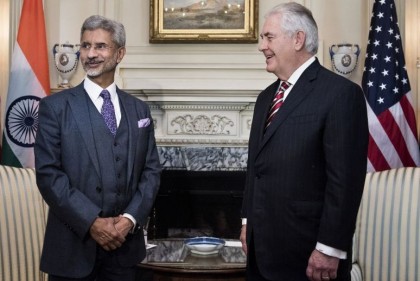
Foreign Secretary Jaishankar’s third visit to the United States since Donald Trump's election is an indication of India’s commitment to engage with all-quarters in Washington with its full diplomatic might. Despite the current situation of concern due to the H-1B visa and the recent shooting of an Indian in Kansas, initial soundings are reassuring and positive.
 Courtesy: MEA/ Flickr
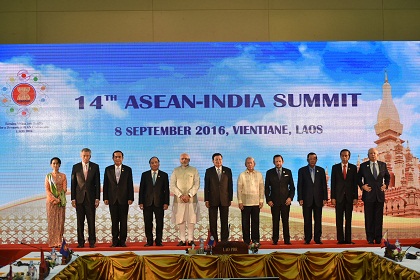
The Indo-Pacific region is home to some of the largest and most rapidly growing economies as also powerful military forces. Nuclear threats, international terrorism and climate change are some of the issues that define the region. Uncertainty dogs relations among the four nations in the top league—U.S., China, India and Japan—but what is emerging is a hawkish, policy stance from the U.S. as opposed to an isolationist outlook apprehended earlier
 Courtesy: IB Times
The era of globalisation is drawing to a close and a new one is emerging—an era of bilateralism over globalisation, of domestic over foreign focus, and reality-based policy-making
 Courtesy: Wikipedia
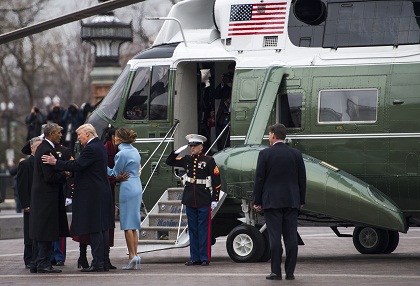
Trump’s pronouncements about his intentions to challenge the direction and substance of America’s post World War II global ‘liberal’ order---terming institutions, like NATO, obsolete and pulling out of trade agreements, like TPP---reveal a preference for political-style deal making
 Courtesy: Flickr
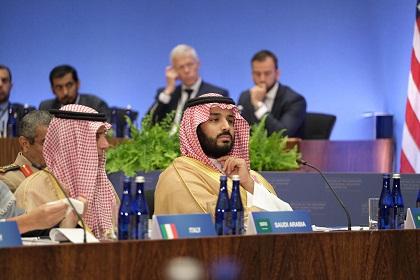
Prince Salman’s accession to the throne after the death of Saudi King Abdullah on 23 January 2015 has been a game changer, both domestically and in West Asian politics. Within days, he sidelined rivals within the House of Saud, and took on Iran with a confrontational policy. But two years later, the results of his new strategy disappoint
 Courtesy: Wikipedia
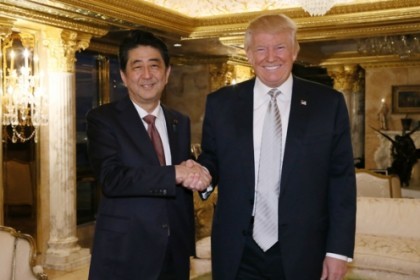
Trump’s cabinet has a preponderance of China hardliners, which has wider implications for the Asia Pacific region while some of its members view Narendra Modi as Reaganesque and a man of the times