A new, consensual world order
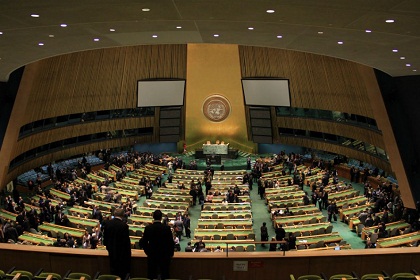
The era of globalisation is drawing to a close and a new one is emerging—an era of bilateralism over globalisation, of domestic over foreign focus, and reality-based policy-making

 Courtesy: IB Times
The era of globalisation is drawing to a close and a new one is emerging—an era of bilateralism over globalisation, of domestic over foreign focus, and reality-based policy-making
 Courtesy: MEA/Flickr
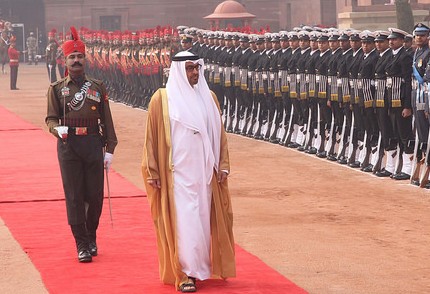
The West Asian monarchies are being forced to ‘look East’ due to a range of factors: the rise of the Islamic State, their need to boost falling oil revenues and doubts about the United States continuing to remain a guarantor of regional stability. Quite coterminously, India is looking towards the Gulf for energy security besides fulfilling other geostrategic goals: this is an ‘East’ and ‘West’ where the ‘twain will meet
 Courtesy: MEA flickr
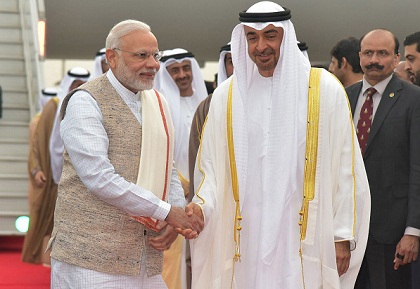
The choice of the Crown Prince of the United Arab Emirates (UAE) to be the chief guest at India’s 2017 Republic Day celebrations is an indication of the enhanced attention that the Indian government is according the Gulf countries. Many trade interests ally India to the UAE, but a deeper engagement is called for even as instability grows in the region
 Courtesy: MEA/Flickr
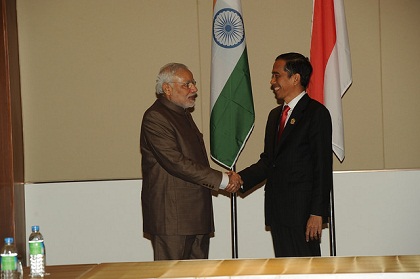
Indonesian President Joko Widodo is visiting India next week two years after assuming office, but Prime Minister Narendra Modi, who is now in the second half of his five-year tenure, is yet to extend the gesture. A ‘Look West-Act East’ policy will benefit both nations respectively
 Courtesy: Gateway House
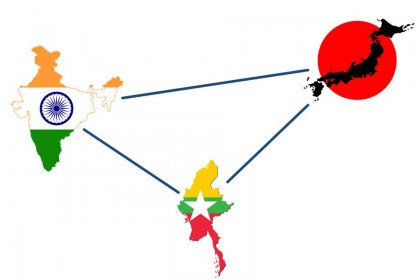
Aung San Suu Kyi paid high-profile visits to both Japan and India recently; economic cooperation would have been high on her agenda. But what could also emerge from such overtures is a diplomatic threesome
 Courtesy: MEA India / Flickr
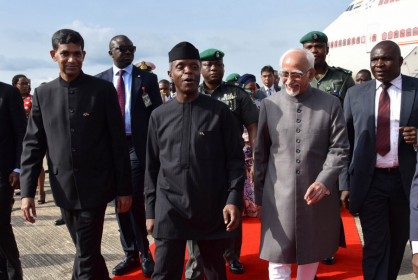
India has remained connected with the African nations in the course of the last one year through high-profile events and well-publicised visits by top leaders. This momentum in bilateral cooperation needs to be sustained on all fronts
 Courtesy: Wikipedia
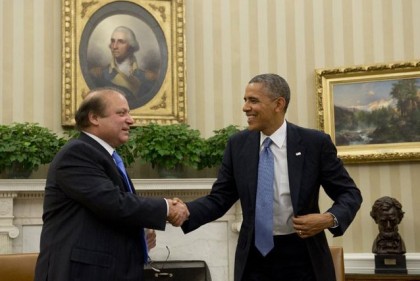
There has been a strengthening in the India-U.S. bilateral, which reached new heights with the signing of the LEMOA agreement in August, 2016. However, this strengthened bilateral has not resulted in a strong response to Pakistan by the U.S. Government.
 Courtesy: Eastern Economic Forum
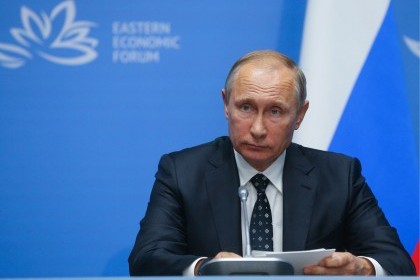
The Second Eastern Economic Forum, held last month in Russia, could have been a time for India to forge stronger trade links, but the governments of both countries have to be more supportive before this can happen.
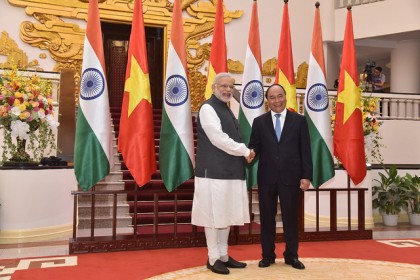 Courtesy: Ministry of External Affairs/Flickr
Prime Minister Narendra Modi’s recent trip to Vietnam had both heads of state announcing an upgrade of their ‘Strategic Partnership’ into a ‘Comprehensive Strategic Partnership’. This added term captures the importance both sides have vested in the need to deepen the relationship and the prospect for future cooperation.
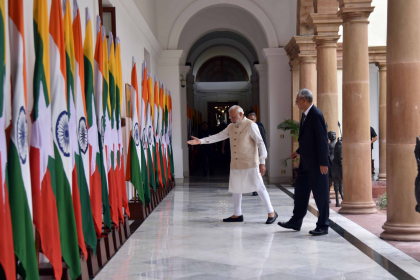 Courtesy: Ministry of External Affairs / Flickr
The visit of the Myanmar president was a landmark visit, the first in five decades. It raises the fundamental question as to whether the visit will bring forth major strategic and economic gains in the India-Myanmar relationship.